# Splinterlore
{% tabs %}
{% tab title="The World" %}
[Timeline](/the-world/timeline)
[Praetoria](/the-world/praetoria)
[Planes of Existence](/the-world/planes-of-existence)
{% endtab %}
{% tab title="The People" %}
[Kinds & Bloodlines](/the-people/kinds-and-bloodlines)
Aspects & Classes
[Splinters](/the-people/splinters)
Afflictions
[Pantheon](/the-people/pantheon)
Currencies
{% endtab %}
{% tab title="The Magic" %}
[Mana and the Elements](/the-magic/mana-and-the-elements)
Arena Games
Obelisk Shield
Languages
{% endtab %}
{% tab title="The Stories" %}
[Tome of Chaos](https://peakd.com/hive-13323/@splinterlands/tome-of-chaos-the-collection)
[Encyclopedia of the Splinters](/the-stories/encyclopedia-of-the-splinters)
{% endtab %}
{% endtabs %}
# Timeline
## In the Beginning
In time immemorial, the great empires of the world sought to extract the land's resources for their own gain and conquest without regard for the ruin they were reaping. In their struggle for dominance, the realm was beset by innumerable calamities: a thick cloud of poison that choked the air, the swelling of the sun, drowning floods, terrible storms, earthquakes that shook the land and brought great mountains to ruin, and the fading of ley lines.
Subsequently, the boundaries between this realm and other realms and [planes](/the-world/planes-of-existence) grew frail and, eventually, broke down. Creatures never before seen spilled forth, and great tides of [mana](/the-magic/mana-and-the-elements#mana) filled the ether.
Wars raged as the empires vied for supremacy, bringing an already ruined realm to even greater ruin. Ultimately, none emerged victorious. In their fervor for ultimate power, they destroyed each other and, in the process, themselves.
Amidst the carnage was born an alliance intent on salvaging what was left of the realm (and, perhaps, the potential for civilization to one day rise again). Using runic symbols to infuse mechanisms with [mana](/the-magic/mana-and-the-elements#mana), they created apparatuses and devices powered by gears, cogs, steam, and magic.
They called this runemancy, and they called themselves the Tai Kalayne.
Using the power of runemancy, they built the Obelisk Shield, a series of interconnected, monolithic pillars that sealed the rifts between this realm and the others. The realm’s entropic decline ended, yet it would be many years before it healed. Eons passed, then eons more. The realm did eventually heal. Its ley lines solidified, restoring the boundaries between realms and [planes](/the-world/planes-of-existence). However, the damage had been done; these boundaries remained tenuous and, sometimes, the preternatural slipped through. Meanwhile, the introduction of magic and otherworldly creatures had reshaped the realm until all remnants of its sordid and sorrowful history had been wiped clean. Yet the Tai Kalayne remained.
Until the Splintering tore the realm asunder and destroyed the Obelisk Shield.
In its wake, the few Tai Kalayne who survived opened a rift to seek the cataclysm’s source. They never returned.
## The Splintering
It was the machinations of Silus of the Rift and his legions of Chaos—a vast horde of armies comprising conquerors and the conquered—that wrought the Splintering in an attempt to breach the realm. Ultimately, they failed, but the damage was tremendous. The realm was torn asunder, its lands reshaped into seven continents: Khymeria in the northwest, Drayk Nahka in the north, Azmare in the northeast, the Burning Lands in the east, Mortis to the southwest, and [Praetoria](/the-world/praetoria) at its center. Billions of souls perished in a great cataclysm of floods, tempests, earthquakes, and pyroclasts. Even more died in the years that followed as an eternal ice age gripped parts of the realm, an infernal heat others. Estimates place the loss at more than 99% of the population, with countless [races, species, and bloodlines](/the-people/kinds-and-bloodlines) wiped out completely.
Thus, the Splinterlands were born.
With the land divided, so too were its people. Separated by great seas and oceans, they evolved into distinct [bloodlines](/the-people/kinds-and-bloodlines) unique to their environments. In time, new civilizations, empires, kingdoms, and city-states rose to fill the vacuum of power. A time of great conflict and wars followed, as each sovereignty sought to expand its borders and establish dominance over each other.
Only [Praetoria](/the-world/praetoria) remained unspoiled. It is here the monolithic pillars of the Obelisk Shield still stood. They were dark and silent, yet a deep magic still resonated within them, ensuring the rifts that connected Splinterlands to its sister realms remained sealed. The greatest mages of the age came together and hid the continent and its secrets behind a veil of magic to ensure those rifts would remain forever closed, and the task was passed on to their successors and their successors' successors, and so on for many generations.
## The Chaos War
Over the millennia, the ageless Silus of the Rift remained intent on his conquest of the Splinterlands and its boundless [mana](/the-magic/mana-and-the-elements#mana)—the most potent source of power in any of the [planes](/the-world/planes-of-existence) and their many realms. He and his legions of [Chaos](/the-people/splinters/chaos-empire) made a pact with the dark god Uul. It was allowed to gorge itself on the [mana](/the-magic/mana-and-the-elements#mana) of the countless realms they conquered until it grew fat enough to overcome the Obelisk Shield and breach the rifts leading to the Splinterlands.
And after thousands of years and hundreds of realms consumed, Uul's strength grew potent enough to weaken these rifts. Agents of [Chaos](/the-people/splinters/chaos-empire) infiltrated the realm, promising power and wealth untold to those who would pave the way for the coming of the legions. Conspirators brought down the Wizards' Veil that shrouded [Praetoria](/the-world/praetoria). They dampened the Obelisk Shield. At last, Uul tore asunder the rifts of the Splinterlands, and the legions of [Chaos](/the-people/splinters/chaos-empire) poured forth in a great tide of conquest.
Mighty kingdoms, empires, and city-states had sailed forth to claim the lands of [Praetoria](/the-world/praetoria) as their own. With their armies split between homeland and distant soil—and with each [splinter](/the-people/splinters) divided by culture and creed—no single sovereignty, no matter how strong, could stand against the legions of [Chaos](/the-people/splinters/chaos-empire).
Within a year, all opposition had been crushed. The Splinterlands was conquered. The [Chaos Empire](/the-people/splinters/chaos-empire) divided the land into thirteen provinces, each with its own decentralized system of governance that enforced the will of Silus of the Rift with ruthless efficiency.
Yet with the rifts breached, the way was opened for another—not invaders, but descendants of the Tai Kalayne who had left the Splinterlands so many millennia ago. All but slaughtered in their initial battle with the legions of [Chaos](/the-people/splinters/chaos-empire), they followed their enemy through the rifts, collecting scraps and survivors of the realms drained of [mana](/the-magic/mana-and-the-elements#mana) by the dark god Uul. A motley band of exiles and refugees severed from their pasts and their cultures, they chose a new identity: the Riftwatchers.
In cities and town across [Praetoria](/the-world/praetoria), The Ritwatchers trained the citizenry to fight and resist, and in the years that followed, the tides shifted—not all at once, but by degrees. Hope once lost was rekindled. Broken wills mended. The shackles of oppression became brittle and festooned with the rust of defiance.
Inevitably, those shackles broke and rebellion swept across the land.
# Rebellion
Praetoria trembled beneath the weight of destiny as colossal war wagons trundled across its territories. But these were no ordinary wagons; they were powerful summoning stations capable of sustaining the elemental manifestations wrought from cards. The [Riftwatchers](/the-people/splinters/riftwatchers) and their rebel allies accompanied them, using their power to fight against the legions of the [Chaos Empire](/the-people/splinters/chaos-empire) and break the chains in which it bound Praetoria. The fate of the Splinterlands hung in the balance.
## The Story
1. [The Interdiction of Icewall Bay](/the-world/timeline/rebellion/interdiction-of-icewall-bay)
2. [Uprising in Solace](/the-world/timeline/rebellion/uprising-in-solace)
3. [Vile and Violence](/the-world/timeline/rebellion/vile-and-violence)
4. [Siege of Solace](/the-world/timeline/rebellion/siege-of-solace)
5. [Anarchy in the Northeast](/the-world/timeline/rebellion/anarchy-in-the-northeast)
6. [No Half Measures](/the-world/timeline/rebellion/no-half-measures)
7. [A Beautiful Death](/the-world/timeline/rebellion/a-beautiful-death)
8. [Fairies and Firebombs](/the-world/timeline/rebellion/fairies-and-firebombs)
9. [Tip of the Scales](/the-world/timeline/rebellion/tip-of-the-scales)
# Interdiction of Icewall Bay
The rebels have begun disrupting the [Chaos Empire’s](/the-people/splinters/chaos-empire) supply lines around [Icewall Bay](/the-world/praetoria/central-fire#icewall-bay). They’ve employed the wagons and elemental manifestations of battle mages in the [Northern Highlands](/the-world/praetoria/central-fire#northern-highlands) and [Northeast Machair](/the-world/praetoria/wild-northeast#northeast-machair) to oppose the legions. But Rage’s dragons of [Mount Redwyrm](/the-world/praetoria/broken-lands#northwest-lowlands) control the skies. Given the chance, they’ll burn this uprising to ashes.
{% embed url="" %}
> *In a dim tavern, a stranger approaches and hints at raids on empire supply lines around Icewall Bay. But you’re a battle mage. You’re for the arena, not the battlefield. It’s just a loan, though. Cards, Mage Wagons to support the cause. Already you’re counting coins in your head. But then the stranger mentions that the empire has the ancient red wyrm, Rage, on its side. You weigh the odds. Make your choice, battle mage…*
The stranger is Dolfar Darflak, a dark dwarf from the [Kingdom of Duskforge](/the-people/splinters/kingdom-of-duskforge) who joined the [Riftwatchers](/the-people/splinters/riftwatchers) after suffering unspeakable losses at the hands of the [Chaos Empire](/the-people/splinters/chaos-empire) and Queen Mycelia’s [brood](/the-people/splinters/minor-splinters#mycelic-brood). The empire’s exploitation of the Splinterlands continues to fuel his personal vendetta, and his unconventional methods often blur the line between what's right and what's effective. But every sabotaged supply line, every detonated bomb, and every legionnaire that bleeds is sweet vengeance indeed.
The risk is high, but if you’re willing to help, Dolfar promises a chance to earn a new card for your collection: the ancient [red wyrm](/the-people/kinds-and-bloodlines/draconics/dragons#red-dragons), Rage, himself.
Rage has been the patriarch of his [flight of red dragons](/the-people/splinters/minor-splinters#redwyrm-dragons) for millenia. Long before the [Splintering](/the-world/timeline#the-splintering)—long before even the Tai Kalayne—he claimed [Mount Redwyrm](/the-world/praetoria/broken-lands#northwest-lowlands) as his own. Over the centuries, he has grown his brood and amassed a hoard of treasure to rival that of the wealthiest of kingdoms a hundred times over. He was content to admire his endless mounds of precious metals and gems while expanding his knowledge of this realm and all the other realms and planes of existence.
With defiance against the [Chaos Empire](/the-people/splinters/chaos-empire) mounting, Mantaroth, second only to Silus of the Rift, offered the ancient [red wyrm](/the-people/kinds-and-bloodlines/draconics/dragons#red-dragons) an alliance. In exchange for crushing any potential uprisings, Rage was promised riches untold—not just gold and baubles, but artworks, artifacts, and divine relics the likes of which the Splinterlands has never seen, amassed from countless conquered realms.
Now, the [Redwyrm Dragons](/the-people/splinters/minor-splinters#redwyrm-dragons) glide over the forests, plains, and moors of the Broken Lands, laying waste to any who would forsake their loyalty to the empire—and demanding tithings in exchange for asylum, regardless of loyalties.
# Uprising in Solace
The interdiction of the [Chaos Empire’s](/the-people/splinters/chaos-empire) supply lines around [Icewall Bay](/the-world/praetoria/central-fire#icewall-bay) has weakened the empire’s grip on the [Northern Highlands](/the-world/praetoria/central-fire#northern-highlands). Now, the citizens of [Solace](/the-world/praetoria/central-fire#population) rise against their oppressors. Governess Akane has rallied her people, yet the [Gloridax](/the-people/splinters/gloridax-empire) are outmatched. Matsuuri Kei, ranking knight of [Solace’s](/the-world/praetoria/central-fire#population) [Dragonsguard](/the-people/splinters/gloridax-empire#dragonsguard), needs your help.
{% embed url="" %}
> *Another town, another tavern.* He *shows up again. This time, it's more than supply line raids. The attacks around Icewall Bay roused the locals. There's trouble brewing in Solace. Governess Akane has rallied her people, but her soldiers are outmatched. Matsuuri Kei, knight of Solace's Dragonguard, needs aid. That's where you come in. Your cards and mage wagons to help the Gloridax take back their city. If the Chaos Empire finds out, heads will roll. Namely yours. But fortunes aren't made by playing it safe.*
The shiminach are the [Gloridax Empire’s](/the-people/splinters/gloridax-empire) land-owning elite, and Ishii Akane was one of the caste’s most powerful and influential drakoshans. Her holdings comprised nearly fifty-thousand hectares of land south of [Icewall Bay](/the-world/praetoria/central-fire#icewall-bay), including [Solace](/the-world/praetoria/central-fire#population). But when the port city fell to the [Chaos Empire](/the-people/splinters/chaos-empire), Akane was given a choice: abdicate her position and swear fealty to Silus of the Rift or face execution.
The once distinguished shiminach became just another conscript in the legions of the [Tovingor Kalamenty](/the-people/splinters/chaos-empire#kalamenty-system). She stood sentry upon the walls of [Solace](/the-world/praetoria/central-fire#population), patrolled the streets, and enforced the edicts of the empire.
Their leadership thought they'd broken her. That she served as a reminder that not even the mightiest dare defy them. But all the while, Akane reinforced in her citizens their heritage, their purpose, and that the [Gloridax Empire](/the-people/splinters/gloridax-empire) would one day rise from the ashes and be restored to its former glory.
Ashinach are the foot soldiers that form the bulk of the [Dragonsguard](/the-people/splinters/gloridax-empire#dragonsguard). But after the [Gloridax Empire](/the-people/splinters/gloridax-empire) fell, the ashinach of Solace served as conscripts in the legions of Chaos.
But dissent grew. Acts of insubordination became more frequent, no matter how many lashings were doled out. The kalament of [Tovingor](/the-people/splinters/chaos-empire#kalamenty-system) knew that something had to be done before it boiled over into a full-blown revolt. But it seemed like there was trouble brewing everywhere, and trying to squash it all was like playing subjugation whack-a-mole.
And now\... now it's too late.
Matsuuri Kei is a dragutsu, a knight of the [Gloridax Empire’s](/the-people/splinters/gloridax-empire) [Dragonsguard](/the-people/splinters/gloridax-empire#dragonsguard). She fought hard and well to defend [Solace](/the-world/praetoria/central-fire#population) against the legions of Chaos. But the attackers were… well, they were legion, and Kei and her Ashinach could not stand against their sheer numbers.
Like her former governess, Kei was conscripted into the [Chaos Empire’s](/the-people/splinters/chaos-empire) [military](/the-people/splinters/chaos-empire#military) after the port city fell. She waited patiently for the day when she could collect the heads of [Solace’s](/the-world/praetoria/central-fire#population) Chaos commander and his captains and present them to Shiminach Akane in a grand [Kubi Jikken](/the-people/splinters/gloridax-empire#culture), the [Gloridax’s](/the-people/splinters/gloridax-empire) traditional head-viewing ceremony.
Now the rebellion has begun, and that day is fast approaching.
# Vile and Violence
Congratulations, you're a wanted battle mage now. After Avina of the Wolf defends you against the [Pieces of Eight,](/the-people/splinters/minor-splinters#pieces-of-eight) you find yourself aligned with the [Order of the Silver Shield](/the-people/splinters/kingdom-of-khymia#order-of-the-silver-shield). Join Commander Goff and his knights in their journey to [Port Pristine](/the-world/praetoria/pristine-northwest#population) to gather reinforcements for the rising rebellion in [New Dawn.](/the-world/praetoria/pristine-northwest#population) Be forewarned however. Venka the Vile rules the city in the name of the [Chaos Empire](/the-people/splinters/chaos-empire), and she does it with brutal efficiency.
{% embed url="" %}
> *In the streets of New Dawn stand the Pirates of Eight. The Chaos Empire knows about you and your mage wagons. There's a bounty, and the pirates want to collect. Avina of the Wolf comes to your aid, and the empire's legionnaires come, too. The people of New Dawn have had enough. Blood and battle in the streets. Avina leads you to Commander Goff. It's time for the Silver Shield to fight back. They'll need reinforcements from Port Pristine, where Venka the Vile rules. Your cards could turn the tide. The journey is dangerous, but isn't everything these days?*
The [Pieces of Eight](/the-people/splinters/minor-splinters#pieces-of-eight) are an infamous crew of pirates led by Captain Corin Drace, who commands eight fleets totaling nearly seven-hundred ships. They are the bane of the three seas of [Praetoria](/the-world/praetoria), sailing its coasts and raiding the merchant and trading ships that carry goods from one port to another.
And things have only gotten worse since they aligned themselves with the [Chaos Empire](/the-people/splinters/chaos-empire). Not only do the [Pieces of Eight](/the-people/splinters/minor-splinters#pieces-of-eight) control the seas, but their pirates can be found in practically every port, where they take what they want from the ships in the harbor before heading to a local tavern to have a good time—namely, getting falling-down drunk and riding roughshod over the locals.
Meanwhile, the [Kingdom of Khymia](/the-people/splinters/kingdom-of-khymia) has been subsumed by the [Chaos Empire](/the-people/splinters/chaos-empire). But while the [Order of the Silver Shield](/the-people/splinters/kingdom-of-khymia#order-of-the-silver-shield) may have lost the war, they haven’t lost their fight.
Once a [regimental commander](/the-people/splinters/kingdom-of-khymia#knighthood) charged with governance of [Port Pristine](/the-world/praetoria/pristine-northwest#population), Gregory Goff fought alongside his knights when the legions of [Chaos](/the-people/splinters/chaos-empire) laid siege to the city, but they were overwhelmed by the enemy’s sheer numbers. Most of the defenders were summarily executed. Goff and the remnants of his command fled to [New Dawn](/the-world/praetoria/pristine-northwest#population), but they found the capital had already fallen to the [Chaos Empire](/the-people/splinters/chaos-empire). They joined the surviving knights there, hidden away beneath the city in the labyrinth of tunnels designed for storm water drainage. They reorganized. They reequipped. They prepared.
Since then, Commander Goff and his knights have developed a network of covert operatives within the empire’s [municipal government](/the-people/splinters/chaos-empire#kalamenty-system). They ambush the legionnaires that patrol the streets and sabotage their depots of munitions and rations before disappearing once more into the shadows. And they fight to protect the citizens of [New Dawn](/the-world/praetoria/pristine-northwest#population) and ensure they never lose hope.
All the while, Goff endeavors to hold fast to his honor and the principles of the [Order of the Silver Shield](/the-people/splinters/kingdom-of-khymia#order-of-the-silver-shield). But he knows that, in order to do good in the world, sometimes you also have to do some very bad things.
Enter Knight Sergeant Avina of Galalaine.
As part of the [Silver Shield’s](/the-people/splinters/kingdom-of-khymia#order-of-the-silver-shield) insurgency in [New Dawn](/the-world/praetoria/pristine-northwest#population), Avina has devoted herself to ending the [Chaos Empire](/the-people/splinters/chaos-empire), no matter the cost. Her brutal hit-and-run tactics are infamous among her enemies, who have taken to calling her “the Wolf,” and she wears this moniker like a badge of pride.
While Commander Gregory Goff may question her methods, Avina of the Wolf has earned his trust and respect. And when the dawn comes to break the chains of tyranny, there is no one he would rather have at his side.
Together with Commander Goff, Avina of the Wolf, and a handful of Silver Shield Fighters, you'll make the journey to Port Pristine to gather reinforcements and retake New Dawn. Along the way, you'll face all kinds of trouble: the bandits from the Aria A'lan gang; territory ulund; and a plethora of other—whoah! Lioceros! It's gonna charge! *Watch out*!
*If* you manage to make it to [Port Pristine](/the-world/praetoria/pristine-northwest#population) in one piece, there's trouble waiting there, too.
Commander Venka the Vile rules the city with brutal efficiency. Her battalion of legionnaires enforces compliance with the laws of the empire and ensures no one gets any stupid ideas about inalienable rights like life, liberty, and other such nonsense.
Lately, however, Venka's legionnaires have been turning up dead: slit throats in some shadowy alley, felled in the street with an arrow to the eye by a rooftop sniper, or blown to bits by explosives both incendiary and magical. Her requests for replacements are drawing questions from her superiors, and Venka knows she'll have to squash this little resistance before it becomes something more.
# Siege of Solace
You’re still mourning the loss of Commander Goff when the famous battle mage, Lorkus, informs you the legions of [Chaos](/the-people/splinters/chaos-empire) have besieged [Solace](/the-world/praetoria/central-fire#population) in an attempt to retake the city. Your mage wagons and cards have already been deployed in its defense, but they’re not enough. Lorkus has a plan, though. If he can convince the [dwarves](/the-people/kinds-and-bloodlines/demifolk/dwarves) of [Grimbardun](/the-people/splinters/kingdom-of-grimbardun) to deploy their army in defense of [Solace](/the-world/praetoria/central-fire#population), the city might just be saved. But he’ll need your help to do it.
{% embed url="" %}
> *He was your mentor, your friend. Now gone. No time to mourn. The famous battle mage, Lorkus, informs you the legions of Chaos have besieged Solace. But he has a plan. Convince the dwarves of Grimbardun to deploy their army and defend the city. The journey will be long and hard. And what will convince the dwarves to abandon their neutrality? There is no other option, though. Without your help, Solace is lost. So, what'll it be, battle mage?*
The [Silver Shield ](/the-people/splinters/kingdom-of-khymia#order-of-the-silver-shield)has vanquished Venka the Vile and her battalion of Chaos orcs. Alas, Commander Gregory Goff gave his life to save his knights. Avina of the Wolf assumes command in his stead. You'd like nothing better than to stay and help her rebuild, but that's not in the cards.
The great halls of the [Kingdom of Grimbardun](/the-people/splinters/kingdom-of-grimbardun) follow the seams of precious metals and minerals deep beneath the [Northern Agniavas](/the-world/praetoria/central-fire#agniavas). The [Chaos Empire](/the-people/splinters/chaos-empire) sought these riches, but the [mountain dwarves](/the-people/kinds-and-bloodlines/demifolk/dwarves#mountain-dwarves) closed their gates and reinforced their defenses. When the legions attacked, the kingdom refused to fall. Eventually, Silus of the Rift called off the siege. As long as the stunties remained holed up in their caves, there was no need for more legionnaires to die.
And so the [dwarves](/the-people/kinds-and-bloodlines/demifolk/dwarves) of [Grimbardun](/the-people/splinters/kingdom-of-grimbardun) shut themselves off from the world, indifferent to the atrocities committed outside their halls. But while Silus had chosen to preserve the combat power of his legions, it turned out that certain splinters of his [Host](/the-people/splinters/chaos-empire#military) had no compunctions about dying en masse.
In the subterranean caverns deepest beneath [Grimbardun](/the-people/splinters/kingdom-of-grimbardun), its [dwarven](/the-people/kinds-and-bloodlines/demifolk/dwarves) laborers—miners, ranchers, gardeners, and harvesters—began to disappear. Just a few at first. Then more. And more. Dalthin Ironhood and his company of fighters were tasked to protect those that remained and find the ones who had gone missing. He hoped to find them alive, and when he did, he wished he had found them dead.
They came shambling up from the [Deep](/the-world/praetoria/the-deep), infected with mycelial corruption—skin mottled with fungal growth, toadstools sprouting in clusters across their bodies, eyes clouded, movements erratic and jerky. Dalthin and his company of fighters fought them off while the laborers fled. Although the [dwarves](/the-people/kinds-and-bloodlines/demifolk/dwarves) were victorious, many fell to that ponderous, mycelial advance, and Dalthin knew they would return.
And return they did.
He told the [Council of Elders](/the-people/splinters/kingdom-of-grimbardun#governance) that a company wasn't enough. They gave him a battalion. And when that wasn't enough, a brigade.
Dalthin Ironhood continues to fight back the tide of mycelia that rises from the Deep, and Queen Mycelia continues to send her endless [brood](/the-people/splinters/minor-splinters#mycelic-brood) against them. The [dwarves](/the-people/kinds-and-bloodlines/demifolk/dwarves) are losing ground. Gardens and ranches have been lost. Water sources and food supplies are dwindling.
Still, the gates of [Grimbardun](/the-people/splinters/kingdom-of-grimbardun) remain shut.
The [dwarves](/the-people/kinds-and-bloodlines/demifolk/dwarves) have their hands full defending the kingdom from the [Mycelic Brood](/the-people/splinters/minor-splinters#mycelic-brood). They won't spare their forces. But if you can put an end to Queen Mycelia, the [brood](/the-people/splinters/minor-splinters#mycelic-brood) will lose its collective consciousness and cease its beleaguerment of [Grimbardun](/the-people/splinters/kingdom-of-grimbardun).
That done, you'll need to convince the [dwarves'](/the-people/kinds-and-bloodlines/demifolk/dwarves) high king to send his army against the legions of [Chaos](/the-people/splinters/chaos-empire) that lay siege to [Solace](/the-world/praetoria/central-fire#population). Attack their rear guard, fight toward the city's gates, and pray the [Gloridax](/the-people/splinters/gloridax-empire) spill out and join the fray.
But the empire has a few tricks up its sleeve, too.
When it comes to transmutation, Tenni Mayla is something of a prodigy. Using nothing but a bit of magic and a wrench, she can build and animate mighty [golems](/the-people/kinds-and-bloodlines/forged/golems) capable of great heaps of destruction.
Tenni was rather fond of the tyranny and oppression that the [Chaos Empire](/the-people/splinters/chaos-empire) brought when it conquered the Splinterlands but figured she'd rather be on the giving than receiving end. Now, she uses her arcane craftsmanship in service to the empire, whether it be crushing revolts or stomping out insurgents—often quite literally.
The formidable chaos [golems](/the-people/kinds-and-bloodlines/forged/golems) are her pride: a blend of magic and mechanics that serve her and the [Chaos Empire ](/the-people/splinters/chaos-empire)as voiceless, tireless, and highly lethal sentinels.
Now, Tenni and her [golems](/the-people/kinds-and-bloodlines/forged/golems) march on [Solace](/the-world/praetoria/central-fire#population) to join the empire's siege. Let there be no mistake: they'll make short work of the city's walls, and once those fall, so too will the [Dragonsguard](/the-people/splinters/gloridax-empire#dragonsguard) and all the rest.
The fate of the [Gloridax's](/the-people/splinters/gloridax-empire) rebellion rests on your shoulders, but thankfully, you don't have to carry it alone.
You have Lorkus at your side.
After graduating from Waur Medge, Lorkus rose to the top of the Arena Games, dominating the Champion League. But a run-in with an ogre nearly ended his life. It left him crippled, and his career came to a screeching halt.
Rather than surrender to his fate, he began training and financing other promising battle mages with the skill but not the means to compete at the highest levels.
Now, with the Splinterlands under the thumb of the [Chaos Empire](/the-people/splinters/chaos-empire), Lorkus and his protégés work to undermine the edicts of their overlords.
# Anarchy in the Northeast
Your next task: convince Eternan Brune and his [Drybone Anarchists](/the-people/splinters/drybone-anarchists) to break their alliance with the [Chaos Empire](/the-people/splinters/chaos-empire) and join the rebellion. Along the way, you'll encounter the merfolk of [Mar Toren](/the-people/splinters/kingdom-of-mar-toren), gnomes of [Nimbledook](/the-people/splinters/minor-splinters#nimbledook), and bluehair minotaurs of the [Ujurak Tribe](/the-people/splinters/panopia#races). And if you can fight your way through the anarchists and legionnaires of [Chaos](/the-people/splinters/chaos-empire), you'll still have to face Endura Brune and Daarg Deadblast to get to the [Drybone Sultan](/the-people/splinters/drybone-anarchists#governance) himself.
{% embed url="" %}
> *Thanks to you and the dwarves, Solace stands firm. The rebellion rages across Praetoria. Runeseer Sevaya needs you to convince the Drybone Anarchists to join the cause. You strap on a Runic Skyclaw suit and set off. But it malfunctions. Prunda Undervesch comes to your aid. Through the Sea of Karsts to the Drybone Badlands and the anarchist's citadel. Cryptic, the legion's captain, joins your cause. Together, you fight toward the throne where Eternan Brune and his cronies await.*
Sevaya Sen and her [Riftwatcher](/the-people/splinters/riftwatchers) compatriots have followed in the wake of Silus of the Rift and his legions of Chaos across numerous realms. They collected the scraps and the survivors, bolstering their combat power and preparing for the day when they would stand against their mortal enemies.
Now, that day is fast approaching. The [Chaos Empire](/the-people/splinters/chaos-empire) controls the Splinterlands, and Sevaya is afraid. For she is a runeseer and triusul human, skilled in both runemancy and clairvoyance. She has seen the possible futures. Most lead to ruin. Only a handful do not. And in these handful, there is always a battle mage, and there are always choices.
She will do what she can to guide the battle mage toward the right ones.
You strap on a Runic Skyclaw suit, fly outta [Solace](/the-world/praetoria/central-fire#population), and head for [Stonetown](/the-world/praetoria/wild-northeast#population) in the [Drybone Badlands](/the-world/praetoria/wild-northeast#drybone-badlands), home of the [Drybone Anarchists](/the-people/splinters/drybone-anarchists).
Unfortunately, along the way your Runic Skyclaw suit malfunctions, and you overshoot the mark. You crash-land off the coast of the [Northeast Coastal Steppes](/the-world/praetoria/wild-northeast#northeast-coastal-steppes), somewhere in the Colossus Ocean. The good news is you have company. The bad news is they ain't friendly.
The soothsayers of [Anasth](/the-people/splinters/minor-splinters#anasth) swim the northern coast of Praetoria, seeking anything that may be of value and could be sold for profit. They offer sage advice to any that can make payment, though their predictions are often haphazard at best. And with the hostile regime of the [Chaos Empire](/the-people/splinters/chaos-empire) choking much of the profit from the coastal settlements of the [Wild Northeast](/the-world/praetoria/wild-northeast), these soothsayers have found that folk are willing to pay that little bit more for some optimism in their lives.
Unfortunately, in this case, "anything that may be of value and could be sold for a profit," turns out to be you.
Luckily, though, merfolk traders from the [Kingdom of Mar Toren](/the-people/splinters/kingdom-of-mar-toren) happen to be in the area, too, and they hear your valiant struggles–that is to say, your splashing and flailing about as you try not to drown. With their help, you fight off the kulu and make it to shore.
Next stop? The [Drybone Badlands](/the-world/praetoria/wild-northeast#drybone-badlands). But you have to make your way through the [Sea of Karsts](/the-world/praetoria/wild-northeast#sea-of-karsts) to get there. And it's here you meet the rock gnomes of [Nimbledook](/the-people/splinters/minor-splinters#nimbledook).
Most [rock gnomes](/the-people/kinds-and-bloodlines/demifolk/gnomes#rock-gnomes) have an insatiable curiosity and thirst for adventure. Their wanderlust takes them wherever there are sights to see and landmarks to behold, regardless of any danger.
The [rock gnomes](/the-people/kinds-and-bloodlines/demifolk/gnomes#rock-gnomes) of [Nimbledook](/the-people/splinters/minor-splinters#nimbledook) are no exception. They've crossed the scorching sands of the [Oni Desert](/the-world/praetoria/pristine-northwest#oni-desert), climbed the highest peaks of the [Agniavas](/the-world/praetoria/central-fire#agniavas), braved the perils of [Tanglethorn Peninsula](/the-world/praetoria/great-lowlands#tanglethorn-peninsula), and delved the depths of the [Great Scar.](/the-world/praetoria/central-fire#southern-highlands) What they haven't done is on-sighted the limestone towers or spelunked the caves of the [Sea of Karsts](/the-world/praetoria/wild-northeast#sea-of-karsts).
But the [Wild Northeast's](/the-world/praetoria/wild-northeast) [Sea of Karsts](/the-world/praetoria/wild-northeast#sea-of-karsts) is a harsh, inhospitable landscape. Few are willing to brave its deadly terrain, and those who do face dangers not only from the land itself, but also from the flora and fauna that dwell within it.
One such danger are the [harpies](/the-people/kinds-and-bloodlines/beastborn/avians#harpies) of the [Halara Venue](/the-people/splinters/minor-splinters#halara-venue). Fiercely territorial, they are known to rouse the colonies of giant bats that roost in the karst's network of underground caves. Then, in the confusion of their flight, these [harpies](/the-people/kinds-and-bloodlines/beastborn/avians#harpies) fling a hail of stone flechettes at intruders.
After helping the [Nimbledook](/the-people/splinters/minor-splinters#nimbledook) fight off the [harpies](/the-people/kinds-and-bloodlines/beastborn/avians#harpies) and karst bats, you continue on your merry way until you enter the [Drybone Badlands](/the-world/praetoria/wild-northeast#drybone-badlands). It is here you meet Prophet Rosa of the [Ujurak Tribe](/the-people/splinters/panopia#races) and her retinue of mystics.
In the [Northeast Coastal Steppes](/the-world/praetoria/wild-northeast#northeast-coastal-steppes) of the [Wild Northeast](/the-world/praetoria/wild-northeast) is a dynamic confederation of seven nomadic tribes known as [Panopia](/the-people/splinters/panopia). These tribes came to Praetoria from Azmare, and at first, they thrived on an abundance of natural resources.
However, all that changed when the [Chaos Empire](/the-people/splinters/chaos-empire) arrived. Caught in the clutches of its tyranny, the tribes of [Panopia](/the-people/splinters/panopia) were taxed in coin and conscripts, with the strongest of their braves enlisted in compulsory service to the legions of Chaos.
Rosa Ombros is a prophet and tribal leader among the bluehair minotaur of the [Ujurak Tribe](/the-people/splinters/panopia#races). Her mystics harness the ancient, primal magic of the earth to enhance the fertility of [Panopia's](/the-people/splinters/panopia) lands and offer guidance and wisdom through communion with both the gods and the natural world.
Not long ago, Prophet Rosa received a vision: that a path to ending the [Chaos Empire's](/the-people/splinters/chaos-empire) reign of terror lay to the south, somewhere in the bleak expanse of the [Drybone Badlands](/the-world/praetoria/wild-northeast#drybone-badlands).
And so she and several of her mystics embarked on a perilous pilgrimage and a journey of faith to free the tribes of [Panopia](/the-people/splinters/panopia).
The path to ending the [Chaos Empire's](/the-people/splinters/chaos-empire) reign of terror? It led Prophet Rosa to you–
–and also, straight into the maw of a Drybone megaladon.
Thriving within the [Drybone Badlands](/the-world/praetoria/wild-northeast#drybone-badlands), these giant sharks are found nowhere else on Praetoria. A surge of dirt and rock in the distance, and a single fin rises from the earth and cleaves a path toward its prey. You can try to run, but there is no escape. Better to stand still. Don’t move. Don’t even breathe. Because once the Drybone megaladon knows where you are, it will hunt you down, erupt from the earth, and swallow you whole. Then it will vanish again into the earth of the badlands, leaving only a memory of its savagery—if there is anyone left alive to remember.
You'll eventually make your way to [Stonetown](/the-world/praetoria/wild-northeast#population), where you'll have to fight your way through the anarchists and legionnaires of Chaos to get to [Drybone Citadel.](/the-people/splinters/drybone-anarchists#overview)
Thankfully, you won't have to do it alone. One of the legions' captains has about had enough of the [Chaos Empire](/the-people/splinters/chaos-empire).
Cryptic Darkenmage joined the legions of Chaos in search of loot and glory. He clawed his way up the ranks to captain and was given command of a company of legionnaires. He dreamed of rising higher, perhaps one day serving in the [Ascendency](/the-people/splinters/chaos-empire#ascendency) at Silus of the Rift’s right hand.
Instead, he found himself assigned to the armpit of Praetoria, [Stonetown](/the-world/praetoria/wild-northeast#population) in the [Drybone Badlands](/the-world/praetoria/wild-northeast#drybone-badlands), where he and his legionnaires were tasked with enforcing the empire’s will among the [Drybone Anarchists](/the-people/splinters/drybone-anarchists). Taxes, logistics, administration. It wasn’t what he signed up for.
Sick of the destruction wrought by the [Chaos Empire](/the-people/splinters/chaos-empire)–sick of obeying the orders of those lesser than him–Cryptic listened as whispers of rebellion swept through [Stonetown](/the-world/praetoria/wild-northeast#population). In the streets and taverns, he heard the rumors. And he waited for his opportunity to turn against the empire and teach them a lesson. You are that opportunity.
# No Half Measures
You and Cryptic Darkenmage, the legionnaire captain turned rebel, convinced Eternan Brune to join the rebellion. But there's a price to be paid. Isn't there always? The Drybone Sultan wants something from you in return...
{% embed url="" %}
> *Executioner Kraan ended the anarchists who spurned the empire's rule. Among them, the sultan's son. Eternan Brune wants you to exact vengeance.*
>
> *You set off from Stonetown, traverse the Drybone Badlands, and make your way through the rainforests of the Endless Valley (where you defend the Kha'zi tribe from a company of legionnaires on the hunt for rebels) to the last known location of Executioner Kraan: the serpentine city-state of New Sskah City. Here, you stop at a local tavern and ask about the executioner's wher*eabouts.
Brewmaster Abraxas, proprietor of the Coiled Chalice, uses his knowledge of herbalism and the arcane to craft bold, alcoholic concoctions as multifarious as [New Sskah City's](/the-world/praetoria/great-lowlands#population) labyrinthine tunnels. After the fall of [Sskah Den](/the-people/splinters/sskah-den) to the [Chaos Empire](/the-people/splinters/chaos-empire), the drudges of the city came to his tavern to drown their sorrows. After a long day of sanitation work, tunnel maintenance, or some other menial, low-wage task, they found solace at the bottom of a mug of spirits. Perhaps someday soon, they'll find the courage to stand against the empire and take back what is theirs.
Lysansera Syltheras is the tavern's beguiling barmaid. She serves up potent spirits to the drudges who come seeking a reprieve from the [Chaos Empire's](/the-people/splinters/chaos-empire) tyranny. She does what she can for them, even if it's only to top off their drinks or lend a sympathetic ear.
But, day by day, animosity toward the empire grows. Conspiratorial whispers have escalated to plots and plans of sedition. Lysansera listens and quietly dreams of a [New Ssah City](/the-world/praetoria/great-lowlands#population) liberated from the shackles of its oppressors.
It's no wonder that, when you show up asking about the whereabouts of Executioner Kraan, the drudges mistake you for a [Chaos Empire](/the-people/splinters/chaos-empire) sympathizer and get hostile. Fortunately, you're able to fend them off using your cards and elemental manifestations without causing any permanent damage to them.
Once they realize you intend to end the executioner, Abraxas informs you that Kraan has been dispatched to [Incaendium](/the-people/splinters/incaendium) to do what he does best: make heads roll. In this case, it's the head of one of the last vizier's of the city-state's [Torch](/the-people/splinters/incaendium#the-torch), which oversaw governance before the [Chaos Empire](/the-people/splinters/chaos-empire) came along and conquered it all.
As Abraxas speaks, a drudge notice a squirrel peering into the tavern and, as you set off for [Incaendium](/the-people/splinters/incaendium), you spot another squirrel trailing after you. Or is it the same one?
Executioner Kraan is the man the [Chaos Empire](/the-people/splinters/chaos-empire) calls when examples must be made. He rides into town on his horned ursidae, swings his scythe, and the streets run with blood.
No one knows the face behind the helm. No one knows the weight he carries.
Once you arrive in [Incaendium](/the-people/splinters/incaendium), you track down Kraan and use your elemental manifestations to defeat him. It is only then you realize he is an [elani](/the-people/kinds-and-bloodlines/extraplanars/celestials#elani), a [celestial](/the-people/kinds-and-bloodlines/extraplanars/celestials) of the [upper planes](/the-world/planes-of-existence#upper-planes), whose wings have been torn from his back and whose soul has been corrupted by the dark arts. Trapped within his own mind, he could only watch in horror as his hands lifted the executioner's blade and brought it down again and again upon the necks of those who defied the empire.
But the damage done by your manifestations broke the enthrallment that bound Kraan. He's not to blame for his actions, and you spare his life. He wants vengeance against the man that stole his will, and you agree to help him get it. But first, the two of you have a vizier to rescue.
The jailers of the [Chaos Empire](/the-people/splinters/chaos-empire) oversee and maintain order within the empire's prisons. For the most part, that means making sure the cell doors are locked, the prisoners aren't trying to escape, and the jailer isn't dozing when someone of senior rank makes a visit. If a lackey happens to bring some slop and water for the prisoners, great. If not… well, it's called prison for a reason.
These jailers have had it pretty easy. But lately, the cells have become more and more crowded, and the prisoners aren't as docile. There's talk of a storm brewing, and it's not the kind that brings puddles and rainbows.
*This* storm brings you and Kraan... and, curiously, that squirrel again, perched in a window and watching you make short work of the jailer. You relieve the orc of his keys and use them to open the cells and free the vizer that Kraan would have executed had it not been for your intervention.
Lady Zafira was an influential vizier of the [Executus Infernum](/the-people/splinters/incaendium#the-torch), the executive arm of [the Torch](/the-people/splinters/incaendium#the-torch) that oversees the governance of [Incaendium](/the-people/splinters/incaendium). But after the legions of [Chaos](/the-people/splinters/chaos-empire) laid siege to the city-state and it fell, the [kalament of Medorgazar](/the-people/splinters/chaos-empire#kalamenty-system) found dealing with [the Torch](/the-people/splinters/incaendium) and its sultan troublesome. They refused to simply accept their place as vassals, instead making ridiculous demands for [Incaendium's](/the-people/splinters/incaendium) [efreet](/the-people/kinds-and-bloodlines/extraplanars/djinn#efreet): things like health, safety, and happiness. As if the [Chaos Empire](/the-people/splinters/chaos-empire) owed them anything. And so, the [kalament](/the-people/splinters/chaos-empire#kalamenty-system) ordered the sultan and [the Torch's](/the-people/splinters/incaendium#the-torch) viziers put to death.
Zafira was one of the few forewarned. She and those loyal to her fled from her estate, taking only what they could carry. They lived on the streets, helping the [efreet](/the-people/kinds-and-bloodlines/extraplanars/djinn#efreet) of [Incaendium](/the-people/splinters/incaendium) survive and ensuring their will remained unbroken. Their true identities, however, they concealed. For if the empire's goons were to discover that a vizier of [the Torch](/the-people/splinters/incaendium#the-torch) still drew breath, Zafira and her attendants would find themselves on their knees beneath the executioner's scythe.
And that is exactly what (almost) happened. When lady Zafira was captured, most of her assistants fled. One one myrmidon stood by her side: the cinder elf Laur'tireth Nar'ignas. He'd gladly give his life for her; and he would give her his heart as well if he could muster the courage.
You free Lady Zafira and her myrmidon, as well as the rest of the prisoners. And it's chaos. They storm from the prison and attack the nearest [Chaos](/the-people/splinters/chaos-empire) legionnaire patrol. The locals joins in. The bedlam spreads. Soon, the [efreet](/the-people/kinds-and-bloodlines/extraplanars/djinn#efreet) of [Incaendeum](/the-people/splinters/incaendium) are in full-scale revolt.
You'd love to stick around and see it to its end, but you and Kraan have business to attend to in [Fireboro](/the-world/praetoria/great-lowlands#population). You set off once again. And once again, that squirrel follows.
Once an influential overlord in the [Belurocian Empire’s ](/the-people/splinters/belurocian-empire)military, Slade was quick to forsake his oath and swear a new one to Silus of the Rift and the [Chaos Empire](/the-people/splinters/chaos-empire). With his military acumen and knowledge of [Belurocian](/the-people/splinters/belurocian-empire) strategy, he proved decidedly effective at crushing his former compatriots. His brutality and mercilessness were rewarded with a promotion to commander and an assignment as the puppet-chancellor of the [Republic of Fireboro](/the-people/splinters/republic-of-fireboro), where his battalion of legionnaires enforces his decrees without compromise or compunction.
It is said that Commander Slade can use the dark arts to corrupt one’s soul, twisting even the most noble to serve his nefarious will.
It is he who twisted Executioner Kraan, and when you arrive in [Fireboro](/the-world/praetoria/great-lowlands#population), Kraan heads straight for Slade's estate. He crashes through the front door swinging his scythe. One last execution.
But Slade is no pushover, and he fells Kraan. Before he can finish the [elani](/the-people/kinds-and-bloodlines/extraplanars/celestials#elani) off, you draw your cards and summon your manifestations. However, the commander has allies, too. Captain Blackthorn and Slade's emberguard come to his aid.
The sorceress Zeddica Blackthorn was an underlord in the [Belurocian military](/the-people/splinters/belurocian-empire#belurocian-military) who served in Overlord Slade's command. When the [Chaos Empire](/the-people/splinters/chaos-empire) began its conquest of the Splinterlands, she joined Slade in his betrayal and led her forces against [New Beluroc](/the-world/praetoria/shimmering-coasts#population).
After the capital's fall, Slade hand-picked Zeddica to be one of his captains. She and her company of legionnaires help to ensure the citizens of [Fireboro](/the-world/praetoria/great-lowlands#population) remain subdued. Her tactics are cruel and ruthless, and she enjoys dolling out reminders of the price of defiance—whether warranted or not.
You face off against them. But there are too many. They cut through your manifestations with steel and spell until it is just you holding a satchel filled with cards you're too spent to use. This is where your journey ends.
But then a squirrel leaps from the wall and lands on Slade's face. It scratches and claws. The commander screams, blood running from the sockets of his eyes. He's blind. Zeddica and the emberguard whirl about, stunned. Before they can react, the squirrel raises a paw and lets loose with a blast of magic.
# A Beautiful Death
You freed the fallen [elani](/the-people/kinds-and-bloodlines/extraplanars/celestials#elani), Kraan, from Commander Slade's corruption, and with a bit of help from a squirrel, liberated the [Republic of Fireboro's](/the-people/splinters/republic-of-fireboro) capital. You remember when all you wanted was glory in the arena. The rebellion could be damned. But now you've found a cause, and you realize it's worth fighting for.
{% embed url="" %}
> *Lagfael is no more. Now, Barashkukor and his legions of Chaos rule the Belurocian Empire, while the greater demon Avarisdeus enforces his master's malevolent sovereignty over the Dark Eternals. Demise Archon Faust was forced into exile, but many of the revenants still see him as their rightful ruler. He is in exile within Fenmoor's Bog of Wails. Find him, restore him to his throne, and light the spark of rebellion.*
Following Commander Slade's defeat, Risqruel Drath, Kraan, and you help Chancellor Townsend and his people bring a semblance of order to [Fireboro](/the-world/praetoria/great-lowlands#population). But no sooner have you begun than a trio of cats begin twining about your legs. You stoop to give them a pat on the head. Then one speaks.
He tells you of the [Chaos Empire's](/the-people/splinters/chaos-empire) conquest of the [Belurocian Empire](/the-people/splinters/belurocian-empire), with the archfiend Barashkukor on the throne in [New Beluroc](/the-world/praetoria/shimmering-coasts#population) and the greater demon Avarisdeus lording over the [Dark Eternal](/the-people/splinters/dark-eternals) city of [Ahna-Chei](/the-world/praetoria/shimmering-coasts#population).
But as you might have guessed, all is not sunshine and rainbows in this empire of [demons](/the-people/kinds-and-bloodlines/extraplanars/fiends#demons) and revenants.
The [archfiend](/the-people/kinds-and-bloodlines/extraplanars/fiends#demons) Barashkukor comes from an infernal realm that was subsumed and obliterated by the dark god Uul during the insidious conquests of the legions of [Chaos](/the-people/splinters/chaos-empire). His formidable power quickly earned the respect and favor of Silus of the Rift, and Barashkukor was soon made a [high legionnaire](/the-people/splinters/chaos-empire#military) and charged with command of a legion of demons ten-thousand strong.
After the conquest of the [Belurocian Empire](/the-people/splinters/belurocian-empire), Barashkukor laid claim to its throne. He governs with meticulous cruelty and a reign of terror that makes even the [Chaos Empire's](/the-people/splinters/chaos-empire) most despotic of despots seem egalitarian by comparison.
In spite of this, acts of subversion are escalating in both frequency and severity, especially among the [Dark Eternals](/the-people/splinters/dark-eternals); the threat of death isn't the best deterrent for a splinter who wants nothing better than to usher in the [Dark Eternity](/the-people/splinters/dark-eternals#overview) and the end of all life in the Splinterlands.
The [greater demon](/the-people/kinds-and-bloodlines/extraplanars/fiends#demons) Avarisdeus hails from the same infernal realm as his master, the [archfiend](/the-people/kinds-and-bloodlines/extraplanars/fiends#demons) Barashkukor, and his legion of demons. After the [Chaos Empire's](/the-people/splinters/chaos-empire) conquest of the Splinterlands and the fall of the [Belurocian Empire](/the-people/splinters/belurocian-empire), he was charged with enforcing his master's malevolent sovereignty over the [Dark Eternal](/the-people/splinters/dark-eternals) city of [Ahna-Chei](/the-world/praetoria/shimmering-coasts#population).
Avarisdeus true loyalties, however, are to himself, and he uses his influence to further his schemes as his unassuming treachery quietly trickles through the revenant city.
Between Avarisdeus's scheming and the unrest among the [Dark Eternals](/the-people/splinters/dark-eternals), your feline friend believes a spark will be enough to ignite rebellion within the [Belurocian Empire](/the-people/splinters/belurocian-empire). And you'll find that spark in the [Bog of Wails](/the-world/praetoria/shimmering-coasts#fenmoor-basin).
The [Dark Eternals](/the-people/splinters/dark-eternals) originally hail from the continent of Mortis. The Demise Archon Faust led those who came to Praetoria to spread the word of the [Dark Codex](/the-people/splinters/dark-eternals#religions). Under his guidance, the collective flourished, accumulating vast sums of wealth in both coins and revenant souls. However, when the [Chaos Empire](/the-people/splinters/chaos-empire) conquered the [Belurocian Empire](/the-people/splinters/belurocian-empire), the [Dark Eternals](/the-people/splinters/dark-eternals) bended the knee as well.
Faust was forced into exile. Now, he has taken shelter somewhere in [Fenmoor Basin's Bog of Wails](/the-world/praetoria/shimmering-coasts#fenmoor-basin), hidden from the empire's legions by Chuul Jujinchi and a contingent of provincial forces from the [Riftwatchers'](/the-people/splinters/riftwatchers) [Southeastern Vergar Command](/the-people/splinters/riftwatchers#governance).
An alagar tortisian of few words, Chuul is nevertheless a respected leader and formidable runemancer who wields earth and life magic with devastating effect. He is motivated by his contempt for the legions of [Chaos](/the-people/splinters/chaos-empire), whose machinations have defiled his swampland home and driven him from the life of solitude he'd enjoyed.
Faust, Chuul, and their allies bide their time as the seeds of rebellion take root and the moment comes to rally the revenants of [Ahna-Chei](/the-world/praetoria/shimmering-coasts#population), retake the city, and restore Faust to his rightful place as ruler of the [Dark Eternals](/the-people/splinters/dark-eternals).
That moment is now. The cat implore you to make your way under the [Daigenloft Mountains](/the-world/praetoria/shimmering-coasts#fenmoor-basin), through [the Deep](/the-world/praetoria/the-deep), to the [Bog of Wails](/the-world/praetoria/shimmering-coasts#fenmoor-basin). Help them find the exiled Demise Archon Faust, retake [Ahna-Chei](/the-world/praetoria/shimmering-coasts#population), and free the [Dark Eternals](/the-people/splinters/dark-eternals) from the shackles of oppression.
With its liberation, the spark of rebellion will ignite across the [Belurocian Empire](/the-people/splinters/belurocian-empire) and consume Barashkukor and his legions of [Chaos](/the-people/splinters/chaos-empire).
At least, that's the cat's plan.
# Fairies and Firebombs
{% embed url="" %}
> *The rebels may have won against the Redwyrm Dragons at Icewall Bay, but now Rage's flight terrorizes the Broken Lands, laying waste to any who would forsake their loyalty to the Chaos Empire—and demanding tithings in exchange for asylum, regardless of loyalties. Sail to Wilhemdale and put an end to Rage once and for all.*
Congratulations. With a little help from your allies and mage wagons, you've restored Faust as [Demise Archon](/the-people/splinters/dark-eternals#governance) of the [Dark Eternals](/the-people/splinters/dark-eternals). What's more, you now have the army of the [Belurocian Empire](/the-people/splinters/belurocian-empire) on your side, as the [archfiend](/the-people/kinds-and-bloodlines/extraplanars/fiends#demons) Barashkukor casts his lot in with the rebellion rather than risk a revolution.
But in the [Broken Lands](/the-world/praetoria/broken-lands), the uprising has faltered. The Kingdoms of [Lyveria](/the-people/splinters/kingdom-of-lyveria) and [Thanaloria](/the-people/splinters/kingdom-of-thanaloria), [New Gobson](/the-world/praetoria/broken-lands#population), the tribes of the [Thunderhoof Nation](/the-people/splinters/thunderhoof-nation), and all the rest. Rage and his [flight of red dragons](/the-people/splinters/minor-splinters#redwyrm-dragons) reduce to ash any who forsake the [Chaos Empire](/the-people/splinters/chaos-empire).
Sail from [New Beluroc](/the-world/praetoria/shimmering-coasts#population) to [Wilhelmdale](/the-world/praetoria/broken-lands#population). From there, make your way to [New Gobson](/the-world/praetoria/broken-lands#population), where the fey goblins of the [Gobson Family](/the-people/splinters/gobson-family) and the ash goblins of the [Gobalano Family](/the-people/splinters/minor-splinters#gobalano-family) are embroiled in a bitter gang war. Seems the crime boss Giovanni Gobson is fed up with playing servile to the [Chaos Empire](/the-people/splinters/chaos-empire), and he and his brother, Fabino, lead the fight to take back their city from the [Gobalanos](/the-people/splinters/minor-splinters#gobalano-family).
Make it out of [New Gobson](/the-world/praetoria/broken-lands#population) alive, and you'll have to cross the [Blackmoor Basin](/the-world/praetoria/broken-lands#blackmoor-basin), which is filled with [fey](/the-people/kinds-and-bloodlines/feyfolk/fey) both friend and foe. Here lies the high elven [Kingdom of Thanaloria](/the-people/splinters/kingdom-of-thanaloria). With any luck, you'll find it still standing and not a smoldering heap of rubble laid to waste by the [dragons of Mount Redwyrm](/the-people/splinters/minor-splinters#redwyrm-dragons).
Convince any high elven survivors to join your quest and lend you their steel, swords, and elvish good looks. Ascend the slopes of [Mount Redwyrm](/the-world/praetoria/broken-lands#northwest-lowlands) and descend into its bowels to face off against Rage, the ancient [red dragon](/the-people/kinds-and-bloodlines/draconics/dragons#red-dragons) who has ruled his domain for untold millenia. If you fail, so too does the rebellion.
No pressure, battle mage.
# Tip of the Scales
{% embed url="" %}
> *You helped the Gobson Family put paid to the Gobalanos. You gave Nomos hope and rallied the fey. You defended Thanaloria against the Redywyrm dragons. And you collapsed the caverns leading into Rage's lair, which has become his tomb. The tide has turned. Join the rebels as they set their sights on Mox City, where Mantaroth rallies the Chaos legionnaires for a final stand. It's time to end this. Liberty or death. Vonak!*
With Rage trapped within his lair and the other [red dragons](/the-people/kinds-and-bloodlines/draconics/dragons#red-dragons) fighting over conrol of [Mount Redwyrm's](/the-world/praetoria/broken-lands#northwest-lowlands) [flight](/the-people/splinters/minor-splinters#redwyrm-dragons), you returned to the [kingdom of the high elves](/the-people/splinters/kingdom-of-thanaloria). No sooner had you caught your breath than Bera Dallin and her [Dauntless](/the-people/splinters/minor-splinters#dauntless) arrived on tower griffins.
Seems the rebels have liberated nearly every sovereign splinter of Praetoria. The last holdout is the [Mox Confederation](/the-people/splinters/mox-confederation), where Mantaroth stands at the head of the army of the [Tokatag Kalamenty](/the-people/splinters/chaos-empire#kalamenty-system) in [Mox City](/the-world/praetoria/land-of-prosperity#population).
To defeat them, Bera Dallin plans to assault the [Golden Arena](/the-people/splinters/mox-confederation#culture), which the [Chaos Empire](/the-people/splinters/chaos-empire) has converted into an arms depot. But the [Dauntless](/the-people/splinters/minor-splinters#dauntless) can't do it alone. They'll need your mage wagons and your help to take it. Seize the [Golden Arena](/the-people/splinters/mox-confederation#culture) and take the legions' weapons and armor to Elias Max Pruitt and his [Mox City](/the-world/praetoria/land-of-prosperity#population) rebels.
Elias Max Pruitt grew up on the streets of [Mox City](/the-world/praetoria/land-of-prosperity#population), surviving by his wits and charm. He mastered the art of deception at an early age and earned a reputation as a cunning con man who could talk his way out of anything. But his luck eventually ran out when he crossed a powerful necromancer.
Hired by a rival mage to steal the necromancer's grimoire, Elias was caught in the act. The necromancer cursed him with wraithblight: a silent affliction that slowly sapped his strength and threatened to unravel him entirely.
Refusing to succumb, Elias devoted himself to finding a cure. He scoured [Mox City's](/the-world/praetoria/land-of-prosperity#population) library, sought out the most renowned scholars and most powerful magic users, but no cure was to be found. Ultimately, he turned to runemancy, teaching himself protective runes that halted the curse's advance.
Although his body was weakened, his mind was not. Nor had he lost his opportunistic nature. Elias used his power of runemancy to outmaneuver his rivals in the streets of [Mox City](/the-world/praetoria/land-of-prosperity#population) and secure power and influence.
However, when the [Chaos Empire](/the-people/splinters/chaos-empire) conquered Praetoria and claimed the city as its own, it put a damper on Elias's operations. But he had bested wraithblight; he'd be damned if he bowed to the empire's goons.
Elias gathered the street urchins, outcasts, and misfits of [Mox City ](/the-world/praetoria/land-of-prosperity#population)and mobilized his own kind of resistance. Some saw him as a hero. Others saw him as the same opportunistic hustler he'd always been. Regardless, his cunning and intellect kept him one step ahead of the legions, and his loyalty toward his followers formed a bond that transformed them from a ragtag resistance to a kind of family.
As the rebellion spreads across Praetoria and the Battle for [Mox City](/the-world/praetoria/land-of-prosperity#population) approaches, Elias Max Pruitt has emerged as a crucial ally of the [Dauntless](/the-people/splinters/minor-splinters#dauntless), [Riftwatchers](/the-people/splinters/riftwatchers), and [Mox Confederation](/the-people/splinters/mox-confederation). And while his motives and endgame remain an enigma, one thing is clear: he'll do whatever it takes to end the [Chaos Empire's](/the-people/splinters/chaos-empire) tyranny.
Help Pruitt and his [Mox City](/the-world/praetoria/land-of-prosperity#population) rebels. defeat Mantaroth and the [Tokatag](/the-people/splinters/chaos-empire#kalamenty-system) army. Slay Silus of the Rift, and the dark god Uul will lose its hold. The legions will crumble. You'll be hailed a hero, and it's all happily ever after.
But something lurks beneath Praetoria, in the caverns of [the lower Deep](/the-world/praetoria/the-deep). Something indescribably huge with an insatiable appetite.
Since before the reach of memory or history, the immense dragon known as Nidhoggr has slumbered beneath Praetoria, buried in the nethermost reaches of [the Deep](/the-world/praetoria/the-deep).
But when the legions of [Chaos](/the-people/splinters/chaos-empire) tore open rifts in the boundaries that separated the Splinterlands from the other realms of existence, Nidhoggr stirred. For he is a [guardian dragon](/the-people/kinds-and-bloodlines/draconics/dragons#guardian-dragons) and custodian of these ley lines.
He rose from the chasm in which he'd buried himself, shook off a mountain of rock and debris, and enlisted the denizens of [the Deep](/the-world/praetoria/the-deep) to travel to the surface and observe. Soon, he learned of the [Chaos Empire's](/the-people/splinters/chaos-empire) trespass. He learned of the Splinterlanders failure to stop them.
And he found them both guilty.
Praetoria trembles as Nidhoggr stretches his wings and tears at the earth with claws and teeth. Soon, he will rise, both vengeful and ravenous.
# Praetoria
Following the continent of Praetoria's discovery, kingdoms, empires, and nations sailed forth to claim this new land as their own. Today, it is home to a diverse collection of peoples from across the Splinterlands.
Praetoria is divided into seven territories.
* [Pristine Northwest](/the-world/praetoria/pristine-northwest)
* [Broken Lands](/the-world/praetoria/broken-lands)
* [Land of Prosperity](/the-world/praetoria/land-of-prosperity)
* [Central Fire](/the-world/praetoria/central-fire)
* [Wild Northeast](/the-world/praetoria/wild-northeast)
* [Great Lowlands](/the-world/praetoria/great-lowlands)
* [Shimmering Coasts](/the-world/praetoria/shimmering-coasts)
# Broken Lands
## Overview
The Broken Lands territory is bordered by the [Pristine Northwest](/the-world/praetoria/pristine-northwest) to the north, the [Central Fire](/the-world/praetoria/central-fire) to the east, the [Land of Prosperity](/the-world/praetoria/land-of-prosperity) to the south, and the Primordic Sea to the west. It derives its etymology from its diverse landforms and the Jagtooth Mountains, which stretch the length of the Broken Land’s southern border and divide the territory in the northeast.
## Features
### **Western Lowlands**
The Western Lowlands comprises most of the southwestern half of the Broken Lands. It is an alluvial plain with little relief other than small, rolling hills and is dominated by rich grasslands and forests.
Lake Arcadia in the northeast is fed by waters from the [Blackmoor Basin](#blackmoor-basin), and its many rivers and tributaries that drain into the Western Lowlands account for the area’s fertile biomes. So, too, does the Pongo River, which cuts through the Jaggedtooth Mountains in the Southeast and empties into the Primordic Sea in the west.
Other prominent lakes include Lake Saber and Lake Paradiso, which support a wide variety of aquatic and amphibious [races and species](/the-people/kinds-and-bloodlines).
### **Ardentioch Wastes**
The Ardentioch Wastes is characterized by its deep drainage channels separated by short, steep ridges of rock, creating a stark landscape of hills, gullies, and ravines. Some of its many buttes and hoodoos, also known as fairy chimneys or mushroom rocks, rise over 30 meters in height.
The Scythen River carves a deep, meandering canyon through the area before emptying into the Primordic Sea.
### **Blackmoor Basin**
Blackmoor Basin is primarily wetlands and dominated by emergent soft-stem vegetation and leafy plants. It is fed by Lake Black, which earns its name from the black rock and soil that comprise its shore and bed.
Darkness Falls, Praetoria’s largest waterfall, empties into Lake Black.
### **Northwest Lowlands**
The Northwest Lowlands comprises the northeastern third of the Broken Lands. Dominated by grasslands and forests, it is mostly flat and of low elevation.
The Jagtooth Mountains separate the area from the rest of the Broken Lands. Mount Redwyrm, the range’s tallest peak, reaches an impressive 7,500 meters in height, while several peaks of the Sky Spire Mountains in the northeast rise over 7,000 meters in height.
Lake Cael Kuva stands in the south, while Abyssal Lake in the north is so named for its unfathomable depths.
## Population
The [Kingdom of Lyveria](/the-people/splinters/kingdom-of-lyveria) has laid claim to much of the [Western Lowlands](#western-lowlands). Named in honor of its late king, its capital of Wilhelmdale is located on the west coast at the mouth of the Pongo River.
The [Gobson Family's](/the-people/splinters/gobson-family) city-state of New Gobson lies farther inland along the Pongo River, while the nomadic tribes of the [Thunderhoof Nation](/the-people/splinters/thunderhoof-nation) are found in the plains and forests of the [Western Lowlands](#western-lowlands).
Of the native Praetorian settlements, the [Kingdom of Thanaloria](/the-people/splinters/kingdom-of-thanaloria) is the largest. A kingdom of high elves, it is located deep within the [Blackmoor Basin’s](#blackmoor-basin) ancient forests. The Broken Lands also contains a high population of fey, while various indigenous tribes and smaller settlements call the territory home, as well.
# Central Fire
## **Overview**
The Central Fire territory is bordered by [Icewall Bay](#icewall-bay) to the north; the [Wild Northeast](/the-world/praetoria/wild-northeast) and [Shimmering Coasts](/the-world/praetoria/shimmering-coasts) to the east; the Splinter Sea to the south; and the [Land of Prosperity](/the-world/praetoria/land-of-prosperity) and [Broken Lands](/the-world/praetoria/broken-lands) to the west. It derives its etymology from its volcanos, calderas, and other geothermal features.
## **Features**
### **Icewall Bay**
Massive glacial ice shelves tower over either side of Icewall Inlet, which leads from the Colossus Ocean into Icewall Bay. Sometimes, chunks of ice will break off these shelves, creating icebergs that drift through the inlet and make passage hazardous for even the most skilled of navigators.
### **Northern Highlands**
The Northern Highlands is mostly between 2,000 and 3,000 meters above sea level. Its northern area consists of rolling hills ranging from approximately 300 meters to 600 meters in height, while the southern area is dominated by lower peaks of the [Agniavas](#agniavas). It has a cold winter and a short, cool summer. Abundant pastures, watered by small streams and rivers, support the seasonal movement of livestock between the north and south.
### **Agniavas**
The Agniavas are the largest mountain range on the continent. They stretch from the southern coast to the [Northern Highlands](#northern-highlands) and have some of Praetoria’s largest peaks, with over seventy-five exceeding 7,000 meters in elevation.
At nearly 8,500 meters, Mount Praetorous is the range’s tallest mountain (second on the continent only to [Mount Mox](/the-world/praetoria/land-of-prosperity#mount-mox)) and the continent’s largest active volcano. Its summit is relatively accessible and can be traversed via a series of switchbacks on its northern flank.
Two major rivers flow from the Central Agniavas: the Wraitholme River to the south and the Zarotha River to the north; their drainage basins are home to a wide range of flora and fauna.
Also within the Central Agniavas is the Crucible of Fire, the largest supervolcano on the continent, comprising lakes, canyons, rivers, and mountains. Its caldera is considered a dormant volcano and has not erupted in recorded history. Fueled by ongoing volcanism, almost all of the continent’s geysers and hydrothermal features are in the Crucible of Fire, which is littered with rocks and lava flows from volcanic eruptions.
The Bandarul Range and Daigenloft Mountains to the east are considered separate from the Agniavas.
### **Southern Highlands**
The Southern Highlands is a plateau rising about 2,000 meters above sea level, bordered by the Mox Divide in the west and the Agniavas in the east. The area is dominated by mountainous terrain in the north, rolling hills in the south, and—although they do not share the distinctive geographical features of highlands—the flat coastal lands that abut the Splinter Sea. The climate is relatively warmer because of the geothermal features found within the Agniavas, making it damp and temperate.
The Southern Highlands largest lake is Lake De’lai, a warm, monomictic crater lake that never freezes and is thermally stratified throughout much of the year, giving it a striking blue color and exceptionally clear waters. From it, the De’lai River flows south before converging with the Daltaine River and flowing into an upland basin, which includes the River of Tears and Talia River, before draining into the Splinter Sea.
The Great Scar is an arid, steep-sided canyon which descends to an incredible depth of well over 3,000 meters, exposing billions of years of Praetoria’s history in its strata. Because of runoff from the Agniavas, the Great Scar has an ephemeral riverbed which varies from a trickling stream in the winter to a raging river during the summer months. Subsequently, longer tributary washes and canyons are found on the Scar’s north side, while shorter and steeper side canyons are on the south.
### **Midland Archipelago**
The Midland Archipelago is located off the southern coast of the Central Fire. It consists of four larger islands and numerous smaller islands and islets which are either volcanic, marine sedimentary, or erosional in nature. The archipelago was formed by volcanic activity from an undersea magma source, creating impressive geological features. Earthquakes and tsunamis have caused coastal avalanches on many of the islands, resulting in steep cliffs along much of their shores.
Climates vary considerably, mostly due to mountainous terrain and changes in elevation, which affect windward and leeward weather patterns. On a single island, the climate around the coasts can range from dry to wet; farther inland, climates range from tropical rainforest, through temperate, to alpine conditions with a cold, dry climate.
## **Population**
The [Gloridax Empire](/the-people/splinters/gloridax-empire) has laid claim to much of the northern portion of the [Northern Highlands](#northern-highlands) and continues to expand into the [Pristine Northwest](/the-world/praetoria/pristine-northwest) and [Wild Northeast](/the-world/praetoria/wild-northeast) territories. Its capital, Oasis, is located in mountainous foothills and protected by the range’s towering slopes. The city of Solace is located on the shores of [Icewall Bay](#icewall-bay) and is a major trading port for the empire.
The nomadic tribes of the [Duratuk Nation](/the-people/splinters/duratuk-nation) have laid claim to the southern portion of the [Northern Highlands](#northern-highlands). The nation’s only permanent city, Thrakatul, is located in the foothills of the [Northern Agniavas](#agniavas).
The [Agniavas](#agniavas) are home to a wide range of mountain-dwelling [races and species](/the-people/kinds-and-bloodlines) adapted to withstand either the cold mountain peaks or the magmatic temperatures of the area. Most noteworthy is the [Kingdom of Grimbardun](/the-people/splinters/kingdom-of-grimbardun), a kingdom of mountain dwarves native to Praetoria.
The [Belurocian Empire](/the-people/splinters/belurocian-empire) has expanded from the [Shimmering Coasts](/the-world/praetoria/shimmering-coasts) into the southern half of the [Southern Highlands](#southern-highlands). Necrulencia, located at the delta of the Daltaine River and De’lai River, is a major trade city and exporter of grain, ore, lumber, and produce. Meanwhile, Darkport serves as a gateway to the empire’s capital of New Beluroc in the [Shimmering Coasts](/the-world/praetoria/shimmering-coasts).
The largest native settlement in the [Southern Highlands](#southern-highlands) is the lupine city of [Canicush](/the-people/splinters/canicush), which is located on the northern shore of Lake De’lai. While [lupi](/the-people/kinds-and-bloodlines/beastborn/canisans#lupi) comprise the city’s leadership and the majority of its population, [Canicush](/the-people/splinters/canicush) is also home to a variety of other [canisan races](/the-people/kinds-and-bloodlines/beastborn/canisans).
# Great Lowlands
## **Overview**
The Great Lowlands territory is bordered by the [Wild Northeast](/the-world/praetoria/wild-northeast) to the north, the Splinter Sea to the east, the Gulf of Alexakis to the south, and the [Shimmering Coasts](/the-world/praetoria/shimmering-coasts) to the west. It derives its etymology from its generally low elevation, particularly its [Great Plains](#great-plains) area.
## **Features**
### **Eastern Plateau**
The Eastern Plateau is a high plain formed by the upwelling of volcanic magma and characterized by lava-capped mesas and dike-like ridges. On its eastern flank, it rises sharply above the [Great Plains](#great-plains) in a series of deep hills and escarpments.
### **Endless Valley**
The Endless Valley runs north to south and has a wide, flat floor with steep, elevated sides. Its western slope is characterized by craggy terrain, as well as moraines of regolith and rock debris ranging in size from sand and gravel to large boulders. Near the eastern coast, the elevation rises sharply before ending in massive, sheer cliffs abutting the Splinter Sea.
The outlying terrain facilitates weather patterns with heavy precipitation throughout the year. Consequently, the Endless Valley holds the largest rainforest on Praetoria, with a variety of long, deep ribbon lakes hidden within its depths.
### **Wastes of the East**
The Wastes of the East is composed primarily of mud rock, with only occasional beds of sandstone. Combined with its infrequent but heavy rainfall, this has led to erosional dissection and the formation of a vast network of gulleys and ravines, which is prone to flash flooding.
The area lacks a substantial layer of regolith and, subsequently, vegetation in the area is sparse, making it unsuitable for agriculture.
### **Great Plains**
The Great Plains is a broad expanse of flatland composed primarily of tallgrass prairies, steppes, and grasslands. Although the altitude of the plains increases as it approaches the Daigenloft Mountains to the south and the [Eastern Plateau](#eastern-plateau) to the west, the local relief is generally small. However, it is still an area of diverse structure and various stages of erosional development and is occasionally broken by buttes, escarpments, and valleys. On the whole, however, a broad, extended surface of moderate relief so often prevails that its name is well-deserved.
Given its semi-arid climate, the Great Plains has few trees aside from near lakes and rivers, resulting in open, far-reaching views, and it is deep and fertile, making the area well suited for agriculture.
### **Lower Flats**
The Lower Flats is a fluvial plain formed by runoff from the Daigenloft Mountains to the northwest, where its altitude is highest, sloping southeasterly at a decreasing rate toward the southern and eastern shore, where it is extraordinarily flat. The area is generally dry except for occasional shallow and temporary water pooling after rain. Like the [Great Plains](#great-plains), the soil of the Lower Flats is well suited for agriculture.
### **Tanglethorn Peninsula**
Tanglethorn Peninsula is connected to the northern shore of the Great Lowlands by a grassland steppe land bridge. Flat, sandy beaches mark the peninsula’s shores, while the canopy of the adjacent wood line is sparse due to hurricanes and other tropical storms, resulting in a thick jungle overgrown with tangled vegetation. Consequently, traffic by foot is considerably arduous and requires travelers to cut their way through.
In contrast, the interior of the Tanglethorn Peninsula is marked by a moist, broadleaf forest with an emergent layer of very large trees, which grow above the general canopy. The vegetative layer between the canopy and the ground cover consists of numerous exotic flora and fauna, while the forest’s floor is relatively clear of vegetation due to the low levels of sunlight penetration.
### **Pandemonias**
The Pandemonias are an archipelago situated in the Splinter Sea off the southeastern coasts of Praetoria’s Great Lowlands and [Shimmering Coasts](/the-world/praetoria/shimmering-coasts) territories, encapsulating the Gulf of Alexakis. They consist of around one thousand islands, which are divided into the Northern Pandemonias, off the coast of the Great Lowlands, and the Southern Pandemonias, off the coast of the [Shimmering Coasts](/the-world/praetoria/shimmering-coasts).
The archipelago is a direct result of uplifted folds and faults created by the collision of lithospheric plates, creating a nearly continuous series of subduction zones. Subsequently, the Pandemonias experience frequent terrestrial and undersea seismic and volcanic activity and are prone to daily earthquakes and upwards of twenty typhoons per year.
The climate is tropical maritime and usually hot and humid, with elevation being the primary consideration in temperature change. Rainfall is generally extremely high in the coastal and mountainous regions and significantly lower in some of the more sheltered valleys.
The Pandemonias have a variety of natural resources, including an abundance of mineral deposits resulting from their complex geological structure and high levels of seismic activity. They are also home to a significant level of biodiversity and harbor a large proportion of Praetoria’s [races and species](/the-people/kinds-and-bloodlines), with many being endemic to the area.
Likewise, a wider variety of forest types grow in the Pandemonias than any other area of Praetoria. They include mangrove forests, beach forests, pine forests, jungles, rainforests, cloud forests, and montane forests.
## **Population**
The [Ferexian Empire](/the-people/splinters/ferexian-empire) has laid claim to much of the eastern half of the Great Lowlands and continues to expand west. Its capital, Miterstedt, is located in the Daigenloft Mountains near the eastern edge of the range.
The capital of [Sskah Den](/the-people/splinters/sskah-den), New Sskah City, is located in the [Wastes of the East](#wastes-of-the-east) and extends underground into a series of massive tunnels and caverns.
Other Burnlander sovereignties include the city-state of [Incaendium](/the-people/splinters/incaendium) in the [Great Plains](#great-plains) and the city-state of [Sha’ignas](/the-people/splinters/shaignas) in the [Lower Flats](#lower-flats).
The Azmarean tribes of [Mangurun](/the-people/splinters/mangurun) are located in the northern jungles of the [Endless Valley](#endless-valley).
Because of its fertile terrain, the plains and flats of the Great Lowlands contain a comparatively large number of native Praetorian splinters, the largest of which is the [Republic of Fireboro](/the-people/splinters/republic-of-fireboro), located on the rim and interior of a dormant volcano on the [Eastern Plateau](#eastern-plateau).
The Great Lowlands also contains the largest population of primates on Praetoria. Numerous troops inhabit the [Endless Valley](#endless-valley) and [Tanglethorn Peninsula](#tanglethorn-peninsula), and a smaller number make their home in the [Great Plains](#great-plains), as well.
# Land of Prosperity
## Overview
The Land of Prosperity territory is bordered by the [Broken Lands](/the-world/praetoria/broken-lands) to the north, the [Central Fire](/the-world/praetoria/central-fire) to the east, the Splinter Sea to the south, and the Primordic Sea to the west. It derives its etymology from its fertile plains and lush vegetation.
## Features
### **Grand Praetorian Plain**
The Grand Praetorian Plain is an extensive structural plain that comprises the whole of the Land of Prosperity. It is a relatively flat expanse of lowland rising from sea level at the coast to higher elevations farther inland. It supports a wide range of biomes, including temperate grasslands, semi-arid steppes, tropical savannas, deserts, and forests. Its sediments are rich and fertile, facilitating crop production, while its grasslands provide good grazing for livestock.
To the north, the Land of Prosperity is separated from the [Broken Lands](/the-world/praetoria/broken-lands) territory by the Ravenmaw and Jagtooth Mountains. To the east, it is separated from the [Central Fire](/the-world/praetoria/central-fire) territory by the Mox Divide.
Its extensive collection of major rivers are primarily located in the southwest. They include the Castigonia River, which is fed by Lake Castigonia; the Hallowfel River; the North Branch River, which connects these two rivers; the South Branch River; the Daltaine River, which is fed by Lake Daltaine; and the Pongo River, which is fed by Lake Pongo.
Other notable lakes include the woodland Lake Jade and Poco Pongo—which lies on a flood plain to the northeast of Lake Pongo where, during the rainy season, these two lakes sometimes converge.
### **Mount Mox**
With an elevation of nearly 9,000 feet, Mount Mox is Praetoria’s tallest mountain. On the lower portion of its eastern slope, the Golden Arena stands upon a vast plateau overlooking [Mox City.](#population) Here, some of the most prestigious of the Arena Games are held, attracting thousands of pilgrims and spectators throughout the year.
Mount Mox has three main climbing routes, none of which pose great technical climbing difficulties. However, other dangers such as inclement weather, wild beasts, and altitude sickness have claimed countless lives over the years. Still, adventurers the Splinterlands over seek to reach the summit of Mount Mox simply because it is there.
## Population
The numerous cities, towns, and settlements of the Land of Prosperity are largely a cultural mosaic of kingdoms, empires, factions, and [races](/the-people/kinds-and-bloodlines). This is mostly due to [Mount Mox](#mount-mox) and its Golden Arena, which has attracted a diverse assortment of cultures from across the Splinterlands.
The three largest city-states in the Land of Prosperity are Mox City, Port Continental, and Meridian. Together, they comprise the [Mox Confederation](/the-people/splinters/mox-confederation).
Located on the bay at the base of [Mount Mox](#mount-mox), Mox City is both the oldest and largest Praetorian settlement of immigrants. Its economy is heavily reliant on tourism, and the city contains a large number of inns, taverns, and attractions to support spectators of the Arena Games.
Port Continental is located on the southern coast at the mouth of the South Branch River. It serves as a gateway for about half of all grain, ore, lumber, and produce, with nearly 5,000 vessels passing through it annually.
Meridian, which lies at the headwaters of the Hallowfel River, is also a major source of trade to Port Continental along the Hallowfel.
# Pristine Northwest
## Overview
The Pristine Northwest territory is bordered by the Colossus Ocean to the north, [Icewall Bay](#icewall-bay) to the east, the [Broken Lands](/the-world/praetoria/broken-lands) to the south, and the Primordic Sea to the west. It derives its etymology from its largely unspoiled and uninhabited areas.
## Features
### **Frigid Coasts**
The Frigid Coasts is a tundra that stretches the length of the Pristine Northwest’s northern and eastern coasts, bordered by the Colossus Sea and [Icewall Bay](#icewall-bay), respectively. It is known for its frigid temperatures and short growing seasons. Mostly treeless, its vegetation is composed of dwarf shrubs, sedges, grasses, mosses, and lichen.
Mount Vinterdun rises along the northern shore of the Frigid Coasts. At nearly 8,000 meters, it is the territory’s tallest mountain, making it a prominent landmark for navigation by both land and sea.
The Skyspire Mountains in the east extend south into the [Broken Lands](/the-world/praetoria/broken-lands).
The Crystal River is named for the large ice floes that give it a crystalline appearance in the winter.
### **Northwest Lowlands**
The Northwest Lowlands comprises the central part of the Pristine Northwest. Dominated by grasslands, it is mostly flat and of low elevation. The soil here is deep and fertile, and the flat terrain facilitates crop production and livestock grazing.
In the west, two large glacial lakes, Lake Majora and Lake Minora, support a diverse ecosystem of fauna.
### **Aria Barrens**
The Aria Barrens is characterized by its arid climate, lack of topsoil, and minimal vegetation. It is composed primarily of ravines, gullies, and buttes.
Its primary feature is the deep canyon that runs its length. Carved by the Aria River, the canyon reaches depths of nearly 500 meters before emptying into the Primordic Sea.
### **Oni Desert**
Crosswinds above the cold currents and upwellings of the Primordic Sea pick up little moisture, resulting in low temperatures and very little precipitation along the western coast of the Pristine Northwest. Subsequently, this area is dominated by the Oni Desert, with its near-freezing climate along the coast and sweltering temperatures farther inland.
It is mostly a vast plain of sand and billowing dunes. However, in places, underground sources of water in the form of springs and seeping aquifers form oases, though these are few and far between. The Oni Desert is generally a desolate place, with living conditions hostile to both plants and animals. Although it seldom rains, the occasional downpour can result in deadly flash floods, and high winds create sand and dust storms that are just as dangerous.
### **Cape Carnage**
Cape Carnage is a peninsula located on the west coast of the Pristine Northwest. Little is known of its flora or fauna. The few explorers who dared venture upon its shores and deeper inland returned with tales of terrifying beasts and leviathans found nowhere else in the Splinterlands… but most did not return at all.
### **Icewall Bay**
Massive glacial ice shelves tower over either side of Icewall Inlet, which leads from the Colossus Ocean into Icewall Bay. Sometimes, chunks of ice will break off these shelves, creating icebergs that drift through the inlet and make passage hazardous for even the most skilled of navigators.
## Population
The [Kingdom of Khymia](/the-people/splinters/kingdom-of-khymia) has laid claim to much of the northern portion of the Pristine Northwest and continues to expand south. Its capital, New Dawn, is located on the west coast of the [Northwest Lowlands](#northwest-lowlands). Port Pristine, located at the mouth of the Crystal River in the north, is a major trading port for the kingdom. Several Silver Shield garrisons stand on the kingdom’s frontier as well.
The [Gloridax Empire](/the-people/splinters/gloridax-empire) has established settlements along the west coast of [Icewall Bay](#icewall-bay).
The clans of [Gaeltland](/the-people/splinters/gaeltland) have laid claim to the highlands near [Mount Vinterdun](#frigid-coasts) and established multiple settlements in the area; the largest is Firth.
Some of the larger populations of native Praetorians include: various tribes on the plains of the [Northwest Lowlands](#northwest-lowlands); [Ulundin](/the-people/splinters/ulundin) in the wetlands between the [Oni Desert](#oni-desert) and the [Northwest Lowlands](#northwest-lowlands); and a heavy fey presence in and around [Lake Majora](#northwest-lowlands) and [Lake Minora](#northwest-lowlands).
# Shimmering Coasts
## **Overview**
The Shimmering Coasts territory is bordered by the [Central Fire](/the-world/praetoria/central-fire) to the west, the [Wild Northeast](/the-world/praetoria/wild-northeast) to the north, the [Great Lowlands](/the-world/praetoria/great-lowlands) to the east, and the Splinter Sea to the south. It derives its etymology from the bioluminescent algae indigenous to its coastal area.
## **Features**
### **Fenmoor Basin**
The Fenmoor Basin is an extensive dendritic drainage basin that comprises the whole of the Shimmering Coasts. It is a relatively flat expanse of lowland descending from higher elevations in the northwest to sea level at the coast. Numerous sub-tributaries merge into tributaries of the system’s main river, the Wraitholme River, which flows from snowmelt in the [Central Agniavas](/the-world/praetoria/central-fire#agniavas), through the Fenmoor Basin, and into the Splinter Sea. The Fenmoor Basin’s drainage system is governed by the area’s topography and the consistency of its strata, with each waterway following the overriding gradient of the terrain.
To the north and west, the Shimmering Coasts is separated from the [Central Fire](/the-world/praetoria/central-fire) territory by the [Agniavas](/the-world/praetoria/central-fire#agniavas). To the northeast, it is separated from the [Great Lowlands](/the-world/praetoria/great-lowlands) territory by the Daigenloft Mountains.
Although it supports a wide range of biomes, the Fenmoor Basin is predominately wetlands, and the Bog of Wails, Praetoria’s largest swamp, is a tropical marshland located on a floodplain near the basin’s center. The bog stands upon a water-bearing stratum of permeable limestone and is fed by runoff from the Wraitholme River, which bisects the bog’s western edge. In certain areas, slower runoff has also created an accumulation of almost six meters of peat.
The Bog of Wails is a web of saw grass marshes, sloughs, and wet prairies. In places, islands of hardwood trees rise on limestone plateaus about a meter above the sloughs and prairies, while at even higher elevations, pinelands have little to no periods of ground saturation.
The bog experiences frequent flooding during the wet season, while during the dry season, its porous stratum maintains a storage of water.
A form of bioluminescent algae unique to the Shimmering Coasts are found along much of its coastline. Exceptionally resilient, these algae thrive both in the shallow reefs along the coast and upon the rocks, sand, and mangroves near the shore. During the hours of darkness, their ethereal, greenish-blue glow creates the illusion that the seacoast is shimmering, earning the territory its moniker.
In addition to the aforementioned Wraitholme River, other major rivers include the Rowan River, which forms a river delta with the Wraitholme River; the Welkin River, which branches from the Wraitholme River and flows both into and out of Lake Welkin; and the Evermore River, which flows south from the Daigenloft Mountains. As mentioned, there are also numerous tributaries and sub-tributaries throughout the area that flow into the Wraitholme River.
Major lakes include Lake Demire in the northwest, Lake Ive and Lake Bale to the south of the Bog of Wails, and Lake Welkin farther to the south. A large, recursive island stands at the center of Lake Bale.
### **Pandemonias**
The Pandemonias are an archipelago situated in the Splinter Sea off the southeastern coasts of Praetoria’s [Great Lowlands](/the-world/praetoria/great-lowlands) and Shimmering Coasts territories, encapsulating the Gulf of Alexakis. They consist of around one thousand islands, which are divided into the Northern Pandemonias, off coast of the the Great Lowlands, and the Southern Pandemonias, off the coast of the [Shimmering Coasts](/the-world/praetoria/shimmering-coasts).
The archipelago is a direct result of uplifted folds and faults created by the collision of lithospheric plates, creating a nearly continuous series of subduction zones. Subsequently, the Pandemonias experience frequent terrestrial and undersea seismic and volcanic activity and are prone to daily earthquakes and upwards of twenty typhoons per year.
The climate is tropical maritime and usually hot and humid, with elevation being the primary consideration in temperature change. Rainfall is generally extremely high in the coastal and mountainous regions and significantly lower in some of the more sheltered valleys.
The Pandemonias have a variety of natural resources, including an abundance of mineral deposits resulting from their complex geological structure and high levels of seismic activity. They are also home to a significant level of biodiversity and harbor a large proportion of Praetoria’s [races and species](/the-people/kinds-and-bloodlines), with many being endemic to the area.
Likewise, a wider variety of forest types grow in the Pandemonias than any other area of Praetoria. They include mangrove forests, beach forests, pine forests, jungles, rainforests, cloud forests, and montane forests.
## **Population**
The [Belurocian Empire](/the-people/splinters/belurocian-empire) has laid claim to much of the southern portion of the Shimmering Coasts and continues to expand north into the [Fenmoor Basin](#fenmoor-basin) and west into the [Central Fire’s](/the-world/praetoria/central-fire) [Southern Highlands](/the-world/praetoria/central-fire#southern-highlands). Its capital, New Beluroc, is located at the delta of the[ Wraitholme River ](#fenmoor-basin)and [Rowan River](#fenmoor-basin).
Ahna-Chei, located on a recursive island at the center of Lake Bale, is home to a large population of [Dark Eternals](/the-people/splinters/dark-eternals). Several smaller settlements are scattered throughout the Bog of Wails' pinelands as well.
Of the native Praetorian settlements, [Skegmire](/the-people/splinters/skegmire) is the largest. A settlement of [terrapin tortisians](/the-people/kinds-and-bloodlines/beastborn/tortisians#terrapin-tortisians), it is located on the northern [Wraitholme River,](#fenmoor-basin) while various indigenous tribes and smaller settlements of other [races](/the-people/kinds-and-bloodlines) call the territory home, as well.
# Wild Northeast
## **Overview**
The Wild Northeast territory is bordered by the Colossus Ocean to the north, the Splinter Sea to the east, the [Great Lowlands](/the-world/praetoria/great-lowlands) to the south, and the [Central Fire](/the-world/praetoria/central-fire) and [Icewall Bay ](#icewall-bay)to the west. It derives its etymology from its largely uninhabited and uncultivated areas.
## **Features**
### Icewall Bay
Massive glacial ice shelves tower over either side of Icewall Inlet, which leads from the Colossus Ocean into Icewall Bay. Sometimes, chunks of ice will break off these shelves, creating icebergs that drift through the inlet and make passage hazardous for even the most skilled of navigators.
### **Northeast Machair**
The Northeast Machair is a fertile, low-lying grassy plain that stretches from the northern coast to the [Drybone Badlands](#drybone-badlands) in the south and the [Sea of Karsts](#sea-of-karsts) in the east. Its soil has a low mineral content, although it is rich in lime near the shore, which is oftentimes covered by a layer of kelp that forms a fertile compost bed where annual coastal flowers blossom and beach grass thrives.
Farther inland, the ground at lower elevations is mostly wet or marshy and contains a relatively large number of smaller lakes.
### **Drybone Badlands**
The Drybone Badlands is a semi-arid, wind-swept area composed primarily of eroded buttes and pinnacles. Although trees, shrubs, and herbaceous flowering plants are found in the area, it is mostly dominated by mixed-grass prairies able to support the farming of wheat, hay, and livestock.
### **Sea of Karsts**
The Sea of Karsts is a tropical landscape of massive, limestone towers formed as near-vertical joints, with fractures eroded downward by dissolution. The water table is relatively low, and rainfall is moderate, which contributes to the rapid downward movement of groundwater and promotes the dissolution of the area’s bedrock.
In addition to its limestone towers, the area’s karstification has resulted in majestic karst plains and valleys and a variety of other unique features, such as limestone pavements, flutes, runnels, and solution pans. Its terrain makes the Sea of Karsts extremely difficult to travel by foot. As a result, its ecosystem is relatively undisturbed which, combined with the soil’s high base content, has resulted in the proliferation of unusual [species of flora and fauna](/the-people/kinds-and-bloodlines/wild).
Although its soil is fertile enough and rainfall is adequate, subterranean drainage limits surface water, with few rivers or lakes in the area, leaving the surface parched between rains and unsuitable for agriculture. Indeed, a complex underground drainage system and extensive network of caves lies beneath the surface of the Sea of Karsts, resulting in sinkholes, vertical shafts, disappearing streams, and reappearing springs.
As a consequence of the area’s permeability, water in the Sea of Karsts is often unsafe to drink, as it usually runs unimpeded from a sinkhole, through a cave, or otherwise bypasses the normal filtering that occurs in a stratum of rock, sand, or gravel.
Additionally, the area’s sinkholes can develop gradually as surface openings enlarge, but progressive erosion is frequently unseen until the entire roof of a cavern suddenly collapses, posing mortal danger to any inhabitants on its surface.
### **Northeast Coastal Steppes**
The Northeast Coastal Steppes is a flat, subtropical area characterized by its semi-arid climate, loamy soil, and xerophilous vegetation, which is composed mainly of shrubs and grasslands. It is predominantly treeless except near its rivers and lakes. The Northeast Coastal Steppes sees extreme fluctuations in temperature, both in the summer and winter as well as in the day and night.
### **Hunger Isle**
Hunger Isle lies off the northeastern coast of the [Northeast Coastal Steppes](#northeast-coastal-steppes). Its shores have a steppe climate, which is cold with low humidity and little rainfall, and are dominated by a mixture of grasslands and deserts. As the altitude increases toward the isle’s interior, the humidity and temperature also increase, and here the area is dominated by broadleaf rainforests that receive significant amounts of rainfall. The moist conditions support an underlying layer of mosses, ferns, shrubs, berries, and other flora.
Hunger Isle is also home to a wide variety of fauna, with large herds of gregarious beasts roaming its exterior and dangerous predators inhabiting its interior.
## **Population**
Merfolk immigrants from Azmare’s Poseidar established the [Kingdom of Mar Toren](/the-people/splinters/kingdom-of-mar-toren) in the waters between [Hunger Isle](#hunger-isle) and the [Northeast Coastal Steppes](#northeast-coastal-steppes).
[Feranon](/the-people/splinters/feranon), the largest Azmarean city on Praetoria, spans across the Strait of Makiot, between the shore of the [Northeast Coastal Steppes](#northeast-coastal-steppes) and an islet just off its coast.
Other Azmarean sovereignties in the Wild Northeast include: the nomadic tribes of [Panopia](/the-people/splinters/panopia) in the [Northeast Coastal Steppes](#northeast-coastal-steppes); [Alcantari](#icewall-bay), located on a group of islands off the territory’s eastern coast; the egalitarian and autonomous tribes of [Anyu](/the-people/splinters/anyu), located in the tundra area off the east coast of [Icewall Bay](#icewall-bay); and [Pimniq](/the-people/splinters/pimniq), located in the northern reaches of the [Northeast Machair](#northeast-machair).
The [Gloridax Empire](/the-people/splinters/gloridax-empire) has expanded from the northern portion of the [Central Fire's](/the-world/praetoria/central-fire) [Northern Highlands](/the-world/praetoria/central-fire#northern-highlands) into the western portions of the [Northeast Machair](#northeast-machair), establishing several garrisons and settlements on the kingdom’s frontier.
The waters off the coast of the Wild Northeast contain a high population of native piscine and sea naga, while various primitive tribes call [Hunger Isle](#hunger-isle) home. On the territory’s mainland, Stonetown is the largest native Praetorian settlement. It is home to the [Drybone Anarchists](/the-people/splinters/drybone-anarchists), who have laid claim to much of the [Drybone Badlands](#drybone-badlands) and often conduct raids against settlements in outlying areas.
# The Deep
## Overview
The Deep is a vast subterranean realm that sprawls beneath the Splinterlands. Shrouded in mystery and largely unexplored, its labyrinth of tunnels and caverns are believed to stretch beneath even the Colossus Ocean and Splinter and Primordic Seas.
## Features
### Daigendark
The Daigendark comprises the network of passageways and caverns within and beneath the [Daigenloft Mountains](https://lore.splinterlands.com/splinterlore/the-world/praetoria/shimmering-coasts). It was formed through the dissolution of smaller limestone conduits by the natural acidity of groundwater. This concentrated the local flows of runoffs into larger solvent limestone layers interspersed within the mountain range’s caprock, creating the Daigendark’s massive cavern complexes.
The sandstone caprock of the Upper Daigendark, which includes the cave system above sea level and extends approximately four-hundred meters below the surface, contains fewer limestone deposits, making it more difficult for water to penetrate. Subsequently, it is relatively dry and lacking in speleothems.
However, the Lower Diagendark, which reaches an indeterminable depth, is composed of a greater proportion of limestone, and its caverns are resplendent with a large number of speleothems, including dripstone, flowstone, cave crystals, speleogens, and others.
### Eisbrisvetlin
Eisbrisvetlin is a vast network of ice caverns beneath the [Frigid Coasts](/the-world/praetoria/pristine-northwest#frigid-coasts) formed through glacial movement and subglacial erosion. River, streams, and meltwater further contributed to the formation of the area’s cave system, sculpting an intricate, labyrinthine complex adorned with a myriad of frostwork and ice speleothems formed by a mixture of mineral deposits and ice, the refractive properties of which create a mesmerizing display of light and give the Eisbrisvetlin an otherworldly appearance.
### Emberfall Hollows
Emberfall Hollows is located beneath the [Central Fire's](/the-world/praetoria/central-fire) [Southern Highlands](/the-world/praetoria/central-fire#southern-highlands) and is accessible through various entrances located in the depths of the [Great Scar](/the-world/praetoria/central-fire#southern-highlands). It is characterized by its warm, mineral-rich springs and naturally heated pools, which have carved and shaped the surrounding rock over countless centuries. The walls of its cave system are a kaleidoscope of mineral deposits, painting the caverns in hues of ochre, rust, and gold.
Emberfall Hollow’s most breathtaking feature is Lake Kaelinith, a vast underground body of water fed by a massive waterfall that cascades from an opening in the cavern wall high above its surface. Lake Kaelinith’s waters are heated by geothermal vents that fill the cavern with a heavy mist.
### Faramore Grotto
Faramore Grotto is a cave system that lies beneath the arid expanse of the [Wastes of the East](/the-world/praetoria/great-lowlands#wastes-of-the-east). It was carved by subterranean rivers and etched by the same erosive forces that shaped the surface, which is reflected in its network of narrow, winding tunnels and vast, vaulted caverns. Its walls and diverse speleothems—ranging from delicate stalactites to grand columns—are a geological tapestry, showcasing a multitude of sedimentary rock layers that chronicle the eons.
### Infernal Caverns
The Infernal Caverns are located beneath the [Agniavas](/the-world/praetoria/central-fire#agniavas). They are a massive cave system sculpted by volcanic activity and ancient, heat-hardened rock. Rivers of magma flow throw lava tubes and pool in massive lakes. Fumaroles and thermal vents emit steam and gasses, creating colorful mineral deposits and crystalline structures that cast vibrant reflections in its thermal pools. Rapidly cooling lava flows take shape as smooth yet sharp-edged obsidian formations or columnar basalt.
The rumblings of [Mount Praetorous](/the-world/praetoria/central-fire#agniavas) often reach deep into the Infernal Caverns, and the threat of cave-ins is always present. Combined with its extreme heat, these conditions create an environment capable of supporting only the most resilient [races and species](/the-people/kinds-and-bloodlines).
### Karst Caves
The Karst Caves are located in the [Wild Northeast](/the-world/praetoria/wild-northeast), beneath the [Sea of Karsts](/the-world/praetoria/wild-northeast#sea-of-karsts). They were formed by the slow, relentless drip of acidic water through limestone, creating a cave complex that mirrors the limestone formations of their sister superterranean karsts. The caves are filled with a multitude of speleothems, the preponderance being enormous stalactites and stalagmites that often meet to form columns, some as wide as a castle tower. Subterranean rivers and streams flow through the caverns in a network of natural canals, and the air is cool and damp, making the Karst Caves ideally suited for a wide array of subterranean life.
### Shadowcomb
Beneath the [Jagtooth Mountains](/the-world/praetoria/broken-lands) and [Broken Lands](/the-world/praetoria/broken-lands) lies Shadowcomb, a sprawl of cathedral-like caverns and interconnecting caves and passageways. In its enormous chambers, the largest of which stretch over twenty kilometers in length, subterranean forests thrive.
The trees of Shadowcomb have developed a symbiotic relationship with the bioluminescent algae and fungi of the area, which emit a spectrum of light that allows for limited photosynthesis and casts the forests in a perpetual twilight. Additionally, Shadowcomb’s trees have also adapted to use a form of chemosynthesis, enabling their specialized root systems to efficiently absorb the nutrients from the mineral-rich subsoil.
## Population
The Deep is primarily populated by dark dwarves, deep gnomes, onyx orcs, venari, dark elves, kobolds, khayals, shadites, mycelias, and arachnes. However, much of its network of caverns is unexplored, and the majority of its sovereignties and settlements remain a mystery.
The [Daigendark](/the-world/praetoria/the-deep#daigendark) is the most well charted feature of the Deep. The dark dwarven [Kingdom of Duskforge](/the-people/splinters/kingdom-of-duskforge) is located in the [Lower Daigendark](#daigendark), as is the [Broken Earth Clan](/the-people/splinters/minor-splinters#broken-earth-clan)—one of the largest populations of venari in Praetoria—which dwells within the great cavern of Gonach Hollow. In the [Upper Diagendark](#daigendark) can be found the [Argarux](/the-people/splinters/minor-splinters#argarux), a tribe of onyx orcs that also inhabit the western foothills of the [Daigenloft Mountains](/the-world/praetoria/shimmering-coasts); a colony of deep gnomes and grove of arboreal shadites, who have formed an [alliance](/the-people/splinters/minor-splinters#daigendark-alliance) against the dangers of the Deep; the muriden hamlet of [Meriput](/the-people/splinters/minor-splinters#meriput); and a variety of other species.
While the capital of [Sskah Den](/the-people/splinters/sskah-den), New Sskah City, is located primarily on the subsurface of the [Wastes of the East](/the-world/praetoria/great-lowlands#wastes-of-the-east), portions of its tunnels and caverns connect with [Faramore Grotto](/the-world/praetoria/the-deep#faramore-grotto).
The vast horde of the Mycelic Brood inhabits the Deep’s subterranean bowels. Its fungoids often venture through its upper reaches and to Praetoria’s surface in search of additional hosts to grow their ranks.
### Daedoks
When the legions of Chaos opened their rifts and invaded the Splinterlands—and again when the Riftwatchers followed—it sent reverberations of magic into the earth, where they found resonance. The deeper they traveled, the greater their intensity grew until, in the nethermost portions of the Deep, it was so great that the ley lines separating the Splinterlands from the [lower planes](/the-world/planes-of-existence#lower-planes) were torn asunder.
Daedoks—an obscenity of creatures born of nightmares—spilled forth. They swarmed through the lower dark, driven by a ravenous hunger and feasting upon any who fell within their path.
Most remain in the labyrinth of tunnels and caverns of the lower dark, near the rifts that lead to the [lower planes](/the-world/planes-of-existence#lower-planes) and back to their homeland. They prefer darkness and the confines of caverns and loathe the open sky and scorching sun. But on occasion, a swarm of daedoks find their way through the upper dark to the surface. When they do, they do not stray far from the caves and crevices that lead back into their subterranean refuge.
But, oh, the sweet flesh of the overlanders is so very tempting.
# Planes of Existence
## Overview
The Splinterlands is just one realm in a stratum of countless realms known collectively as the planes of existence. These planes aren’t separated geographically; rather, they occupy the same space and time, divided instead by interplanar and extraplanar boundaries known as ley lines. Paradoxically, each plane—and each realm within it—is surrounded by an infinite expanse known as the Beyond.
While ley lines typically prevent interaction and passage between the planes and their realms, trace amounts of mana from the Beyond continually permeate these barriers and diffuse throughout the planes of existence. Additionally, while it takes a great deal of concerted force, ley lines can be weakened through means both magical and natural—the latter being the case in the Splinterlands, where numerous natural disasters and empire-driven calamities caused its ley lines to fail and nearly precipitated the ruination of the realm—allowing passage within or across the planes of existence.
Despite their shared space and time, the planes are distinguished by thematic and metaphysical characteristics that lend to philosophical (rather than spatial) classifications, which enables a better understanding of their complex nature and relationship to one another.
* The Material Plane lies within the inner planes, as do the Fey and Shadow Plane.
* The outer planes comprise the Planes of Fire, Water, and Earth.
* The upper planes comprise the Planes of Order, Light, and Life
* The lower planes comprise the Planes of Chaos, Darkness, and Death.
* The Beyond surrounds each plane and its individual realms.
## Inner Planes
The inner planes and their realms all share one quality: each is unique. They are a nexus of the mundane, the magical, and the elemental aspects of the outer, upper, and lower planes, both defining and defying reality.
These are the only planes of existence where all gods and goddesses hold equal influence. Subsequently, it is here they concentrate their attention as they vie for dominion over one another.
### The Material Plane
The realms of the Material Plane, which include the Splinterlands, are defined by their tangible, mortal, and physical aspects—in contrast to the abstract, elemental, or moral themes of the realms of other planes. Yet each is unique in the variety of its magic, [bloodlines](/the-people/kinds-and-bloodlines), [elements](/the-magic/mana-and-the-elements), religions, geography, technology, and other characteristics.
### Fey Plane
The realms of the Fey Plane are wild and capricious, from their fey inhabitants to the forests, meadows, and glades that comprise their landscapes. Hills and valleys roll like waves, as if the land itself is breathing, forests shift in relation to one another and the surrounding terrain. These movements are subtle, imperceptible to the eye, yet they make mapping and navigation by outlanders all but impossible. So too is the Fey Plane rife with magic and the element of earth. Here, the laws of nature are merely suggestions. Streams might flow uphill; stars can light the forest floor; spring may well turn to summer then to autumn—never winter—and back again in a span of hours; day and night vary end-to-end; and even time can change its speed or course in relation to other realms.
### Shadow Plane
The realms of the Shadow Plane are static and unchanging, the same events playing out over and over again. They are populated by the [shadowfey](/the-people/kinds-and-bloodlines/feyfolk/fey#shadowfey): dark, silhouetted counterparts of [feyfolk](/the-people/kinds-and-bloodlines/feyfolk) and [beasts](/the-people/kinds-and-bloodlines/wild/mundane-beasts). Landscapes repeat like quilted patches, every leaf and blade of grass is like the other, and forests grow in uniform canopies. Fell a tree, and it will return, unchanged. The Shadow Plane is devoid of the elements. There is no fire, water, or earth. Nor is there life or death. Here, there are no dragons. There is only raw mana and the eternal sameness, painted in shadows of gray beneath a blank, black canvas that is the sky.
## Outer Planes
The outer planes are defined by their elemental and primordial nature. They comprise the fundamental forces from which all realms were forged. Subsequently, in the outer planes, the elements are more than mere substances; each is the primary force of creation within their respective plane. They shape every facet of life, from the environment to the cultures and magics of the denizens of their realms.
### Plane of Fire
The realms of the Plane of Fire are landscapes sculpted by heat and flames. Some are nothing but vast fields of smoldering ash that stretch beneath a sky of perpetual flames. Others boast majestic mountain ranges eclipsed by massive volcanoes from which rivers of magma flow into lakes and oceans aflame.
The gods and goddesses of water have minimal influence over the Plane of Fire.
### Plane of Earth
The realms of the Plane of Earth are defined by their terrestrial nature. Mountain ranges, plains, and underground caverns comprise their landscapes. These are worlds of impossibly large rock formations that rise into the ether, sculpted by time and the wind; limestone pavements and karst forests of stone that stretch from horizon to horizon; abyssal canyons that carve into seemingly bottomless depths; and hollow, geode-like interiors, where entire ecosystems and civilizations thrive beneath the surface.
The gods and goddesses of fire have minimal influence over the Plane of Earth.
### Plane of Water
The realms of the Plane of Water are endless expanses of seas and oceans that stretch unbroken in every direction. Some are calm and placid. Others expand and constrict with the tides. Still more are gripped by an eternal rain, from light mistings to violent tempests, where megatsunamis rise as high as mountains before crashing down in a cacophony of violence. In stark contrast are the plane’s icy realms—those of icebergs or oceans frozen solid and blanketed by a dusting of snow or a layer kilometers thick. Formations of ice rise in peaks and ranges like mountains. Here, the cold might be bearable, or it might freeze one through in the span of a blink.
The gods and goddesses of earth have minimal influence over the Plane of Water.
## Upper Planes
The upper planes are manifestations of the higher aspects of existence, which transcend abstraction and manifest in tangible, concrete ways. The life element dominates, and its magic is profound.
The gods and goddesses of death have minimal influence over the upper planes.
### Plane of Order
In the realms of the Plane of Order, laws of both nature and community are of paramount importance. The seasons change on an unerring cycle. Sunrise and sunset occur precisely at the same time each day. Celestial movements are meticulously orchestrated. Geological activity and weather patterns follow an invariable, reiterative succession. Sovereign laws and edicts are strictly enforced, sometimes to a totalitarian degree. Rules and regulations exist for everything from architectural design to dress codes. Such is the price for absolute order, for anything that disrupts it has the potential to fundamentally alter reality, with consequences ranging from minor to catastrophic, until order is restored.
### Plane of Light
The realms of the Plane of Light are suffused with a perpetual brilliance. Everything—from the earth to the oceans and the flora and fauna that inhabit them—exudes a natural luminescence. Even the air itself exudes a soft glow. Darkness and shadows do not exist, eliminating the traditional cycle of night and day. The pervasive nature of light has a profound affect on life within the plane’s realms, including the philosophies of its denizens, whose cultures tend to emphasize truth and openness above all else. For some, however, it is opposite; in realms without darkness, privacy and secrets kept are rare and can be of great value indeed.
### Plane of Life
In the realms of the Plane of Life, there is no death. Its denizens and the outlanders who travel to it do not grow old and die. There is no sickness or disease, no decay or decline of the flesh, flora, or terrene; all is unmarred by the ravages of time and the shadow of mortality. These realms are not globes but infinite expanses without end—necessarily so, for without death, their flora, fauna, and civilizations continue to expand infinitely as well. Ecosystems are perpetually flourishing with rivers that brim with crystal-clear waters, lush forests, and meadows in eternal bloom. All things exist in perpetual harmony, with the life element providing all the nourishment required to thrive.
## Lower Planes
The lower planes are defined by the darker aspects of existence. Wickedness and sin prevail, and existence amounts to a series of tribulation and trials. The death element is pervasive, its magic irrepressible.
The gods and goddesses of life have minimal influence over the lower planes.
### Plane of Chaos
In the realms of the Plane of Chaos, unpredictability and turmoil reign supreme. Earthquakes rend the land, volcanoes belch magma and great clouds of choking ash, mountains crumble, great tempests bring to ruin everything in their path—all often and without warning. Great plagues, blights, and famines ravage entire ecosystems, and the denizens of these realms must adapt or die. Kingdoms and empires remain in a state of constant conflict: fighting to gain territory, losing it, and soaking the land red with blood in the process.
### Plane of Darkness
The realms of the Plane of Darkness are cast in an eternal night. Fire burns without light. No sun or moon or stars shine in the sky. Even bioluminescence and phosphorescence are absent. The air is heavy with the weight of its tenebrosity, so that even sounds seem muted and hollow. Denizens of the Plane of Darkness have adapted to their sightless existence, with flora feeding on the darkness itself while fauna is endowed with preternatural senses that allow them to hunt prey and evade predators. Societies are built on caution and wariness, trust is scarce, and secrets are the common currency of the realm; and for good reason: here, a samaritan is as likely to stab you in the back as lend a hand.
### Plane of Death
The realms of the Plane of Death are landscapes of desolation and decay shrouded in a perpetual twilight. The terrain is eroded, leaving mostly flat plains broken only by low hills and fractured mountains. Here, the cycle of life is starkly absent. Instead, the flora and fauna are bound in the perversion of growth and vitality that is undeath. Beasts of prey hunt their quarry not for subsistence, but merely for the sake of the kill. The same holds true for the empires and kingdoms of these realms, whose wars are waged for neither glory nor power, but to end the mockery of life that is undeath. Sacrifices and other ritual killings to appease Yzaos are common as well.
## The Beyond
The Beyond is an endless ebon expanse filled with swirling wisps of the elements—motes of red, blue, green, white, black, and orange—interspersed with pinpricks of star-like light. It is the birthplace of mana and the home of the gods and goddesses. It surrounds not only each of the planes of existence, but also each of their many realms, stretching out to infinity around them. Where the Beyond abuts the planes of existence, mana seeps into the realms. Here, too, the gods and goddesses exert their influence on the realms, vying for power in a cosmic game of strategy, leveraging lives like pawns on a chess board or elemental manifestations in an arena.
# Kinds & Bloodlines
## Kinds
The Splinterlands are divided into eleven kinds of creatures:
* [**Beastborn**](/the-people/kinds-and-bloodlines/beastborn): humanoid animals.
* [**Colossals**](/the-people/kinds-and-bloodlines/colossals): enormous humanoids.
* [**Demifolk**](/the-people/kinds-and-bloodlines/demifolk)**:** diminutive humanoids.
* [**Draconics**](/the-people/kinds-and-bloodlines/draconics)**:** large, powerful saurian-like creatures and those related to them.
* [**Extraplanars**](/the-people/kinds-and-bloodlines/extraplanars): creatures native to realms beyond the [Material Plane](/the-world/planes-of-existence#the-material-plane).
* [**Feyfolk**](/the-people/kinds-and-bloodlines/feyfolk)**: c**reatures native to the [Fey Plane](/the-world/planes-of-existence#fey-plane) or [Shadow Plane](/the-world/planes-of-existence#shadow-plane).
* [**Forged**](/the-people/kinds-and-bloodlines/forged)**:** creatures crafted and given life through artificial means.
* [**Goblinoids**](/the-people/kinds-and-bloodlines/goblinoids)**:** goblins and goblin-like humanoids.
* [**Primes**](/the-people/kinds-and-bloodlines/primes)**:** diverse and adaptable humanoids with relatively short lifespans.
* [**Verdants**](/the-people/kinds-and-bloodlines/verdants)**:** sentient flora and fungi.
* [**Wild**](/the-people/kinds-and-bloodlines/wild)**:** animals, plants, and hybrids, typicaly lacking sapience.
Kinds are further divided into various bloodlines. Bloodlines of sentient kinds are divided into races and types, each representing distinct ancestral lineages and adaptations. Bloodlines of [forged](/the-people/kinds-and-bloodlines/forged) are divided solely into types. And the bloodlines of [wild](/the-people/kinds-and-bloodlines/wild) are divided into species.
Scholars believe these distinctions arose through cumulative inherited changes over time, shaped by environment, magic, and culture. Just as a mountain goat can bound effortless up the sheer cliffs of the [Jagtooth Mountains](/the-world/praetoria/broken-lands#northwest-lowlands), so too can a wild elf soundlessly traverse the forests of the [Broken Lands'](/the-world/praetoria/broken-lands) [Northwest Lowlands](/the-world/praetoria/broken-lands#northwest-lowlands) without leaving a trace, while a dark dwarf's magic is drawn from their ancestry.
## Transformed
[Transformations](#transformed) are profound alterations that fundamentally change one's nature. Subsequently, they are considered distinct from the eleven kinds found in the Splinterlands and are classified separately.
# Beastborn
Beastborn are humanoid animals.
The bloodlines of beastborn are:
* [Avians](/the-people/kinds-and-bloodlines/beastborn/avians)
* [Canisans](/the-people/kinds-and-bloodlines/beastborn/canisans)
* [Feliforms](/the-people/kinds-and-bloodlines/beastborn/feliforms)
* [Llamataurs](/the-people/kinds-and-bloodlines/beastborn/llamataur)
* [Minotaurs](/the-people/kinds-and-bloodlines/beastborn/minotaur)
* [Rodentians](/the-people/kinds-and-bloodlines/beastborn/rodentians)
* [Suarians](/the-people/kinds-and-bloodlines/beastborn/saurians)
* [Skitterkin](/the-people/kinds-and-bloodlines/beastborn/skitterkin)
* [Suidae](/the-people/kinds-and-bloodlines/beastborn/suidae)
* [Tideborn](/the-people/kinds-and-bloodlines/beastborn/tideborn)
* [Tortisians](/the-people/kinds-and-bloodlines/beastborn/tortisians)
* [Ulund](/the-people/kinds-and-bloodlines/beastborn/ulund)
# Avians
Avians are humanoid birds characterized by their feathered bodies and keen, forward-facing eyes adapted for exceptional vision. They have lightweight, yet muscular builds, with strong, taloned feet capable of grasping prey or perches with ease. Their feathered plumage ranges widely in color and pattern, providing both insulation and camouflage suited to their native environments. Most possess powerful senses, with eyesight sharp enough to detect the smallest movements even in low light, and hearing sensitive enough to pick up the faintest rustle or distant call.
Avians are primarily carnivorous or omnivorous, feeding on small mammals, fish, insects, fruits, and nuts, depending on their habitat. They are typically agile and capable of swift, silent movement, whether gliding through the air, darting between trees, or stalking prey. Most are highly territorial, defending their nests and foraging grounds with fierce determination.
Avians organize themselves into tight-knit communities led by the wisest, strongest, or most cunning individuals. These societies value wisdom, cunning, and observational skill, with knowledge often passed down through storytelling, song, or ritual. Communication is complex, blending vocalizations, songs, and nonverbal cues such as feather displays or head movements. Though they are naturally quiet and observant, avians can be surprisingly fierce when threatened, with many capable of using their sharp beaks and talons to defend themselves.
The races of avians are:
* [Harpy](#harpies)
* [Ravenfolk](#ravenfolk)
* [Owlkin](#owlkin)
## Harpies
Harpies are a race of humanoid birds with an innumerable array of types scattered across the Splinterlands. Sizes vary dramatically: the smallest harpies stand about 30.5 centimeters (1’) tall, weigh 94 grams (3.3 oz), and have a wingspan of 61 centimeters (2’), while the largest grow to about 1.4 meters (4.5’) and weigh 9.1 kg (20 lbs) with a wingspan of 3.7 meters (12’). Lifespans vary significantly as well, with smaller types having a lifespan of about 7 years and larger types nearly 100 years. Instead of conventional hair, harpies have feathers that grow on their heads and other body parts, including their shoulders, breasts, hands, forearms, and legs, with the distribution, density, and color varying by type. Their skin and eye colors also differ widely.
Feathered wings sprout from their backs, enabling them to fly with agility and speed. Harpies have human-like heads and excellent eyesight, even in low light. Their bodies are lean and muscular, with powerful, taloned feet that can seize and securely hold prey or a perch. Their hands, which are partially covered in feathers, have elongated fingers tipped with sharp claws.
Harpies typically live in flocks resembling tribal communities and exhibit complex social behaviors that blend cooperation and competition, particularly during the mating season. They communicate through a series of calls and songs, from haunting melodies to fierce, warbling cries. They are highly territorial and fiercely protective of their nesting sites and young, which are usually born in clutches of two to three.
Harpies thrive in a variety of environments, from dense forests and rugged mountains to cliff sides and isolated islands, adapting their hunting and nesting techniques to suit their habitat. Most harpies are omnivorous, with diets ranging from fruits and nuts to small- and medium-size beasts, although flocks have been known to take down creatures of much larger size.
## Ravenfolk
Ravenfolk are flightless humanoid ravens that average 1.8 meters (5.9’) in height and weigh 70 to 90 kg (154 to 198 lbs). They reach adulthood at around 20 years and can live to about 100 years old. Their bodies are covered in sleek, black feathers that shimmer with hints of blue or purple, providing insulation and camouflage. Their heads are birdlike, with sharp, angular features and a prominent, curved beak. Their eyes are usually shades of dark brown or black.
Ravenfolk possess a lean, muscular build, with broad chests and strong, sturdy frames. Their legs end in sharp, taloned feet, adapted for grasping and climbing while also well suited for walking, running, and other quick, agile movements.
Known for their quiet demeanor, Ravenfolk are often found in tight-knit groups—or unkindnesses—that value secrecy and strategy. Unkindnesses have a complex social hierarchy based on wisdom and cunning, with leadership often falling to the most astute and strategic-minded.
Ravenfolk are omnivores but usually prefer meat. They are adept hunters, often using their intelligence and cunning to trap or outsmart prey. While adapted to a variety of climates, they are predominantly found in the [Fenmoor Basin](/the-world/praetoria/shimmering-coasts#fenmoor-basin), where their dark plumage blends into the surrounding landscape, as well as the cities and towns of the [Belurocian Empire](/the-people/splinters/belurocian-empire).
## **Owlkin**
Owlkin are humanoid owls characterized by their upright posture; rotund bodies; large, forward-facing eyes that reflect light back through the retina, giving them superior night vision and causing their eyes to shine in the dark; and a distinctive facial disk—an arrangement of feathers around their head that directs sound to their ears, giving them equally impressive hearing. They are covered in a soft, dense plumage of feathers and have powerful, taloned feet, with arms and hands rather than wings. Their necks are extraordinarily flexible, allowing for significant rotation of their heads.
Owlkin societies—also known as parliaments—are usually structured around extended family units or clans. They are, by nature, a quiet race, with silent observation and careful consideration taking precedence over an immediate response in words or action. However, they can be surprisingly fierce and agile when necessary. When threatened, they will puff up their feathers to appear larger and more intimidating.
Owlkin are primarily nocturnal, remaining active from dusk to dawn. Their keen senses make them excellent hunters, and they are able to remain motionless for extended periods, blending into their surroundings while waiting for their prey, preferring mammals and other beasts.
The types of owlkin are:
* [Horned Owlkin](#horned-owlkin)
* [Snowy Owlkin](#snowy-owlkin)
* [Tytoni Owlkin](#tytoni-owlkin)
* [Wood Owlkin](#wood-owlkin)
### **Horned Owlkin**
Horned owlkin stand about 1.8 meters (5.9’) tall and weigh 80 to 100 kg (176 to 220 lbs). They reach adulthood around the age of 20 and live up to 95 years. Their plumage consists of an array of mottled dark browns and shades of gray, allowing them to easily blend into the woodland environments they inhabit. Their heads are adorned with conspicuous tufted plumes that resemble horns. Their large, round eyes are typically yellow with black pupils, and their faces are framed by a prominent circular ruff of feathers.
Their parliaments, which are found mostly in the forests of the [Broken Lands’](/the-world/praetoria/broken-lands) [Northwest Lowlands](/the-world/praetoria/broken-lands#northwest-lowlands) and [Central Fire’s](/the-world/praetoria/central-fire) [Southern Highlands](/the-world/praetoria/central-fire#southern-highlands), place a high value on both combat prowess and wisdom, with leadership often comprised of the wisest of their sages, warriors, and practitioners of magic. Knowledge, and techniques related to combat, hunting, and magic are taught at a young age, and education is considered a communal responsibility.
### **Snowy Owlkin**
Snowy owlkin stand about 1.5 meters (4.9’) tall and weigh 50 to 65 kg (110 to 143 lbs). They reach adulthood around the age of 22 and live up to 90 years. They are covered in thick, luxurious white feathers, with flecks of black or gray that fade as they mature. Snowy owlkin have round heads, with a slight flattening at the top. Their eyes are a striking shade of bright yellow, stark against their pale feathers. Their facial feathers are fluffed and dense; this, along with their dense plumage, helps to insulate them against biting winds and arctic climates.
Most snowy owlkin parliaments are found in the mountains and tundra area of the [Pristine Northwest’s](/the-world/praetoria/pristine-northwest) [Frigid Coasts](/the-world/praetoria/pristine-northwest#frigid-coasts), where their white plumage blends into the wintery landscape. Their societies tend to be highly organized, with a hierarchy based on age and wisdom. They are carnivorous, relying heavily on local fauna such as lemmings, arctic hares, and fish.
### **Tytoni Owlkin**
Tytoni Owlkin stand about 1.6 meters (5.25 feet) tall and range in weight from 45 to 60 kg (99 to 132 lbs). They reach adulthood around the age of 21 and live up to 85 years. Their plumage is golden-brown, with soft, white feathers on their underbellies and a distinctive, heart-shaped facial disk, which is a stark white, contrasting with their eyes, which are typically black or dark brown. Their bodies are slender and elongated, with a narrow chest and less robust frame compared to other owlkin types.
Their parliaments, found primarily in the forests of the [Central Fire’s](/the-world/praetoria/central-fire) [Northern Highlands](/the-world/praetoria/central-fire#northern-highlands), tend to be agrarian, with farms and fields hidden within the woodlands. Tytoni owlkin are omnivorous, feeding on livestock—such as cattle, yaks, goats, and hogs—vegetables, and fruits.
### **Wood Owlkin**
Wood Owlkin average 1.5 meters (4.9 feet) in height and weigh 55 to 75 kg (121 to 165 lbs). They reach adulthood around the age of 20 and live up to 80 years. They are covered in thick, variegated plumage that ranges from deep browns to muted greens. Their heads are broad and somewhat rounded, with large, dark eyes. They have a well-defined facial disk framed by ruffled feather tufts, and their beaks are short but sharply hooked. Their torsos are stocky with a muscular build, yet they are extremely agile, able to maneuver swiftly and silently through trees and underbrush.
Their parliaments are found primarily in the forests of the [Broken Lands’](/the-world/praetoria/broken-lands) [Western Lowlands](/the-world/praetoria/broken-lands#western-lowlands) and [Blackmoor Basin](/the-world/praetoria/broken-lands#blackmoor-basin). Social hierarchies are traditionally based on age and wisdom, although prowess in battle is also highly regarded. Wood owlkin tend to be distrustful of other races and rarely interact with outsiders. They are highly territorial and have a deep respect for the woodland ecosystems in which they dwell, protecting it fiercely against intruders.
Skilled hunters known for their stealth, wood owlkin are primarily carnivorous, although they supplement their diets with fruits and nuts as well.
# Canisans
Canisan are humanoid canines characterized by their upright posture, slender frame, and digitigrade legs. They have large, erect ears and a triangular face with a black nose and pointed snout. Their thick fur is typically densest around the neck and tail regions—forming an iconic mane and brush—and lighter in color on the belly, throat, and lower jaw. Canisan use their bushy tails for communication, with various movements reflecting their emotions and intentions.
Their senses are remarkably keen, and their sharp eyesight, acute hearing, and exceptional sense of smell make them superb hunters and trackers. Their eyes reflect light back through the retina, giving them superior night vision and causing their eyes to shine in the dark. Omnivorous by nature, they can survive on a variety of diets, but most prefer meat.
Canisan societies are commonly organized into family-based packs, ranging from small close-knit groups to larger, more complex hierarchies. They demonstrate monogamous tendencies, forming strong pair bonds that often last for life. This emphasis on familial ties and cooperative behavior extends to their activities, including hunting, territory defense, and pup rearing. They use a complex vocalization of howls and yips to coordinate hunts, warn of potential threats, and communicate over long distances.
Canisan tend to be nocturnal and crepuscular—that is, they are primarily active at night, dawn, and dusk—and thrive in diverse environments. When threatened, they exhibit common defensive behaviors such as baring their teeth, growling, and fluffing their fur to appear larger. Additionally, playful behavior, both as pups and adults, reveals an aspect of their social bonding and reflects their communal nature.
The races of canisans are:
* [Coyotians](#coyotians)
* [Jackalans](#jackalans)
* [Lupi](#lupi)
## Coyotians
Coyotians are humanoid canines with a resemblance to coyotes. They range from 1.25 to over 1.7 meters (4.1’ to 5.6’) tall and 14 to 40 kg (31 to 88 lbs) in weight, with males tending to be slightly larger than females. They can live up to 90 years. Their thick, soft fur is typically gray, red, cream, or fulvous interspersed with black and white. Their tail is about 50 cm (20”) long and ends in a black tip. Their eyes are typically a brown, yellow, or amber color.
Coyotians tend to form close-knit familial packs containing an alpha male, reproductive female, and their offspring. However, unrelated coyotians—typically bachelor males, nonreproductive females, and subadults—may join together or with a familial pack for companionship or to accomplish complex tasks requiring collective effort.
Renowned for their cunning and resourcefulness, coyotians exhibit remarkable adaptability and live in a wide variety of environments. They are found predominantly in the semi-arid and lowlands regions of the [Pristine Northwest](/the-world/praetoria/pristine-northwest) and [Great Lowlands](/the-world/praetoria/great-lowlands), as well as the [Central Fire’s](/the-world/praetoria/central-fire) [Great Scar](/the-world/praetoria/central-fire#southern-highlands).
## Jackalans
Jackalans are humanoid canines with a resemblance to jackals. They are smaller than other canisan races, ranging from 0.94 to over 1.21 meters (3.1’ to 4’) tall and 14 to 30 kg (30.9 to 66.1 lbs) in weight. They can live up to 85 years. Their shorter tails, elongated torsos, and less-prominent foreheads also set them apart from other canisan, as do their narrower, more pointed muzzles. The color of their fur varies widely, with hues ranging from silver-gray to golden-yellow to tawny, depending on their lineage. Their eyes are typically a brown, yellow, or amber color.
Jackalan tend to favor a small, tight-knit family over packs. The basic social unit is a breeding pair and their litter of pups. Once the pups are of age, however, they almost always strike out on their own to find a mate.
Jackalans tend to be resilient and opportunistic scavengers, swiftly assessing situations and seizing advantageous opportunities in a range of environments. They are found predominantly in the [Wild Northeast’s](/the-world/praetoria/wild-northeast) [Drybone Badlands](/the-world/praetoria/wild-northeast#drybone-badlands) and the [Great Lowlands’](/the-world/praetoria/great-lowlands) [Wastes of the East](/the-world/praetoria/great-lowlands#wastes-of-the-east) and [Great Plains](/the-world/praetoria/great-lowlands#great-plains), as well as the [Central Fire’s](/the-world/praetoria/central-fire) [Great Scar](/the-world/praetoria/central-fire#southern-highlands).
## Lupi
Lupi are humanoid canines with a resemblance to wolves. They range from 1.75 to over 2.3 meters (5.7’ to 7.6’) tall and 70 to 110 kg (154.3 to 242.5 lbs) in weight, making them the most physically formidable of the canisan races. They can live up to 110 years. Their stocky, powerful build is complemented by broad muzzles and heavy brows, adding to the lupi’s imposing countenance. Their dense, double-layered coats come in a range of colors—typically mottled shades of white, brown, red, gray, and black, although some lineages that live in arctic regions may be nearly all white. Their tail averages from 35 to 65 cm (13.8” to 25.6”) in length. Most have yellow, orange, hazel, light brown, or green eyes.
The lupi’s social structure is predominantly centered around the pack, which is generally led by an alpha male and female, and the race’s commitment to the pack forges tight-knit communities in which each member plays a significant role. Though capable of subsisting on diverse food sources, lupi display a strong preference for large game, and their strategic hunting methods allow them to take down prey much larger than themselves through coordinated attacks and relentless pursuit. Known for their loyalty and protective nature, they are often found in leadership roles in mixed canisan societies.
Lupi are found predominantly in southwestern Praetoria and the [Great Lowlands’](/the-world/praetoria/great-lowlands) [Eastern Plateau ](/the-world/praetoria/great-lowlands#eastern-plateau)and [Great Plains](/the-world/praetoria/great-lowlands#great-plains). They demonstrate impressive adaptability and inhabit a broad range of environments, and their exceptional endurance allows them to traverse vast distances at a steady trot while maintaining persistent pursuit of their quarry.
# Feliforms
Feliforms are humanoid felines with solid, muscular builds; powerful digitigrade legs; and clawed foot-paws. Most have a broad and rounded face, a black-tipped nose, and large, high-set ears. Their fur is short, dense, and lighter on the chin, throat, chest, and belly.
With acute senses adapted for the hunt, feliforms' eyes reflect light through their retinas to enhance their exceptional night vision. Their ears can detect the softest rustle in the grass, and they can track both threats and prey by scent alone. Carnivorous by nature, they tend to prefer large, hoof-form mammals, utilizing their strength, stealth, and strategic group coordination to bring down their quarry.
Feliforms are predominantly crepuscular—most active at dawn and dusk—and prefer grassland, savanna, and woodland habitats.
The races of feliforms are:
* [Hyaenans](#hyaenans)
* [Leonines](#royal-leonines)
* [Rajakans](#rajakans)
## Hyaenans
Hyaenans are humanoid hyenas. They are solidly built and range from 1.2 to over 2.07 meters (3.94’ to 6.8’) tall and 80 to 130 kg (176.4 to 186.6 lbs) in weight. They can live up to 95 years. Their fur is short and coarse, typically varying in shades of tawny to gray and often decorated with darker spots. They have digitigrade legs and a luxuriant mane of tough, long hairs that runs along their back from the top of their head to the base of their tail, which averages 35 cm (13.8”) long. The tail of a hyaenan is covered with fur that is darker (typically black or dark brown) and longer than the rest of their coat, giving it a fluffy or puffed-up appearance. It is raised high during displays of dominance or aggression and held low or tucked between the legs when submissive or frightened. Hyaenans have a broad, rounded head, high-set eyes, and a strong, wide jawline. Their ears are large, rounded, and erect, and their eyes are usually brown or amber.
Hyaenan societies—which are usually matriarchal, with females typically being larger, stronger, and more aggressive than males—are commonly organized into clans, with complex hierarchies and relationships that emphasize cooperation and competition. During hunts, territorial disputes, and other times of conflict and crisis, hyaenans communicate using whoops, groans, and giggles to facilitate effective coordination. During times of stress or excitement, they produce a sound similar to high-pitched laughter, often to the bewilderment, frustration, and even anger of those unfamiliar with hyaenan culture.
Hyaenans often scavenge on carcasses left by other predators and can consume almost every part of their prey, including bones. They tend to prefer grasslands, savannas, and woodland biomes and are found predominantly in the [Wild Northeast’s](/the-world/praetoria/wild-northeast) [Drybone Badlands](/the-world/praetoria/wild-northeast#drybone-badlands) and the [Great Lowlands’](/the-world/praetoria/great-lowlands) [Wastes of the East](/the-world/praetoria/great-lowlands#wastes-of-the-east) and [Great Plains](/the-world/praetoria/great-lowlands#great-plains), as well as the [Central Fire’s](/the-world/praetoria/central-fire) [Great Scar.](/the-world/praetoria/central-fire#southern-highlands)
## Leonines
Leonines are humanoid lions known for their powerful build, majestic appearance, and complex social structures. Males are typically larger, standing between 1.9 and 2.6 meters (6.2' to 8.5') tall and weighing 130 to 230 kg (287 to 507 lbs), while females range from 1.6 to 2.3 meters (5.2' to 7.6' feet) tall and weigh 80 to 170 kg (176 to 375 lbs). They can live up to 115 years. Their fur is typically tawny, gray, or warm, muted tones, and their manes vary in color, ranging from dark, regal hues to silver and white. Leonines’ eyes can be amber, yellow, green, blue, or brown, exuding a fierce, commanding presence.
Leonines possess retractable claws on their foot-paws and hands, and a thick tuft of fur at the end of their long, flexible tails, which averages 80 cm (2.6’) long. They use their tails to communicate emotions, intentions, and state of mind. Males have thick, beard-like manes that enhance their imposing appearance.
Their societies are organized into prides—complex, cooperative units composed primarily of related females, their offspring, and a small number of adult males. Social bonds within a pride are strong, maintained through tactile displays of grooming, head-rubbing, and play. Leonines are known for their strategic and deliberate approach, often favoring precision and patience over reckless aggression. Their society emphasizes cooperation, with each pride member playing a vital role in hunting, defense, and raising cubs.
Leonines are formidable hunters and warriors, their keen senses making them exceptional trackers. They possess a remarkable sense of smell, acute hearing, and sharp eyesight, including superior night vision. They are known for their booming roars, which can be heard over great distances—serving as both a call to their kin and a warning to potential rivals. They are highly territorial, defending their domains with a fierce sense of pride. When challenged, they display their dominance by baring their fangs, growling deeply, and fluffing up their manes and tails to appear larger.
Despite their imposing demeanor, leonines are not devoid of playfulness. Within their prides, they engage in games of skill, social grooming, and friendly wrestling—rituals that strengthen their bonds. Whether defending their pride, stalking prey, or simply lounging in the shade, leonines embody a blend of strength, grace, and nobility.
The types of Leonines are:
* [Royal Leonines](#royal-leonines)
* [Silverback Leonines](#silverback-leonines)
* [Wild Leonines](#wild-leonines)
### **Royal Leonines**
The royal leonines of the[ Northwest Lowlands](https://lore.splinterlands.com/the-world/praetoria/pristine-northwest#northwest-lowlands) and[ Grand Praetorian Plain](https://lore.splinterlands.com/the-world/praetoria/land-of-prosperity#grand-praetorian-plain) form the largest and most complex prides among the leonine. Living primarily in grasslands and savannas, their fur is typically a tawny shade that varies from a light-sandy color to a deep, reddish-brown. The manes of males—which give the appearance of a royal cloak about their broad shoulders—are typically darker in color than their coats, with some being darker toward the tips or composed of varying shades. Their eyes are usually an amber or yellow hue and exude an air of regal authority.
The disposition of royal leonines echoes their appearance: royal, dignified, and commanding. They tend to prefer strategic and deliberate action and are known for their precision and patience.
### **Silverback Leonines**
The silverback leonines of the [Western Lowlands](https://lore.splinterlands.com/the-world/praetoria/broken-lands#western-lowlands) prefer forests and other woodland habitats. Their fur is typically a shade of gray, infrequently with a hint of some autumnal color. They derive their name from the distinctive streak of silver that runs along their back from the top of their head to the base of their tail. The manes of males are typically also silver or white. Their eyes are typically amber, yellow, green, or blue.
Silverback leonines exhibit a lithe grace and regal tranquility that belies their size and strength. They are known for harboring a deep respect for—and understanding of—their habitats, often seeing themselves as both sovereign and custodian of the flora and fauna within their dominion. They will act with authority, determination, and an unwavering commitment to preserve the equilibrium of their home. Their hallmark stoicism and patience is mirrored both in their interactions with others and in their methods for tracking and hunting prey. The roars of silverback leonines serve not only as a call to their kin but as a celebration of harmony in the symphony of their environs.
### **Wild Leonines**
The wild leonines of the [Northwest Lowlands](https://lore.splinterlands.com/the-world/praetoria/broken-lands#northwest-lowlands) prefer ancient forests and other remote woodland habitats. However, their domains are often transient, as many prefer to live a nomadic lifestyle in harmony with the pulse of nature, making temporary shelters amid the underbrush or in the cradle of trees. The fur of their coats and the manes of males are typically beige, taupe, khaki, olive, moss, rust, or other warm, muted tones. The weaving of leaves, branches, twigs, and other foliage into their fur and manes is both an ingrained custom and method of camouflage widely adopted by wild leonines; this natural artistry often extends to their clothing as well. Their eyes are typically brown, green, or blue.
Wild Leonines usually keep to their own pride and avoid interaction with outsiders. They've mastered the art of stealth and coordinated ambush, which allows them pride to blend seamlessly into the environment and launch unexpected strikes on their prey. When challenged, they respond with a show of dominance by baring their fangs, letting out a deep, threatening growl, and puffing up their manes and tails to appear larger.
While they may seem aloof to outsiders, within their pride, wild leonines exhibit the same complex social interactions as other leonine races, including social grooming, distinctive purrs and roars, and wrestling.
## Rajakans
Rajakans are humanoid tigers known for their muscular build, distinctive striped fur, and fierce, solitary nature. They are powerfully built, ranging from 1.8 to 2.5 meters (5.9 to 8.2 feet) tall and weighing 90 to 300 kg (198 to 661 lbs). Rajakans can live up to 120 years. Their fur is typically orange with black, vertical stripes, though variations include white, golden, and even rare melanistic (black) patterns. Their eyes are usually amber, yellow, or green, but blue eyes are also seen, particularly among white-furred individuals.
Rajakans possess retractable claws on both their hands and foot-paws, allowing them to maintain a deadly grip in combat or scale difficult terrain. Their sharp, curved fangs are the longest among the feliform races, and their powerful jaws can deliver a crushing bite. Their long, flexible tails assist with balance and communication, and they use them to signal aggression, submission, or playfulness.
Rajakans are natural predators, possessing keen senses of smell, hearing, and night vision that make them exceptional hunters. They are known for their ambush tactics, stalking prey with patience before striking with a burst of speed and strength. Their claws can extend to 10 cm (3.9 inches), and they are capable of powerful leaps, able to cross several meters in a single bound.
Rajakan society is typically solitary. They do sometimes form temporary alliances for hunting or mutual protection, although these arrangements are usually short-lived. The only lasting social bonds are between a mother and her cubs, who remain with her for two to three years before becoming independent.
Rajakan maintain personal territories that they defend against trespassers, marking their domains with scent, claw marks, and vocalizations. They are known for their deep, rumbling roars, which can be heard for kilometers and serve as both a warning to rivals and a call to mates. When conflict cannot be avoided, rajakans fight with calculated ferocity, using their raw strength to overpower opponents.
Although they are often viewed as fearsome and dangerous, rajakans are not inherently malicious. They are pragmatic, valuing strength, cunning, and personal freedom above all else. To those who earn their respect, they can be fiercely loyal allies, but betrayal is met with ruthless vengeance.
Rajakans primarily inhabit dense forests, tropical jungles, and mountainous regions, where their stripes provide natural camouflage. Most are found in the [Endless Valley](/the-world/praetoria/great-lowlands#endless-valley).
# Llamataur
Llamataurs are humanoid camelids known for their strong, sturdy frames, long arched necks, and thick, woolly coats that protect them from the elements. They possess an elongated, somewhat rectangular face with a blunt nose, wide-set eyes—typically brown or blue—and a pair of large, curved ears that stand erect. Their thick fur can vary in color, ranging from shades of white, brown, and black to more complex combinations.
Their robust, muscular bodies are supported by powerful, unguligrade legs that end in two-toed hooves, adapted for speed, endurance, and stability on rough or mountainous terrain. Their long, bushy tails are used for balance and communication, signaling emotions such as calm, agitation, or confidence.
Llamataurs are social creatures, typically organized into herds or tribe-like communities where cooperation, mutual support, and strong social bonds are highly valued. Though they are generally calm and patient, they can be assertive or even aggressive when provoked. A common response to threats or irritation is to spit—a behavior meant to establish dominance rather than cause harm.
Herbivorous by nature, llamataurs use their strong, flat teeth to grind down vegetation, making them exceptionally efficient grazers capable of thriving on sparse or hardy plants. Their resilience allows them to survive in harsh environments, including cold, high-altitude regions, where they are well-adapted to thin air and scarce vegetation.
Llamataurs typically reach adulthood at around 15 years and can live up to 75 years.
The races of llamataurs are:
* [Alpana Llamataurs](#alpana-llamataurs)
* [Chakana Llamataurs](#chakana-llamataurs)
* [Vicuna Llamataurs](#vicuna-llamataurs)
## Alpana Llamataurs
Alpana llamataurs stand around 1.6 meters (5.3') tall and weigh about 105 kg (231 lbs). Their wool is especially thick and typically a shade of white, cream, brown, gray, or black.
They prefer to make their home in secluded valleys and meadows and are primarily found in the [Northern Highlands](/the-world/praetoria/central-fire#northern-highlands).
## Chakana Llamataurs
Chakana llamataurs stand around 1.7 meters (5.6') tall and weigh about 165 kg (364 lbs). Their wool is typically various shades of white, brown, or black.
They primarily inhabit the lower slopes of the [Northern Agniavas](/the-world/praetoria/central-fire#agniavas), where they migrate seasonally between mountain pastures.
## Vicuna Llamataurs
Vicuna llamatar are slender and agile, standing around 1.6 meters (5.3') tall and weighing about 60 kg (132 lbs). Their soft, fine wool typically a golden brown on their backs and creamy white on their bellies.
They inhabit the highest, most rugged peaks of the [Agniavas](/the-world/praetoria/central-fire#agniavas), navigating steep paths with ease and often act as guides for travellers and advenurers.
# Minotaur
Minotaurs are hulking humanoid bovines, standing 2.2 to 2.8 meters (7’2” to 9’2”) tall and weighing over 140 kg (309 lbs). Their lean, heavily muscled bodies are covered in short, sparse hair, with males also capable of growing facial hair. They reach adulthood at 17 years and can live up to 200 years. Minotaurs have whip-like tails measuring 60 to 100 cm (24” to 39”), ending in a tuft of coarse hair known as a switch. Their bovine heads feature bull-like horns in males, and their plantigrade legs end in cloven hooves, providing stability, durability, and endurance, particularly on rough terrain.
Minotaur societies are tight-knit and hierarchical, with the strongest typically holding leadership. They value strength, courage, honor, and wisdom and are highly territorial, responding aggressively to challenges. Despite their ferocity, they are generally stoic and introspective, excelling in problem-solving and strategic thinking, making them natural scouts, warriors, and tacticians.
Minotaurs are primarily carnivorous but supplement their diet with local flora.
The races of minotaurs are:
* [Bluehair Minotaur](#bluehair-minotaurs)
* [Brownhair Minotaur](#brownhair-minotaurs)
* [Grayhair Minotaur](#grayhair-minotaurs)
* [Redhair Minotaur](#redhair-minotaurs)
* [Whitehair Minotaur](#whitehair-minotaurs)
## Bluehair Minotaurs
Bluehair minotaurs have brown, tan, beige, yellow, or blue skin and hair in shades ranging from light sky to deep midnight blue. Their thicker hair, an adaptation to the cool winds of Praetoria’s northern seas, sets them apart from other minotaur races. Their eyes are typically brown or blue. They have cornidelantero horns, which extend outward and downward before curving sharply forward.
Bluehair minotaurs prefer coastal environments and are primarily found in northeastern Praetoria, particularly the [Northeast Machair](/the-world/praetoria/wild-northeast#northeast-machair) and [Northeast Coastal Steppes](/the-world/praetoria/wild-northeast#northeast-coastal-steppes).
## Brownhair Minotaurs
Brownhair minotaurs have brown or tan skin and hair in shades ranging from light beige to dark chocolate, an adaptation to their woodland habitat. Their eyes are typically brown, amber, or green. They have corniapretado horns, which extend horizontally before curving sharply upward and slightly inward.
Brownhair minotaurs prefer woodland environments and are primarily found in western Praetoria, particularly the [Western Lowlands](/the-world/praetoria/broken-lands#western-lowlands).
## Grayhair Minotaurs
Grayhair minotaurs have brown or black skin and gray hair ranging from pale silver to deep charcoal. Their eyes are typically gray, blue, or green. They have gacho horns, which extend from the sides of the head, curving symmetrically forward and inward.
Grayhair minotaurs prefer wetland-adjacent environments and are primarily found in southern Praetoria, particularly the [Fenmoor Basin](/the-world/praetoria/shimmering-coasts#fenmoor-basin).
## Redhair Minotaurs
Redhair minotaurs have brown, tan, beige, or red skin and hair in shades of red, from pink to maroon, an adaptation to their volcanic habitat. Their brown eyes and corniapretado horns, which extend horizontally before curving sharply upward and slightly inward, distinguish them from other minotaur races.
Redhair minotaurs prefer volcanic environments and are primarily found in eastern Praetoria, particularly the [Great Plains](/the-world/praetoria/great-lowlands#great-plains) and [Lower Flats](/the-world/praetoria/great-lowlands#lower-flats).
## Whitehair Minotaurs
Whitehair minotaurs have tan, beige, or white skin and thick, snow-white hair, an adaptation to their arctic habitat. Their pastel-colored eyes and playero horns, which extend horizontally before curving upward and outward, distinguish them from other minotaur races.
Whitehair minotaurs prefer arctic environments and are primarily found in northwestern Praetoria, particularly the [Frigid Coasts](/the-world/praetoria/pristine-northwest#frigid-coasts).
# Rodentians
Rodentia are humanoid rodents characterized by upright postures, compact frames, and rounded faces. They lack canine teeth but have large, ever-growing incisors, typically yellow or orange due to iron in the enamel. Most develop a habit of gnawing on wood or other materials to prevent overgrowth. Their fur-covered bodies and long, flexible tails aid in balance and communication.
Rodentia have sharp eyesight, acute hearing, and an exceptional sense of smell, making them skilled foragers and adept at detecting threats. They are omnivorous, capable of surviving on seeds, fruits, leafy plants, and insects, though they may hunt small animals when food is scarce.
Rodentia societies are typically formed around familial ties or cooperative survival, with communal foraging and shared defense against predators. Their playful behavior persists into adulthood, reinforcing social bonds and group cohesion.
Primarily nocturnal and crepuscular, Rodentia thrive in diverse environments. They nest in tree hollows and underground burrows and, when threatened, flare their fur and chatter their teeth as a warning.
The races of rodentians are:
* [Muriden](#muriden)
* [Quilliun](#quilliun)
* [Scavo](#scavo)
* [Venari](#venari)
## Muriden
Muridens are humanoid mice, averaging 0.75 meters (2’6”) in height and 10 kg (22 lbs) in weight, with a lifespan of up to 45 years. Their short, soft fur, typically brown, gray, or black, is lighter on the belly, throat, and lower jaw. They have large, rounded ears set high on their heads, dark eyes, and hairless, scaly tails measuring 0.3 to 0.4 meters (1’ to 1’3”). Their hairless hands and feet provide exceptional dexterity.
Colloquially called "squeakborn," muridens are highly social, living in large, intricate burrow systems. Their societies, known as mischiefs, are lively, unpredictable, and centered on curiosity and playfulness. Leadership is typically held by a dominant male or female, with age, wisdom, and respect determining status and responsibilities. They often communicate with one another through a complex series of squeaks, using pitch and intensity to convey emotions, coordinate movement, and share information.
Adaptable and resilient, muridens thrive in diverse environments and are primarily found in the southern and southwestern Praetoria, particularly the [Southern Highlands](/the-world/praetoria/central-fire#southern-highlands) and [Grand Praetorian Plain](/the-world/praetoria/land-of-prosperity#grand-praetorian-plain).
## Quilliun
Quilliuns are humanoid porcupines, averaging 1.45 meters (4’9”) in height and 22.7 kg (50 lbs) in weight, with a lifespan of up to 110 years. Their soft fur, typically brown, black, or white, is interspersed with dense, barbed spines in alternating bands of brown, black, and white covering their back, sides, and tail. They have a small, rounded face, beady eyes, and a blunt snout, with swept-back quills around their head. Their small, rounded ears are often hidden in their fur. Their prehensile tails, measuring 33 to 41 cm (13” to 16”), are shorter than those of other rodentia races and are also covered in quills. Though bipedal, they are capable of swift, quadrupedal scurrying.
Quilliuns are generally solitary and less playful than other rodentia races but may form loose groups, or prickles, for foraging, defense, and social bonding. They practice self-anointing, chewing objects and applying the scent to their quills to communicate emotions, reflect mood, and mask scent. Their quills serve primarily as defense, flaring outward when threatened. However, they also use them offensively, swinging their quilled tails like clubs or even launching themselves at adversaries. Their quills are painful and difficult to remove.
Quilliuns prefer forested, grassland, and badland habitats and are primarily found in northwestern Praetoria, particularly the [Drybone Badlands](/the-world/praetoria/wild-northeast#drybone-badlands) and [Northeast Machair](/the-world/praetoria/wild-northeast#northeast-machair), making their homes in tree hollows or underground burrows.
## Scavo
Scavos are mole-like humanoids, averaging 1.1 meters (3’7”) in height and 13.2 kg (29 lbs) in weight, with a lifespan of up to 65 years. Their bodies are covered in thick, velvety fur in shades of brown, black, or white. Unlike moles, they have hairless, humanoid hands with three fingers and an opposable thumb rather than clawed paws. Their small, weak eyes make corrective goggles common for enhancing vision.
Scavo societies are organized into labors, named for their industrious nature. A labor can tunnel up to 1.95 km in a day while producing an average of 3.45 unique technomagical artifacts—which may or may not function as intended. Their burrows are extensive and intricately structured, with chambers dedicated to sleeping, storage, personal effects, and waste disposal. Labors are typically led by the most venerable male or female, chosen based on age, wisdom, and character.
Unlike other rodentia races, Scavos are primarily insectivorous, favoring worms, insects, and other small invertebrates. They are found primarily in the five realms of the [Deep](/the-world/praetoria/the-deep).
## Venari
Venari are humanoid rats, averaging 1.1 meters (3’7”) in height and 22.7 kg (50 lbs) in weight, with a lifespan of up to 45 years. Their coarse fur is typically brown, black, or gray, with lighter shades on the belly. They have large, rounded ears, small beady eyes, and long, hairless tails measuring 0.4 to 0.5 meters (1’3” to 1’7”). Their hairless hands and feet provide exceptional dexterity.
Venari societies are structured into colonies ranging from a few dozen to several hundred individuals. Most are led by a dominant male or female, with a hierarchical structure based on strength and power. Venari have a notable fondness for shiny objects, often hoarding items with little intrinsic value. Their assertive, aggressive, and territorial nature is driven by curiosity, with material fascination often taking precedence over morality.
Highly adaptable, Venari thrive in diverse environments but are found primarily in the five realms of the [Deep](/the-world/praetoria/the-deep) and the [Shimmering Coasts' ](/the-world/praetoria/shimmering-coasts)[Fenmoor Basin](/the-world/praetoria/shimmering-coasts#fenmoor-basin).
# Saurians
Saurians are cold-blooded humanoids adapted to a wide range of terrestrial and aquatic environments. Their skin is covered in smooth or ridged scales that vary in color and pattern depending on race and habitat. Most have slit pupils and sharp teeth, with some possessing hoods, crests, frills, or venomous fangs. Some walk upright on two legs, while others have long, coiling tails in place of lower limbs. All possess reptilian features and heightened sensory perception.
They are ectothermic, relying on environmental heat to regulate their body temperature. Most thrive in warm, humid, or arid regions and are highly attuned to vibration, scent, and subtle shifts in heat. Their metabolism allows for long periods of rest or fasting, and their diets are typically carnivorous or omnivorous, depending on region and availability.
Females typically lay one to five eggs per clutch, with incubation periods ranging from several months to a year.
The races of Saurians are:
* [Gorgons](#gorgons)
* [Kobolds](#kobolds)
* [Lizardkin](#lizardkin)
* [Nagas](#nagas)
* [Serpentines](#serpentines)
## Gorgons
Gorgons have humanoid upper bodies that seamlessly merge into a serpent-like lower body, replacing legs with a powerful, coiling tail. Instead of hair, they have a crown of prehensile serpents that move instinctively—rather than through conscious control—to sense vibrations, detect prey, or display emotions.
They stand between 1.8 to 2.4 meters (5.9’ to 7.9’) in height and weigh 140 to 230 kg (308 to 507 lbs), with females typically being larger and more dominant. Their bodies are covered in smooth, overlapping scales, which come in a wide variety of colors but tend toward dark green, deep bronze, slate gray, dusky blue, or purple. Their eyes are usually yellow, red, or silver, with rounded or vertically slit pupils.
Gorgons are carnivorous, feeding primarily on small to mid-sized mammals, birds, and reptiles—though some prefer humanoid prey. Their digestion is highly efficient, allowing them to go weeks or even months between meals.
They are most commonly found in the swamps and bogs of the [Shimmering Coasts'](/the-world/praetoria/shimmering-coasts) [Fenmoor Basin](/the-world/praetoria/shimmering-coasts#fenmoor-basin). Though often solitary, some gorgons form tightly-knit covens ruled by a matriarch, whose power is typically determined by age, size, and mastery of magic.
Gorgon culture values secrecy, strength, and the pursuit of arcane knowledge. While some integrate into various splinters across Praetoria, most remain elusive, preferring the shadows to engaging with other races and cultures.
Their reproduction is slow and selective, with females laying one to three eggs per clutch. Incubation lasts about a year, and hatchlings take roughly fifty years to reach adulthood, with a lifespan of up to 220 years.
## Kobolds
Kobolds are small, wiry, humanoid reptiles known for their tenacity, adaptability, and pack mentality. They stand between 0.9 to 1.3 meters (3’ to 4’3”) in height and typically weigh 20 to 35 kg (44 to 77 lbs). Their scaled bodies tend to be shades of red, brown, orange, ochre, or yellow, often mottled with spots, stripes, or ridges. Their eyes are shades of yellow, amber, or green, and their heads have draconic, lizard-like features, with pointed ears, sharp teeth, and elongated snouts.
Kobolds are relentless survivors who rely on speed, agility, and sheer numbers to overcome adversity. While few have the talent, focus, or patience to become skilled artisans, their natural scavenging instincts allow them to repurpose existing resources into makeshift tools, weapons, and other essentials. They have a high pain tolerance and a near-fanatical endurance, making them highly valuable to—and often exploited by—the splinters of Praetoria.
Kobolds are found in large numbers as slaves within the [Ferexian](/the-people/splinters/ferexian-empire) and [Gloridax](/the-people/splinters/gloridax-empire) Empires, where they are subjected to brutal labor or military conscription. In war, they are thrown into battle with little more than crude weapons and tattered armor, fighting wars they neither understand nor benefit from.
Elsewhere, kobolds mostly inhabit the [Northern Highlands](/the-world/praetoria/central-fire#northern-highlands), [Eastern Plateau](/the-world/praetoria/great-lowlands#eastern-plateau), [Great Plains](/the-world/praetoria/great-lowlands#great-plains), and labyrinthine tunnel networks of the [Deep](/the-world/praetoria/the-deep). Their culture is communal and resilient, with tight-knit clans and warbands that value cleverness, loyalty, and adaptability. Their warrens are often a haphazard assortment of makeshift shelters, forges, and other necessities, protected by traps and hidden escape routes.
Kobolds reproduce rapidly compared to other eureptilian races, with females laying clutches of three to five eggs every few years. Incubation lasts around six months, and hatchlings mature quickly, reaching adulthood in just 15 years. However, most do not live past about 70 years.
Most see kobolds as expendable vermin—a belief reinforced by their widespread enslavement. Yet those who underestimate them rarely do so twice. Kobolds are scrappy, fearless fighters, capable of outmaneuvering, outwitting, or simply outlasting even the most disciplined foes.
## Lizardkin
Lizardkin are humanoid reptiles that stand between 1.6 to 2.2 meters (5’3” to 7’2”) tall and weigh 70 to 140 kg (154 to 308 lbs), with males and females being similar in size. Their bodies are covered in rough, overlapping scales, generally shades of mottled green, which provide natural camouflage in their swampy environments. Their eyes are typically yellow, orange, or emerald, with slit pupils that enhance vision in low light. Many have frilled or spined crests along their heads and backs, and some possess ridged tails that aid in balance and swimming.
Lizardkin are distinguished from those of the serpentine race by their fused lower jaw, external ears, movable eyelids, and sturdier necks, bodies, and tails. Cold blooded, they thrive in warm, humid climates and are mostly found within the [Fenmoor Basin](/the-world/praetoria/shimmering-coasts#fenmoor-basin) and its Bog of Wails.
Their diet consists primarily of fish, amphibians, and crustaceans, supplemented with roots, fungi, and fruits when available. Some have developed a tolerance for toxins, allowing them to consume venomous creatures without harm.
While many lizardkin are solitary or live in small hunting bands, others form tribal societies ruled by elders, shamans, or the strongest warriors. Their culture values patience, adaptability, and cunning, with an emphasis on survival over material wealth. They practice a blend of primal magic and shamanistic traditions, often invoking spirits of the swamp for guidance or protection. Though naturally reclusive, they are not inherently hostile, but they are fiercely territorial and will defend their homes with ruthless efficiency.
Females lay clutches of two to four eggs, which hatch after six months. The young reach adulthood within 25 years. Most lizardkin live for about 100 years.
## Nagas
Nagas are cold-blooded, with humanoid upper bodies that seamlessly merge into a serpent-like lower body, replacing legs with a powerful, coiling tail. They stand between 1.8 to 2.5 meters (5’11” to 8’2”) when upright, though their true length can be considerably greater. Females lay one to three eggs per clutch, which incubate for nearly a year before hatching. Naga reach adulthood at around 40 years and can live for up to 180 years.
The types of nagas are:
* [Land Nagas](#land-nagas)
* [Sea Nagas](#sea-nagas)
### **Land Nagas**
The skin, hair, scale, and eye color of land nagas vary, as do their patterns and markings. Some have elaborate markings or crest ridges, while others have sleek, unpatterned scales. Their eyes are typically yellow, green, or orange, with slitted pupils that grant them excellent night vision. Land nagas are carnivorous, preferring mammals, birds, and reptiles, though some consume fish and amphibians.
Land Nagas mostly inhabit the warm dry climes of the [Northern Highlands](/the-world/praetoria/central-fire#northern-highlands). Their dens tend to be tight-knit warrior societies, with many also serving as mercenaries and scholars. A relatively large population also inhabits the [Gloridax Empire](/the-people/splinters/gloridax-empire).
### **Sea Nagas**
The skin, hair, scale, and eye color of sea nagas are typically shades of blue, silver, teal, and deep green. Some have finned crests or webbed frills, enhancing their speed and agility in water. Their eyes are adapted for underwater vision, allowing them to see clearly in the murky depths of the ocean. Their gill slits allow them to remain submerged indefinitely. Sea nagas are omnivorous, feeding on fish, crustaceans, and aquatic plants. They tend to be highly territorial, patrolling coastal shallows and deep-sea trenches.
Sea nagas are found in the oceans and coastal regions of Praetoria, with many inhabiting the [Kingdom of Mar Toren](/the-people/splinters/kingdom-of-mar-toren).
## Serpentines
Serpentine are humanoid serpents with long, sinuous bodies covered in smooth or ridged scales, typically shades of green, brown, gold, or black, often patterned with bands, spots, or hood markings. They stand between 1.7 to 2.4 meters (5’7” to 7’10”) when upright, though their true length varies depending on their form; while some possess powerful, coiling tails in place of legs, others have digitigrade lower limbs that end in clawed feet. Their eyes are usually yellow, red, or copper, with vertical slit pupils that grant them exceptional vision in low light. Some have hoods, crests, or frills, while others possess venomous fangs capable of delivering paralytic or lethal bites.
Serpentine are cold-blooded and found mostly comonly in the warm, arid, and temperate climates of the [Northern Highlands](/the-world/praetoria/central-fire#northern-highlands), [Wastes of the East](/the-world/praetoria/great-lowlands#wastes-of-the-east), and [Great Plains](/the-world/praetoria/great-lowlands#great-plains). [Sskah Den](/the-people/splinters/sskah-den) is composed almost entirely of serpentine, while large populations also inhabit the [Gloridax](/the-people/splinters/gloridax-empire) and [Ferexian](/the-people/splinters/ferexian-empire) Empires.
Females lay one to three eggs per clutch, which incubate for nearly a year before hatching. Young serpentine mature slowly, reaching adulthood at 30 years, and can live for up to 150 years.
# Skitterkin
Skitterkin are humanoid arthropods, characterized by their segmented bodies, chitinous exoskeletons, and multiple jointed limbs. Their tough, flexible exoskeleton provides both protection and support, while their compound or multifaceted eyes grant them exceptional vision. Most possess sharp, clawed digits and mandible, or other specialized mouthparts suited to their unique feeding habits.
The races of skitterkin are:
* [Antoids](#antoids)
* [Arachnes](#arachnes)
* [Beeteloids](#beeteloids)
* [Mantisoids](#mantisoids)
## Antoids
Antoids are humanoid ants, ranging from 10 to 20 cm (4” to 8”) in height and weighing less than 1 kg (2 lbs). They have segmented, chitinous exoskeletons in shades of red, orange, or deep brown, with large, black multifaceted eyes and segmented antennae that enhance communication and spatial awareness. Their powerful mandibles deliver crushing bites, and despite their small size, they can lift up to 50 times their own weight.
Antoids operate through a shared hive mind, allowing for near-instantaneous coordination in battle, labor, and social structures. Their society is rigidly hierarchical, with castes that include workers, soldiers, and elite guardians, all ruled by a single queen. Loyalty to the colony is absolute, and individual desires are almost always subordinated to the collective will. Their vast underground settlements are reinforced with a mixture of earth and resin-like secretions, creating durable structures.
Industrious and disciplined, antoids thrive in structured environments. While not inherently aggressive, they respond with overwhelming force to perceived threats. Colonies frequently expand through tunneling or military campaigns.
Though their population is small, antoids are highly resilient and can be found throughout Praetoria. However, their lifespans are fairly short, with most not living past 30 years.
## Arachnes
Arachnes are humanoid spiders. Their upper bodies are humanoid, but their mouths have insectile mandibles. Their lower halves consist of a rounded abdomen and eight segmented legs, granting them speed and agility. Most have eight black eyes, though some have six, four, or two. Some possess venomous fangs, while others produce silk from spinnerets in their abdomens. They can live for several centuries.
Arachnes are fearsome predators, known for territorial aggression and strategic cunning. Silk-producing arachnes weave web networks that serve as traps and barriers, allowing them to ambush prey and deter intruders. They hoard victims, incapacitated by poison or webbing but often still alive, within their lairs for later consumption.
Their brutal, hierarchical splinters are ruled by the most cunning and powerful. They often enslave weaker races, such as venari and scavo, for labor and sport.
The types of arachnes are:
* [Huntsman Arachnes](#huntsman-arachnes)
* [Widow Arachnes](#widow-arachnes)
* [Taran Tula Arachnes](#taran-tula-arachnes)
### **Huntsman Arachnes**
Huntsman arachnes stand around 1.7 meters (5.6') tall and weigh about 165 kg (364 lbs). They have long, powerful legs, which grant them remarkable speed and agility. Their bodies are lean, with mottled gray and purple coloration.
Huntsman arachne are solitary by nature but sometimes form loosely organized splinters, where cooperation and mutual support are highly valued. They are nomadic hunters, rarely settling in one place for long. Leadership is determined by skill and strength, with the most experienced hunters guiding their kin.
Most dwell in the five realms of the [Deep](/the-world/praetoria/the-deep). However, some venture to the surface in search of prey, particularly in the [Fenmoor Basin's](/the-world/praetoria/shimmering-coasts#fenmoor-basin) Bog of Wails, with its thick fog and tangled swamps providing ideal terrain for ambushes.
### **Widow Arachnes**
Widow arachnes stand around 1.5 meters (4.9') tall and weigh about 110 kg (243 lbs). They are characterized by their sleek, glossy black bodies with crimson markings, often in the shape of hourglasses, which adorn their abdomens. Their long, slender limbs are built for precision, ending in sharp, claw-like tips that allow them to manipulate fine objects or ensnare prey. They have a potent venom which can incapacitate even the largest foes.
Widow arachne societies are matriarchal, with dominant females ruling over tightly-knit splinters. Males are significantly smaller and typically occupy a lower social status, often serving as scouts, hunters, or messengers. Widow arachne value cunning and patience, preferring to ensnare their enemies through traps and deceit rather than direct combat
Most dwell in the five realms of the [Deep](/the-world/praetoria/the-deep)—particularly the caverns of Emberfall Hollows—and [Fenmoor Basin](/the-world/praetoria/shimmering-coasts#fenmoor-basin), where they construct complex, multi-layered webs for hunting as well as defense of their homes.
### **Taran Tula Arachnes**
Taran tula arachnes stand around 2 meters (6.6') tall and weigh about 200 kg (440 lbs). They have thick, hairy bodies covered in a dense, bristled coat ranging from deep brown and black to reddish-orange. Their powerful limbs are shorter but immensely strong, and their mandibles are longer and more pronounced than those of other types of arachne. Though not known for speed, they are remarkably durable, with a natural resistance to venom and an aggressive, tenacious demeanor.
The splinters of aran tula arachne are typically clan-based, with the burrow of each clan connected through a network of underground tunnels that allow for communication and trade. Leadership is usually earned through trial by combat, with the strongest and most experienced warriors serving as chieftains. When hunting, they rely on stealth and raw power, lunging from hidden burrows or shaded crevices to overpower their prey. Their thick, bristled coats provide protection and help them sense vibrations, making them exceptional ambush predators.
They prefer arid scrublands, dry forests, and rocky deserts, where their burrows can be dug easily into sandy or loose soil. They mostly inhabit the [Wastes of the East](/the-world/praetoria/great-lowlands#wastes-of-the-east), as well as some dry, rocky areas of the [Great Plains](/the-world/praetoria/great-lowlands#great-plains).
## Beeteloids
Beeteloids are humanoid beetles, standing 0.8 to 1.0 meters (2’7” to 3’3”) tall and weighing 16 to 24 kg (35 to 53 lbs). They can live up to 50 years. Their thick, chitinous exoskeletons range in color from black to deep brown, sometimes with an iridescent or metallic sheen, and provide natural armor. They have large multifaceted eyes and segmented antennae that enhance sensory perception. Their powerful limbs end in sharp, clawed digits.
Beeteloids are highly durable and physically formidable, capable of withstanding extreme force. They can lift up to 20 times their own weight, making them excellent warriors and laborers. While generally slow-moving, some possess translucent, veined wings—hidden beneath protective elytra—capable of short bursts of flight.
Their societies follow monarchal or council-based leadership, with the largest and most resilient beeteloids rising to power. They value endurance, perseverance, stability, and tradition.
Beeteloids are primarily found in the [Wastes of the East](/the-world/praetoria/great-lowlands#wastes-of-the-east) and the rainforests of the [Endless Valley](/the-world/praetoria/great-lowlands#endless-valley), though their population is small compared to other races.
## Mantisoids
Mantisoids are humanoid mantises, standing 0.7 to 1.0 meters (2’4” to 3’3”) tall and weighing 12 to 22 kg (26 to 49 lbs). They can live for up to 40 years. Their elongated, segmented bodies are covered in a smooth chitinous exoskeleton, typically in shades of green, brown, or blue. Their triangular heads have large, multifaceted eyes that provide exceptional vision, and their flexible necks allow for nearly 360-degree rotation. Their raptorial forelimbs are lined with rows of razor-sharp spines, which they sharpen by rubbing together.
Mantisoids are ambush predators, using stealth, speed, and precision to overwhelm prey. Their exoskeletons provide limited protection, but their primary defense is agility, with rapid bursts of movement to evade attacks. Many have heightened reflexes, allowing them to track and react to threats faster than most humanoids. Their thin, translucent wings grant limited gliding capabilities.
Mantisoids are solitary by nature, preferring to hunt and live alone. Temporary cooperation occurs rarely—usually for mutual survival or shared hunts—and they form no lasting social bonds. Leadership and hierarchy are virtually nonexistent, as individuals rely solely on their own instincts and abilities. They are opportunistic and pragmatic, favoring quick, decisive action over prolonged conflicts.
Mantisoids primarily inhabit the rainforests of the [Endless Valley](/the-world/praetoria/great-lowlands#endless-valley).
# Suidae
Suidae are a humanoid hogs with coarse hair and robust, muscular builds. They have large heads set on short, powerful necks. Their eyes are relatively small, but their prominent, mobile ears grant them a keen sense of hearing. They have short tails, and their feet are cloven hooves. The most distinctive feature of suidae is their elongated, disk-shaped snout, a sensory powerhouse that grants them an exceptional sense of smell.
Omnivorous and highly adaptable, suidae thrive in diverse environments, ranging from dense forests to open plains. Their diets reflect this versatility, including roots, fruits, small mammals, reptiles, insects, and carrion. Their dental structure supports this varied diet, retaining upper incisors and powerful, sharp canines.
Suidae societies are organized into sounders, typically led by a dominant female (sow) and composed of extended kin. While females maintain the core of the community, males (boars) often serve as warriors, hunters, or wanderers, sometimes living apart but remaining deeply connected to their sounder. Suidae are highly territorial and aggressive when threatened, particularly in defense of their young.
The races of suidae are:
* [Bristleback Suidae](#bristleback-suidae)
* [Gorewart Suidae](#gorewart-suidae)
* [Port Suidae](#port-suidae)
## Bristleback Suidae
Bristleback suidae average 1.8 meters (5.9 feet) tall and weigh around 125 kg (275 lbs). They are covered in thick, bristly fur ranging from dark brown to black, often with a grizzled, mottled appearance. Their tusks are long, straight, or slightly curved, protruding from their lower jaws and well-suited for foraging, combat, and displays of dominance.
Bristleback suidae societies are more rigidly hierarchical than those of other suidae, with dominance determined by a combination of age, strength, and wisdom. While females continue to maintain the core of the sounder, males are expected to earn their place through displays of courage and skill. Young males often leave their birth sounders to roam alone or join bachelor groups, returning only after proving themselves.
They usually inhabit temperate and boreal forests, but they are highly adaptable. Their keen sense of smell and powerful tusks make them formidable foragers and fierce defenders of their territories.
They are primarily found in temperate and boreal forests of the [Northeast Machair](/the-world/praetoria/wild-northeast#northeast-machair).
## Gorewart Suidae
Gorewart suidae average 1.5 meters (4.9 feet) tall and weigh around 100 kg (220 lbs). They are covered in sparse, coarse hair ranging from gray to dark brown, with thick, protective skin pads on their faces, often mistaken for warts. These facial pads shield them in combat, while their large, upward-curving tusks are powerful weapons, capable of goring predators or rivals. Smaller, sharper lower tusks rub against the upper tusks, maintaining a cutting edge.
Gorewart suidae societies are shaped by a culture of resilience and combat. Dominance is earned through strength, scars, and survival, with warriors rising to leadership positions based on their proven skill. Unlike the more communal sounders of other suidae, gorewart suidae form smaller, loosely connected clans led by the strongest boars. They are fiercely independent, and even within a clan, disputes are often settled through ritualized duels. Young gorewart suidae are expected to learn the ways of combat from an early age, and those who survive their first few battles earn the right to display their scars with pride.
They thrive in arid savannas, scrublands, and rocky hills, where their tough skin and efficient foraging skills allow them to survive in harsh conditions. Their keen sense of smell helps them locate food, while their tusks protect them from predators. They are most commonly found in the semi-arid lowlands of the [Great Lowlands ](/the-world/praetoria/great-lowlands)and the [Central Fire's](/the-world/praetoria/central-fire) [Great Scar](/the-world/praetoria/central-fire#southern-highlands).
## Port Suidae
Port suidae average 2 meters (6.6 feet) tall and weigh around 200 kg (440 lbs). They are covered in sparse, coarse hair that ranges from pink to gray or black, with thick, leathery skin that offers moderate protection. Port suidae lack prominent tusks, though some may develop small, vestigial tusks. Their large, disk-shaped snouts grant them an exceptional sense of smell, while their stocky, powerful bodies make them imposing despite their relatively docile appearance.
Port suidae societies are sophisticated and hierarchical, often centered around merchant guilds, agricultural estates, or bustling marketplaces. They are renowned for their skills in commerce, governance, and diplomacy, with wealth and influence often determining status more than physical prowess. While families form the foundation of port suidae communities, their social structures are far more fluid than the rigid sounders of other suidae. Ambitious individuals can rise through trade, craftsmanship, or political maneuvering, and even those of humble birth may achieve prominence through cunning and hard work.
Port suidae thrive in fertile lowlands, river valleys, and bustling coastal cities, where their skills in trade and agriculture can flourish. They are most commonly found in the prosperous regions of the [Land of Prosperity](/the-world/praetoria/land-of-prosperity), where they control thriving trade routes and prosperous estates. Their adaptability and resourcefulness make them natural merchants, while their keen sense of smell ensures they are rarely deceived in business.
# Tideborn
Tideborn are humanoid fish and cephalopods with gill slits or mantle gills that allow them to breathe underwater and lungs that allow them to breath air. However, all races of tideborn live in aquatic environs, where their fins, limbs, or tentacles propel them through the water, allowing them to navigate currents and dive to incredible depths with ease. Their sharp, reflective eyes are adapted to see clearly in the dim depths of oceans and lakes. Their other senses are keen as well, particularly their sense of smell. Most can detect minute changes in water pressure, and some use echolocation to navigate and hunt prey in the full dark of the abyss.
Most tideborn are omnivores, with diets consisting of fish, crustaceans, and other sea creatures, as well as seaweed, fruits, and even terrestrial plants when necessary.
The races of tideborn are:
* [Cecaelias](#cecaelias)
* [Kulus](#kulus)
* [Merfolk](#merfolk)
* [Sirens](#sirens)
## Cecaelias
Cecaelias are humanoid octopuses, averaging 1.7 to 2.4 meters (5’7” to 7’10”) in height and weighing 50 to 110 kg (110 to 242 lbs). They can live up to 160 years. Their upper bodies resemble lean, aquatic humanoids, while their lower halves consist of multiple flexible tentacles, providing exceptional agility and precise movement in water. Their smooth, color-shifting skin varies in blue, purple, and green, often mottled or patterned for camouflage.
Cecaelias primarily inhabit the coastal shallows of Praetoria, residing in submerged caves, shipwrecks, and coral reefs. Most live in loosely structured, nomadic pods rather than permanent settlements. Highly elusive, they avoid outsiders and use chromatophores to blend into their surroundings for concealment and ambush hunting.
## Kulus
Kulu are humanoid squids, averaging 2.1 to 3.2 meters (7’ to 10’6”) in length and weighing 90 to 200 kg (198 to 441 lbs). They can live up to 80 years. Their skin is smooth, rubbery, and scaleless, varying in color from dark green to shades of blue or purple, often marbled or speckled with lighter hues for camouflage. In addition to humanoid limbs, they have prehensile tentacles that extend from their torsos, which they use as additional appendages. Their elongated, tapering heads feature large, forward-facing eyes adapted for low-light vision and facial tendrils that enhance sensory perception.
Kulu are apex predators and highly adaptable hunters, traversing oceans, lakes, and rivers in pursuit of prey. While many hunt for sustenance, others kill for sport, leaving devastation in their wake. They can wield an array of weapons using their limbs and tentacles, although they are just as lethal unarmed.
Kulu society is built around consortiums—fluid alliances where leadership is earned through cunning and strength rather than lineage. They frequently raid merchant vessels and coastal settlements or serve as mercenaries, offering their lethal services to the highest bidder.
They are found throughout the seas of Praetoria, with consortiums like the [Anasth](/the-people/splinters/minor-splinters#anasth) dominating key maritime routes. Ruthless and pragmatic, kulu are both feared and respected throughout Praetoria.
## Merfolk
Merfolk are an aquatic race native to the seas surrounding Praetoria, with the largest population in the [Kingdom of Mar Toren](/the-people/splinters/kingdom-of-mar-toren). They measure between 2.4 and 3.5 meters (8' to 11'6") from head to tail and weigh 50 to 120 kg (110 to 265 lbs). Their upper bodies resemble humanoids, while their lower halves transition into finned, fish-like tails, allowing for swift, precise movement underwater. Their skin varies in shades of blue, green, and teal, and gills along their necks enable them to extract oxygen from water. Some possess limited lung capacity, allowing them to survive above the surface for short periods. They typically live up to 150 years.
Merfolk society is structured yet adaptable, valuing diplomacy, craftsmanship, and martial skill in equal measure. Their settlements blend seamlessly with the ocean floor, featuring coral-carved structures ranging from modest dwellings to towering castles designed to withstand everything from shifting currents to violent tempests. Their jewelry, tools, and weapons—crafted from pearls, shells, and deep-sea minerals—are highly prized in maritime and terrestrial trade.
While known for their grace and eloquence, many merfolk are also formidable warriors and magic users. They hold a deep reverence for the sea, seeing the tides as a guiding force in both personal and communal life. Their traditions center around the ocean’s rhythms, with festivals, competitions, and performances that showcase agility, strategy, and endurance.
Cautious yet curious, merfolk engage with land-dwellers primarily through trade and the Arena Games but remain wary of those who would exploit the sea’s resources. They fiercely defend their territories, ensuring their waters remain untamed and sovereign.
## Sirens
Sirens are an aquatic race found throughout the seas surrounding Praetoria, known for their haunting beauty, hypnotic voices, and mastery of magic. They range from 2.5 to 3.7 meters (8’2” to 12’2”) in length and weigh 70 to 160 kg (154 to 353 lbs), with lifespans reaching up to 170 years. Their upper bodies resemble elegant humanoids, while their lower halves transition into sleek, scaled tails built for speed and agility. Their skin and scales range in shades of deep blue, violet, and teal.
Sirens possess large, membranous wings resembling elongated fins, with webbing stretched between long, spiny supports. Though incapable of flight, they use their wings for underwater propulsion, creating powerful currents to disorient foes, and briefly gliding above the water before plunging back beneath the surface.
Reclusive by nature, sirens prefer the solitude of deep trenches, sunken ruins, and coral labyrinths. Their splinters are typically a matriarchal, with the most powerful spellcasters and warriors rising to leadership. Their voices are potent magical instruments, capable of weaving illusions, luring prey, or inspiring allies. Many are skilled sorcerers, seamlessly blending magic and combat.
Sirens will defend their waters with a mix of cunning, magic, and force. Some rely on stealth and ambush tactics, while others favor direct confrontation, using their aquatic speed and sorcery to overwhelm intruders. Though they rarely interact with land-dwellers, they may forge alliances with those who respect the sea.
# Tortisians
Tortisians are humanoid turtles with a domed, plated carapace upon their back and a flat, plated plastron over their chest and belly; both are extremely tough and durable, serving as natural armor. They are ectothermic, meaning their internal temperature varies with their direct environment; they can be slow and ungainly in colder temperatures, where they spend much of their time basking in the sun. They are generally opportunistic omnivores and mainly feed on plants and animals with limited speed and movement.
The races of tortisians are:
* [Alagar Tortisians](#alagar-tortisians)
* [Sea Tortisians](#sea-tortisians)
* [Terrapin Tortisians](#terrapin-tortisians)
* [Tortoi Tortisians](#tortoi-tortisians)
## Alagar Tortisians
Alagar tortisians stand between 1.7 to 2.3 meters (5.6’ to 7.5’) in height and weigh up to 500 kg (1,100 lbs). Their shells are ridged and serrated, with jagged keels running down their carapace. Their plastron is thick and armored but flexible enough to allow a surprising degree of mobility. Due to their robust physique, they are among the strongest and most physically imposing of the tortisians.
An alagar tortisian's hide is usually shades of dark green, brown, or gray with black mottling or striping. Their eyes are often yellow or orange, and their heads are wide and angular, featuring pronounced beaks with a sharp, hooked edge capable of delivering devastating bites. They cannot retract their heads or limbs into their shells, relying instead on their thick, spiked skin and armor-like scales for protection.
They are aggressive omnivores with a diet that consists of fish, amphibians, mollusks, mammals, and carrion. Their powerful jaws and ironclad grip make them fearsome predators, and they are known for their ability to lunge with startling speed despite their size.
Alagar tortisians are most commonly found near swamps, bayous, and the backwaters of large rivers, with a relatively large concentration in the [Bog of Wails](/the-world/praetoria/shimmering-coasts#fenmoor-basin). They are solitary by nature, only gathering during mating season or territorial disputes. Their culture revolves around dominance and personal strength, with the most formidable establishing control over prime hunting grounds and resources.
Females create their nests by digging shallow pits in soft, damp soil near the water’s edge, laying anywhere from two to eight eggs in a single clutch. Incubation lasts nearly a year. While hatchlings take about 40 years to reach adulthood, they must quickly learn to fend for themselves, as alagar tortisians do not engage in communal raising of their young. Those that survive to adulthood can live for up to 300 years or more.
## Sea Tortisians
Sea tortisians stand anywhere from 1.8 to over 2.7 meters (5.9’ to 8.9’) in height and weigh up to 700 kg (1,543 lbs). They can live for up to 200 years or more. In general, their shells taper toward the top and bottom; consequently, they are unable to retract their heads or limbs into their shells for protection. However, their streamlined bodies reduces drag in the water and allows them great speed and maneuverability.
The color of a sea tortisian's hide, carapace, and plastron depend predominantly on their habitat but are generally shades of brown, green, blue, and white. Their legs and arms are flipper-like yet still capable of upright land-based movement and tasks requiring manual dexterity.
They can hold their breath for up to an hour at a time or for up to eight hours while sleeping. When surfacing, they can refill their lungs in a single explosive exhalation and rapid inhalation before submerging again.
Because females create their nests in the sand, sea tortisians tend to live in tribes on seaside beaches along the coasts of Praetoria. Each clutch typically contains seven to nine eggs, with incubation lasting about a year, and a female laying no more than a single clutch in her lifetime. In most tribes, males take on a communal fatherhood role, with each male responsible for teaching a specific aspect (e.g., survival, hunting, navigation, combat, magic, etc.) to the tribe's hatchlings, who take nearly forty years to reach adulthood. After laying their clutch, females typically no longer perform menial tasks or manual labor, instead serving as the spiritual and hierarchical leaders of the tribe.
## Terrapin Tortisians
Terrapin tortisians stand approximately 1.6 meters (5.3’) in height and weigh an average of 115 kg (254 lbs). They can live up to 150 years.
Their carapace is usually a shade of green, blue, or brown with yellow, orange, or black highlights; their plastron is usually orange to yellow with a green, blue, brown, or black pattern; and their leathery skin is usually a shade of green, blue, or brown with yellow, orange, or black stripes, highlights, and other patterns.
Most terrapin tortisians are quick and agile, preferring the martial arts to harness the power of their bodies in combat. They are able to retract their head and limbs completely into their shell and use this ability both offensively and defensively in combat.
They tend to be gregarious in nature, and their settlements are most often found on lakeshores or riverbanks or in swamps, bogs, marshes, and other wetlands, particularly in the [Southern Highlands](/the-world/praetoria/central-fire#southern-highlands) and [Fenmoor Basin](/the-world/praetoria/shimmering-coasts#fenmoor-basin), the latter of which of which is home to [Skegmire](/the-people/splinters/skegmire), the largest splinter of terrapin tortisians on Praetoria. Females create their nests by burying their clutch, which typically has one to three eggs, in the earth. Incubation lasts about nine months, and a hatchling takes about 20 years to reach adulthood.
## Tortoi Tortisians
Tortoi tortisians stand approximately 1.8 meters (5.9’) in height and weigh up to 100 kg (220 lbs), with their enormous carapaces accounting for the largest proportion of their mass. Males generally have a larger neck plate and longer tail, while females tend to have longer claws. They have the longest lifespan of the tortisian splinters, living for nearly 1,000 years.
A tortoi tortisian's hide is thick, rough, and wrinkled. The carapace and the plastron are generally dull shades of brown, green, or gray. They can move no faster than 7 km (4.35 mi) per hour. Most, however, are adept at both melee combat and sorcery. To protect themselves, they can retract their head and limbs completely into their shell, which is nearly impervious to damage, while still being able to cast their spells.
They are most often in northwesterly deserts, arid grasslands, and other semiarid habitats—namely the [Ardentioch Wastes](/the-world/praetoria/broken-lands#ardentioch-wastes), [Oni Desert](/the-world/praetoria/pristine-northwest#oni-desert), and [Aria Badlands](/the-world/praetoria/pristine-northwest#aria-barrens). Predominantly reclusive, they usually spend their time in solitude or with a mate. They do not often speak, instead preferring olfactory cues and tactile communication, both during conversation and courtship.
Females create their nests by burying their clutch, which consists of a single egg, in the safety of her and her mate's domicile: a cave, beneath a rocky overhang, a stone or wood hovel, or some other simple, spartan living space. Incubation lasts for several years, with a female rarely laying more than a single egg in her lifetime. A hatchling takes about 150 years to reach adulthood.
# Ulund
Ulund are humanoid hippopotamuses with have broad, barrel-chested bodies, four fingers, pillar-like legs, and wide, padded feet adapted for stability. They have thick, leathery skin, with a pinkish hue around the eyes, ears, and belly. They are mostly hairless, though some have sparse, coarse hairs around their snouts. Their skin secretes a natural red-orange substance that protects against infections and sun damage.
Ulund heads are large and elongated, with powerful jaws capable of opening nearly 180 degrees. Their teeth are flat except for their lower canines, which grow continuously and are used primarily for intimidation and combat rather than feeding. Despite their imposing appearance, their diet is primarily herbivorous, consisting of grains, roots, and aquatic vegetation.
The races of ulund are:
* [Greater Ulund](#greater-ulund)
* [Pygmy Ulund](#pygmy-ulund)
## Greater Ulund
Greater ulund stand between 2.3 and 2.9 meters (7’7” to 9’6”) tall and weigh 450 to 800 kg (990 to 1,760 lbs). They can live up to 120 years. Their thick hides are purplish-gray or blue-black, and their eyes are usually blue, green, or hazel.
Greater ulund societies are highly structured and pragmatic, emphasizing discipline, diplomacy, and communal responsibility. Known for their patience, resilience, and methodical approach to governance, many serve as administrators, tacticians, or merchants. Their strength lies not just in muscle but in management and long-term planning.
Though generally peaceful, greater ulund are fiercely territorial, especially in [Ulundin](/the-people/splinters/ulundin), their largest city-state. Its sealed borders foster self-reliance and a deep communal bond. This isolationist policy stems from a strong commitment to stability and order, as well as a deep-seated distrust of outsiders.
When diplomacy fails, greater ulund respond with overwhelming force, relying on their immense strength and endurance to dominate the battlefield. They are known to break enemy formations using only their sheer mass.
Beyond [Ulundin](/the-people/splinters/ulundin), smaller greater ulund enclaves exist throughout Praetoria, often establishing trade hubs, administrative centers, or military strongholds, reinforcing their role as both defenders and stewards of civilization.
Greater ulund prefer freshwater wetlands or plains near rivers or lakes in tropical and subtropical climates. They are primarily found in the [Pristine Northwest](/the-world/praetoria/pristine-northwest), particularly in and around [ulundin](/the-people/splinters/ulundin).
## Pygmy Ulund
Pygmy ulund stand between 1.3 and 1.7 meters (4’4” to 5’6”) tall and weigh 72 to 128 kg (158 to 282 lbs). They can live up to 100 years. Their hides are smoother and darker than those of their larger kin, ranging from slate gray to deep brown, sometimes with a faint reddish or greenish sheen.
Most pygmy ulund prefer solitude and maintain a reserved demeanor in their daily lives. Their communities are loosely organized, with social bonds centered more on mutual respect and personal autonomy than formal hierarchy or tradition. While cooperation is common when needed, long periods of independence are typical and culturally valued. Social interaction tends to be understated and pragmatic, with quiet and purposeful communication that emphasizes observation and listening rather than display or persuasion. While they rarely seek leadership roles, pygmy ulund are known for their patience, discretion, and capacity for long-term thinking.
Pygmy ulund are primarily nocturnal, remaining active from dusk to dawn. They favor dense rainforests, swamps, and slow-moving streams. They are found primarily in the wetlands of the [Fenmoor Basin](/the-world/praetoria/shimmering-coasts#fenmoor-basin).
# Colossals
Colossals are enormous humanoids.
The bloodlines of colossals are:
* [Bruteborn](/the-people/kinds-and-bloodlines/colossals/bruteborn)
* [Giant](/the-people/kinds-and-bloodlines/colossals/giants)
# Bruteborn
Bruteborn are smaller and lack the elemental attunement of giants. However, they are still larger than the other humanoid races. With the exception of cyclopes, they are violent and primitive, and their splinters are motivated primarily by hunger, survival, and dominance.
The races of bruteborn are:
* [Cyclopes](#cyclopes)
* [Ettins](#ettins)
* [Ogres](#ogres)
* [Trolls](#trolls)
## Cyclopes
Instead of a pair of eyes, cyclopes have a single, oversize eye centered in the area between the scalp and nose. Their skin and hair are generally earthy tones. One of the smallest subtypes of giants, they average 3 meters (10’) tall and live to be about 120 years old.
Because of their single eye, cyclopes have poor depth perception, and most prefer melee to ranged weapons; however, their great strength allows them to hurl massive boulders and other large projectiles that don't require precision to be effective. Many have a natural affinity for magic as well, and some scholars theorize that this comes from prescient qualities of their eye.
Birthing has an extremely high mortality rate for cyclopes' mothers, and most only have one child. Subsequently, the population of cyclopes remains low, and threats like disease, famine, and war have resulted in a decline in their numbers over the years.
Cyclopes generally live in nomadic tribes and prefer the open spaces of plains and deserts, with many inhabiting the [Broken Lands](/the-world/praetoria/broken-lands) and its [Northwest Lowlands](/the-world/praetoria/broken-lands#northwest-lowlands). They usually remain in one area until the supply of game and sustenance begins to dwindle, which is oftentimes predicated on the seasons.
A large number worship Mnephrea, the cyclopean Goddess of Knowledge and Wisdom. Their culture is typically one of neutrality, instead preferring to watch and record events from a neutral perspective. However, they will defend themselves and their lands if threatened.
## Ettins
Ettins have two heads, each with its own distinct personality. They average about 3.6 meters (11.8') in height, with broad shoulders, long arms, and beige to dark brown skin that is typically deeply tanned. Most are muscular and incredibly strong; sometimes, one side of an ettin's body will be dominant and more muscular than the other. They can live for up to 75 years.
These polycephalic giants are typically of low intelligence and easily confused, leading to frequent bickering between their two heads. Consequently, they are quick to anger, often turning to violence when they cannot reach a common understanding or agreement with themselves.
Most ettins have little regard for hygiene or grooming; they dress in worn and tattered cloth or leathers and, as a general rule, would rather be flogged than bathed. It is said that the arrival of an ettin is preceded by both its thunderous footfalls and stomach-churning stench. Their ears and noses are often pierced and adorned with crudely carved bones. They typically favor makeshift weapons like clubs and spears fashioned from stone and wood, although they have been known to use more refined martial weapons if they acquire them. In battle, they are slow and ungainly, yet their powerful attacks are quite deadly if they connect.
Females tend to be more dominant and controlling of their mates. They typically select a partner and attempt to win them over through a colorful display of trinkets and jewelry. If that fails, they will resort to a swift blow to the head to claim their mate. The male will then serve as the female's and brood's guardian, providing food, shelter, protection, and other needs.
Having said that, Ettin are hermitic by nature, and aside from their mate and brood, they rarely congregate in tribes or settlements. When they do gather, these brief affairs usually descend into squabbling and violence.
They primarily inhabit the [Northeast Machair](/the-world/praetoria/wild-northeast#northeast-machair). Most are nomadic and travel in search of food, treasure (they are particularly fond of shiny trinkets and baubles), and battles in which they can show off their great strength. As such, they typically live in caves, crude makeshift huts, or anywhere else they can find shelter.
## Ogres
Ogres average about 4 meters (13.1’) in height and can live up to 100 years. Their skin is thick, leathery, and ranges from pale to brown, often blemished by warts and other lesions. They are usually bald, although some have a sparse, coarse growth of black or dark brown hair. Their small, dull eyes can be orange, yellow, or red.
Ogres are crude, gluttonous, and violent, driven almost entirely by aggression. They are indiscriminate carnivores, and their massive jaws and thick teeth can crush bone with ease. Their stomachs allow them to digest rotting meat and even toxic substances that would sicken or kill most creatures.
Primarily inhabiting the [Great Scar](/the-world/praetoria/central-fire#southern-highlands) and [Wastes of the East](/the-world/praetoria/great-lowlands#wastes-of-the-east), they are mostly solitary, though some join or form warbands and other violent splinters, with a considerable number found among the [Drybone Anarchists](/the-people/splinters/drybone-anarchists). However, most ogres lack discipline and, without a strong leader to check their aggression, these groups often collapse into infighting and betrayal. Few ogres build civilizations, forge lasting alliances, or engage in meaningful trade. Instead, the vast majority raid and pillage, preying on the weak, taking what they want, and leaving destruction in their wake.
In combat, ogres rely on overwhelming brute strength rather than skill or strategy. They wield makeshift weapons or use their fists to pummel their foes into submission. While slow-witted, they possess a cunning, predatory instinct, often using ambush tactics and overwhelming force. Their thick hides and immense stamina make them difficult to bring down, allowing them to shrug off injuries that would incapacitate most creatures.
## Trolls
Trolls average about 3.4 meters (11’) tall and weigh roughly 1,200 kg (2,650 lbs). Their tough, rubbery skin—typically a shade of gray, green, or greenish blue—secretes a slime-like substance, which many scholars believe is related to their remarkable regenerative abilities. Trolls are able to rapidly heal severe wounds fatal to most races, even regrowing lost limbs within hours. Their coarse hair is usually green, black, or brown, growing in sparse patches and tangled mats, and their eyes are typically black or green. They can live up to 200 years.
Trolls thrive in wet, marshy environments and dense, dark swamps and are found primarily in the [Fenmoor Basin](/the-world/praetoria/shimmering-coasts#fenmoor-basin) and its Bog of Wails. They have an insatiable hunger, driven by their regenerative abilities, which requires the constant consumption of flesh, almost always raw. Much of their time is spent hunting; they often lurk within murky waters and thick vegetation, waiting to strike unsuspecting prey.
While trolls possess low intellect, they exhibit remarkable adaptability and a keen instinct for survival. In combat, most use primitive but effective weapons—clubs, stones, and jagged branches—or tear their enemies apart with their elongated, clawed hands. Trolls are solitary by nature, gathering only to mate, and will violently defend their territory from intruders, including their own kind.
# Giants
Giants are towering humanoids usually 5.5 meters (18’) tall or more. They have immense strength and lifespans that span centuries or even millennia. They are deeply attuned to their environments and their primary element, and their physical characteristics reflect this connection. Most are solitary, yet their sheer presence often shapes the landscapes they inhabit.
The races of true giants are:
* [Fire Giants](#fire-giants)
* [Frost Giants](#frost-giants)
* [Hill Giants](#hill-giants)
* [Stone Giants](#stone-giants)
* [Storm Giants](#storm-giants)
### Fire Giants
Fire giants average 6 meters (20’) tall and weigh up to 5,000 kg (5.5 tons). Their skin ranges from tan to deep red, often darkened by soot and ash. Their hair is typically black, blond, or brown, and their eyes burn with hues of yellow or gold. They can live for thousands of years.
Solitary by nature, fire giants stake out vast territories in volcanic regions, scorched wastelands, and other extreme environments. They require neither food nor water, instead absorbing heat or consuming fire, magma, and lava for sustenance.
Fire giants value strength above all else, and their existence is one of constant struggle, testing themselves against the world’s deadliest forces. They forge their own weapons and armor, wielding massive blades, axes, and warhammers with effortless precision. Most have an innate control over fire and wield elemental fire magic as an extension of their will, immune to even the most hellish infernos.
Proud and temperamental, fire giants bow to no one. They live and fight on their own terms, forging alliances only with those who match their power and earn their respect. They are quick to anger and slow to forgive, holding grudges that last for generations.
### Frost Giants
Frost giants average 6.4 meters (21’) tall and weigh up to 5,500 kg (6 tons). Their skin is icy blue and sometimes mottled with crusts of ice. Their hair can be white, blonde, or blue, and their eyes are pale blue or silver. They can live up to 600 years.
Frost giants are solitary wanderers who carve out dominion in the most inhospitable lands, inhabiting the frozen tundras and towering glacial peaks of Praetoria. While able to subsist on ice alone, many prefer the taste of raw, red meat as well.
They are the embodiment of the relentless, unyielding force of winter. They traverse their domain effortlessly, unfazed by blizzards and subzero temperatures. Most are skilled hunters, able to track prey across endless miles of snow and icy crags. In combat, they wield colossal axes, spears, and hammers forged of stone and ice.
Frost giants are grim and stoic. They respect only strength, endurance, and sheer force of will; only those who survive a frost giant’s wrath might earn their grudging respect.
### Hill Giants
Hill giants average 5.5 meters (18’) tall and weigh up to 4,500 kg (5 tons). Their skin is ruddy or earthen brown, often covered in grime, dust, or dried mud. Their hair is usually black or dark brown, unkempt and matted, and their eyes range from dull yellow to deep brown. They can live up to 300 years.
They are ravenous omnivores, consuming anything they can kill or scavenge, from livestock and wild game to entire trees when desperate. Their massive stomachs allow them to digest nearly anything organic, and their appetites drive much of their behavior.
Crude, brutal, and fiercely territorial, hill giants roam the rolling highlands and vast plains, taking what they want with sheer physical might. They have little need for weapons beyond the massive clubs, tree trunks, or jagged slabs of stone they swing with bone-crushing force. What they lack in refined craftsmanship, they make up for in raw endurance and brute strength.
Hill giants often live in loosely structured bands, where the strongest leads until overthrown. They respect little beyond overwhelming power and view most creatures as either food, threats, or nuisances. Though not inherently cruel, their dim-witted nature and insatiable hunger make them a danger to anything smaller and weaker than themselves—which is nearly everything.
### Stone Giants
Stone giants average 7 meters (23’) tall and weigh up to 6,000 kg (6.6 tons). Their skin is gray or slate-colored. They are bald, lacking hair anywhere on their bodies, and their eyes are typically a dull silver or a pale, grayish hue.
They can live for tens of thousands of years. Subsequently, to a stone giant, time moves differently. What others consider a lifetime, they see as a fleeting moment.
Reclusive and contemplative, stone giants prefer the company of stone to that of living creatures. They dwell in mountains, caves, and canyons, spending millennia carving vast, underground halls and chambers and meditating beneath the weight of the mountains.
Stone giants are not driven by hunger, rage, or conquest. Their diet consists exclusively of rocks and minerals. They are patient and methodical, not only in their lives, but also their every movement. Though formidable in combat, most prefer to avoid conflict unless provoked. When they do fight, they wield massive stone hammers, boulders, and even their bare hands with devastating effect.
### Storm Giants
Storm giants are the tallest of the giants, averaging 7.9 meters (25.9’) tall and weighing up to 6,800 kg (7.5 tons). Most have pale light-green or violet skin, dark-green or dark-blue hair, and dark-green or silver eyes. They can live up to 600 years.
They typically make their homes in arctic, subarctic, and alpine regions. They require neither sleep nor food. Instead, storm giants get sustenance and recuperation by drawing upon the raw power of tempests, which they are able to harness and control (e.g., wind, rain, hail, lightning, tornadoes, typhoons, blizzards, and other atmospheric calamities).
They are immune to lightning- and cold-based damage. Subsequently, they often wear fine tunics and leather sandals even in extreme arctic temperatures. In battle, they generally prefer flexible armor, such as chain or scale. They are found living in solitude, male-female pairs, families, and tribes.
Storm giants have a most unusual method of reproduction. Instead of giving birth naturally, gestation lasts until the mother dies, either of natural causes or otherwise. During this time, the unborn children are taught in vitro, learning language, culture, survival skills, etc. Upon the mother's death, they extravasate themselves from her belly, oftentimes as adolescents or young adults, depending on the period of gestation. If they are not mature enough to care for themselves, they are provided for by their father, kin, or tribe.
# Demifolk
Demifolk are diminutive humanoids.
The bloodlines of demifolk are:
* [Dwarves](/the-people/kinds-and-bloodlines/demifolk/dwarves)
* [Gnomes](/the-people/kinds-and-bloodlines/demifolk/gnomes)
* [Halflings](/the-people/kinds-and-bloodlines/demifolk/halflings)
# Dwarves
Dwarves are known for their broad, muscular builds and a low center of gravity that grants them exceptional balance and stability. They reach adulthood by around 50 years, often living up to 350 years. Their facial features are marked by prominent noses, deep-set eyes, and a strong jawline. Both male and female dwarves grow thick facial hair, which is a source of pride and often elaborately groomed.
Dwarves have an inherent connection to stonework and metalwork, and these skills are passed down through the generations. Their architecture is characterized by its durability and functionality, with stone structures that withstand the test of time.
Dwarven society is typically structured around clans and guilds, each specializing in different aspects such as blacksmithing, mining, and engineering, and loyalty to one's clan is paramount. Dwarven laws are usually built around principles such as of honor, craftsmanship, and tradition. Their communities are tightly knit, with leadership often determined by a combination of lineage and merit.
Dwarves are known for their hardiness and are seldom swayed by harsh environments or physical challenges. Their diets are hearty, favoring meat, root vegetables, and strong ales, which are often produced and consumed in generous quantities. Social gatherings are loud and lively, with storytelling, music, and dance playing integral roles in their culture.
Despite their somewhat gruff exterior and formidable presence, dwarves are typically loyal, trustworthy, and steadfast allies. Most place a high value on the welfare of their community and are prepared to defend their homes and loved ones with fierce determination. In battle, dwarves are renowned for their courage and tenacity, making them formidable warriors and respected opponents.
The races of dwarves are:
* [Dark Dwarves](#dark-dwarves)
* [Hill Dwarves](#hill-dwarves)
* [Mountain Dwarves](#mountain-dwarves)
* [Scorch Dwarves](#scorch-dwarves)
## Dark Dwarves
Dark Dwarves, known for their resilience and mysterious allure, inhabit the sprawling subterranean network of caverns beneath Praetoria known as the [Deep](/the-world/praetoria/the-deep). They are shorter and stockier than their surface-dwelling kin, typically standing about 1.1 to 1.4 meters (3.5’ to 4.5’) in height and weighing between 70 to 90 kg (154 to 198 lbs). Their skin tones range from gray to a sooty black. Their hair is usually stark white or pale gray, and their eyes, adapted to the eternal night of the [Deep](/the-world/praetoria/the-deep), are shades of silver, black, blue. Dark dwarves have infravision, which enables them to see in the dark.
Dark dwarven societies are typically built around the exploitation of mineral wealth, crafting raw materials into artifacts of incredible durability and beauty. They excel in metallurgy and gem cutting, and their forges and workshops echo with a constant hum of productivity. Their architecture is characterized by grand stone halls that curve and climb through the bedrock, blending functionality with an austere beauty that reflects their pragmatic and proud spirit. They are also the only race of dwarves with an innate talent for sorcery.
Dark dwarven clans are usually bound by familial ties, with each specializing in a specific craft or trade essential to the survival and prosperity of the community. Clans are typically meritocratic and based on individual skill and contribution to the clan’s and community’s well-being. Leadership is often comprised of the eldest and most skilled members, who are revered not only for their expertise, but also for their wisdom in navigating the politics, economics, and dangers of the [Deep](/the-world/praetoria/the-deep).
The diet of dark dwarves primarily consists of fungi and roots supplemented by cave-dwelling beasts. Meals are often shared communally, reflecting the tight-knit nature of dark dwarven society. Ale and spirits, brewed from underground grains and minerals, are a staple of their diet and feature prominently in their numerous festivals and celebrations.
Despite their somewhat isolated existence, Dark Dwarves are not xenophobic, but they are wary of outsiders. Their trust is hard-earned but, once given, deep and enduring.
## Hill Dwarves
Hill dwarves stand 1.2 to 1.4 meters (4’ to 4.5’) tall and weigh 68 to 90 kg (150 to 198 lbs). Their skin tone varies from tan to brown, and their hair, which can be blonde, brown, black, or auburn, is often worn long and braided in intricate patterns that signify their clan affiliations. Their beards are meticulously groomed and similarly styled.
Hill dwarves primarily inhabit the hills of the [Western Lowlands](/the-world/praetoria/broken-lands#western-lowlands) and [Northwest Lowlands](/the-world/praetoria/broken-lands#northwest-lowlands) of the [Broken Lands](/the-world/praetoria/broken-lands), as well as the cities and towns of the [Kingdom of Lyveria](/the-people/splinters/kingdom-of-lyveria). Their communities usually thrive on agriculture and animal husbandry, with skills that often rival the traditional dwarven trades of metallurgy and stonecraft. Their homes are typically constructed of stone and wood—low-set dwellings that blend seamlessly into hillsides, often surrounded by sprawling farms and pastures.
Hill Dwarven societies emphasize communal living and the collective welfare of their townships and cities. Their communities are usually governed by a council of elders, although many also place an emphasis on public debate and consensus.
Their diet consists of the crops they cultivate and the livestock they rear, with plenty of ales and meads made from local barley and honey. Meals are often shared at communal gatherings and festivals.
Despite their somewhat insular communities, hill dwarves are known for their hospitality. Most are welcoming to strangers, though they expect all who dwell in their lands, to contribute to the community's welfare.
## Mountain Dwarves
Mountain Dwarves are generally stern, gruff, and rugged. They stand 1.2 to 1.4 meters (4’ to 4.5’) tall, with broad shoulders and stout builds, and weigh 70 to 100 kg (154 to 220 lbs). Their skin is often ruddy, and their hair is usually dark, ranging from deep brown to jet black, with thick, luxurious beards and braids.
Mountain dwarves are considered unparalleled in their skills of mining and smithing, transforming raw ores and gems into exquisite jewelry and masterwork arms and armor. Their grand stone fortresses and elaborate underground halls are carved into the heart of Praetoria’s mountains and built to withstand the elements, invaders, and time itself. Their kingdoms are found throughout the [Agniavas](/the-world/praetoria/central-fire#agniavas) and [Bandarul Range](/the-world/praetoria/central-fire#agniavas), with the [Kingdom of Grimbardun](/the-people/splinters/kingdom-of-grimbardun), located in the [Central Agniavas](/the-world/praetoria/central-fire#agniavas), being the largest splinter of mountain dwarves on Praetoria. A significant number also reside in the [Republic of Fireboro](/the-people/splinters/republic-of-fireboro).
Governance among mountain dwarves is typically feudal, with a strong emphasis on loyalty to clan and king or queen. Leaders are often chosen based on lineage and merit. Their societies are highly structured, with clear roles and responsibilities that ensure each member contributes to the community's welfare. They are warriors by nature and tradition and will fiercely defend against any who would threaten the sanctity of their mountain homes.
Their diet includes a variety of game hunted on mountain slopes, in surrounding forests, and within the mountains themselves. This they supplement with vegetables, grains, and other crops (and livestock) cultivated beneath the earth. Brewing is a revered craft, with ales and stouts forming an essential part of their diet and cultural practices.
## Scorch Dwarves
Scorch dwarves stand 1.2 to 1.4 meters (4’ to 4.5’) tall and weigh 70 to 90 kg (154 to 198 lbs). Their skin has a deep, burnished hue—usually dark tan, brown, or reddish—and red or orange eyes. They have a natural affinity for fire magic and are able to conjure it at will, producing flames that engulf or even transform parts of their bodies while remaining untouched and unharmed by the effects. Some scholars have suggested this is due to a shared ancestry with efreet dating back eons.
Indeed, scorch dwarves are highly resistant to heat and thrive in environments that others might find oppressively hot; they primarily inhabit areas around calderas and volcanoes in the [Great Plains](/the-world/praetoria/great-lowlands#great-plains) of the [Great Lowlands](/the-world/praetoria/great-lowlands) but are also found in many of the cities and towns of the [Ferexian Empire](/the-people/splinters/ferexian-empire).
Most scorch dwarves prefer diets of meat and vegetables spiced heavily with herbs and peppers—the spicier the better. Their meads and ales tend to be particularly strong, even for dwarves.
# Gnomes
Gnomes typically range from 0.9 to 1.1 meters (3’ to 3.5’) tall and weigh between 13.6 to 18.1 kg (30 to 40 lbs). They reach adulthood by around 40 years and can live for over 200 years. Gnomes have a large head, eyes, and ears and a short, stocky torso and legs. Females tend to have rounded noses, while those of males are large and bulbous.
An elderly gnome is often only recognizable by deeper facial wrinkles and graying hair, particularly at the temples.
The races of gnomes are:
* [Deep Gnomes](#deep-gnomes)
* [Marine Gnomes](#marine-gnomes)
* [Rock Gnomes](#rock-gnomes)
* [Tinder Gnomes](#tinder-gnomes)
### Deep Gnomes
Deep gnomes inhabit the vast subterranean realm that sprawls beneath the Splinterlands known as the [Deep](/the-world/praetoria/the-deep). They are stockier than other gnome races, with skin tones ranging from shades of gray to granite. Their hair is typically white, and their eyes—usually black, purple, or dark gray—grant them infravision, enabling them to see in the pitch darkness of their subterranean homes.
Deep gnomes live in tight-knit communities and typically shun interaction with other races. They possess an innate talent for magic, particularly illusionary magic, which they use in conjunction with physical defenses, traps, and wards to conceal and protect their homes from the many dangers of the [Deep](#deep-gnomes).
### Marine Gnomes
Most marine gnomes are heavyset, with blue or blue-green skin and hair of various shades. Their eyes are usually a hue of brown, blue, or green.
They primarily inhabit the [Wild Northeast](/the-world/praetoria/wild-northeast)—namely, the [Northeast Machair](/the-world/praetoria/wild-northeast#northeast-machair) and [Northeast Coastal Steppes](/the-world/praetoria/wild-northeast#northeast-coastal-steppes). Their societies and cultures vary greatly, but they tend to value structure, purpose, and community.
### Rock Gnomes
Rock gnomes are the most populous of the gnome races and are found across Praetoria. They are more slender than other gnome races, with skin tones ranging from pale to deep brown and eyes of varying colors. Their hair can be shades of blonde, black, brown, or red.
Known for their boundless curiosity, fearless nature, and irrepressible zest for life, rock gnomes are natural explorers. They have an innate sense of direction, and their quick thinking and resourceful nature give them an uncanny ability to avoid danger and escape tricky situations—traits that serve them well in their travels.
Their societies generally lack strict hierarchies, emphasizing equality and mutual support. It is rare for rock gnomes to settle in one place for long, as tales of new sights to see and adventures to be had spark a collective wanderlust, and the entire community will set off in pursuit.
Generally amiable and openhearted (often to a fault), most rock gnomes are nevertheless fiercely loyal and tenacious when the safety of their allies and community is threatened.
### Tinder Gnomes
Tinder gnomes are typically lean and muscular, with brown or reddish skin and hair. Their eyes are usually a hue of brown.
They primarily inhabit the [Great Lowlands](/the-world/praetoria/great-lowlands)—namely, the [Eastern Plateau](/the-world/praetoria/great-lowlands#eastern-plateau) and [Great Plains](/the-world/praetoria/great-lowlands#great-plains). Known for their innate talent for fire magic, tinder gnomes are considered the most volatile of the gnome races. They are characterized by short tempers and manic personalities: easily excited, mentally and physically hyperactive, and prone to jump from one passion to another as the whim strikes them. Their societies and households mirror this dynamic and are often described as organized chaos. They tend to value innovation, creativity, and individuality.
# Halflings
Halflings resemble diminutive humans, ranging from 1.1 to 1.37 meters (3.5’ to 4.5’) tall and weighing between 22.7 to 31.8 kg (50 to 70 lbs). They come of age at 33 years and often live for over 130 years, maintaining a youthful appearance well into middle age. They cannot grow facial hair, although sideburns are common. They tend to be slightly plump and are characterized by a thick growth of hair on the tops of their feet, which are comparatively large for their size.
Most halflings have a deep connection to agriculture and pastoral life. They typically live in rolling hills or near peaceful, verdant riverbanks ideal for cultivating the land. Their communities consist of a collection of cozy burrows—often with rounded doors and windows—nestled in hillsides and surrounded by lush gardens and orchards. Halflings value close-knit societal ties, where everyone knows each other, and social gatherings are central to their way of life.
Life for a halfling centers on simple pleasures: good food and drink, hearty laughter, and the company of friends and family. They are generally content and hospitable, with feasts and celebrations that can last well into the night. Although their idyllic lifestyle and unassuming appearance often leads others to underestimate them, halflings are resourceful, quick-witted, and surprisingly agile. They can also be cunning and courageous when necessary, displaying a bravery that belies their small stature.
The races of halflings are:
* [Anumiun Halflings](#anumiun-halflings)
* [Khymerian Halflings](#khymerian-halflings)
* [Praetorian Halflings](#praetorian-halflings)
## Anumiun Halflings
Anumiun halflings have a warm, brownish to olive complexion and brown or hazel eyes. Their hair color ranges from dark chestnut to black, often worn long and styled simply to complement their practical lifestyle. They have high cheekbones and a gentle curvature to their noses, giving them a striking, resilient appearance.
Anumian halfings are native to the continent of Anumun and primarily reside within the [Kingdom of Lyveria](/the-people/splinters/kingdom-of-lyveria).
## Khymerian Halflings
Khymerian halflings have fair, sometimes freckled skin. Their eye color ranges from pale blue to bright green, and their hair, frequently worn long and braided, varies in color from platinum blonde to light brown. They have soft, rounded facial features, with a slight sharpness to the chin that enhances their hardy nature.
Khymerian halflings are native to the continent of Khymeria and primarily reside within the [Kingdom of Khymia](#khymian-halflings).
## Praetorian Halflings
Praetorian halflings have a variety of skin tones, ranging from light to rosy beige. Their hair, typically wavy, can be sandy blonde to rich brown, and their eyes are hues of gray, green, or blue. Their facial features are balanced and symmetrical, with soft lines that make their expressions open and friendly.
Praetorian halflings are found mostly in the [Broken Lands'](/the-world/praetoria/broken-lands) [Northwest Lowlands ](/the-world/praetoria/broken-lands#northwest-lowlands)and [Western Lowlands](/the-world/praetoria/broken-lands#western-lowlands), as well as the [Republic of Fireboro](/the-people/splinters/republic-of-fireboro), although numerous smaller shires and communities are scattered across Praetoria.
# Draconics
Draconics are large, powerful saurian-like creatures and those related to them.
The bloodlines of draconics are:
* [Drakoshans](/the-people/kinds-and-bloodlines/draconics/drakoshans)
* [Dragons](/the-people/kinds-and-bloodlines/draconics/dragons)
* [Dragonkin](/the-people/kinds-and-bloodlines/draconics/dragonkin)
# Drakoshans
Drakoshans are humanoids with draconic blood in their veins. On average, they stand 1.9 meters (6.2’) tall and weigh 125 kg (276 lbs), with females being slightly larger and heavier. Their pupils can be rounded or slit vertically and are generally yellow or orange. They are usually solidly built, and all have draconic features: dragon-like heads, scales of an endless variety of colors and hues, and talon-like hands and feet. Some, but not all, have horns of various shapes and sizes, spines and frills webbed by skin, wings, and tails.
Drakoshans can live 500 to 700 years and, like many of draconic heritage, are highly intelligent and have an innate passion for knowledge and power. However, most are taught at a young age to put their family before all else; subsequently, the majority live and die by their family. Their societies tend to be militaristic, with a clear hierarchy of stations and positions. Drakoshans are honorable by nature and tend to devote themselves entirely to perfecting a skill or completing a task, as their success or failure is seen as a direct reflection of their family.
Because of their draconic blood, intelligence, and tendency to excel at whatever they set their minds to, most drakoshans see other races as inferior (save for dragons, of course). They are native to the continent of Draykh-Nahka and found predominantly in the [Gloridax Empire](/the-people/splinters/gloridax-empire) and its subordinate peripheries.
The races of Drakoshan are:
* [Deirak Drakoshans](#deirak-drakoshans)
* [Laenak Drakoshans](#laenrak-drakoshans)
* [Nivak Drakoshans](#nivak-drakoshans)
## Deirak Drakoshans
Deirak drakoshans are distinguished by their large, powerful wings, which allow them to take flight.
## Laenrak Drakoshans
Laenak drakoshans lack wings but retain all other draconic features common to drakoshans.
## Nivak Drakoshans
Nivak Drakoshans are marked by their more humanoid facial features, which are expressive and less draconic. they may or may not have wings.
# Dragons
Dragons are highly intelligent, wise, cunning, and willful. They are the only creatures that generate their own form of elemental mana and have mastered its use in ways that other races find incomprehensible. True dragons hunger for knowledge and power, and their vast lifespans (they can live for many thousands of years) afford them the opportunity to collect vast sums of both. It is rumored that the most ancient of wyrms can deduce how others will feel, think, and react when faced with events or actions, and they use this knowledge to manipulate circumstances to their advantage.
The races of dragons are:
* [Chromatic Dragons](#chromatic-dragons)
* [Gemstone Dragons](#gemstone-dragons)
* [Lung Dragons](#lung-dragons)
* [Primordial Dragons](#primordial-dragons)
* [Elemental Dragons](#elemental-dragons)
## Chromatic Dragons
Chromatic dragons include any true dragons whose primary distinguishing characteristics are the color of their scales and their breath weapons. While their appearances vary widely, all have wings capable of flight.
The types of chromatic dragons are:
* [Black Dragons](#black-dragons)
* [Blue Dragons](#blue-dragons)
* [Gold Dragons](#gold-dragons)
* [Green Dragons](#green-dragons)
* [Red Dragons](#red-dragons)
* [White Dragons](#white-dragons)
### Black Dragons
Distinguished by their horns (which wrap around the sides of their head and point forward), a longer body and thinner tail, and a large frill around the upper part of their neck. Black dragons can reach lengths of over 40 meters (131.2’). As they mature, their scales lighten in color; ancient black wyrms can appear almost purple. They tend to make their lairs in mountainous or underground caverns near swamps and bogs. Their breath weapon is acid.
### Blue Dragons
Distinguished by the single horn that protrudes from their snout; large, frilled ears; and a thick, ridged tail. Blue dragons can reach lengths of over 70 meters (229.7’). Their wings are proportionally larger compared to other dragons. They tend to make their lairs in rock formations in desert terrain and can burrow under the sand to conceal themselves. Their breath weapon is lightning.
### Gold Dragons
Distinguished by several large horns that protrude from the sides of their head, two prominent horns that point backward from atop their head, and tentacle-like whiskers that hang from the top and bottom of their jaw, giving them a bearded appearance. Their wings connect to their body from the shoulders to the tip of their tail; when in flight, these wings ripple rather than flap. Gold dragons can reach lengths of over 80 meters (262.5’) . Most devote immense time and energy into their lairs, which are typically located in massive caverns deep within the mountains or underground. They are usually many-roomed and decorated with priceless artwork, statues, and other treasures. Gold dragons often enlist humanoid vassals to construct and maintain their lair. Their breath weapon is a cone of fire and sometimes a weakening gas.
### Green Dragons
Distinguished by bony spines joined together by skin in a webbed fashion; these spines protrude from the top of their snout and run the length of their body to about mid-tail. They have blackish green scales that gradually lighten as they age. Green dragons can reach lengths of over 60 meters (196.9’). They tend to make their lairs in cliffside caverns, often near bodies of water. Most are fiercely territorial. Their breath weapon is a cloud of poisonous gas.
### Red Dragons
Distinguished by their massive size and wingspan relative to other chromatic dragons—an ancient red wyrm can be upwards of 100 meters (328.1’) in length—as well as a pair of swept-back horns atop their head. They tend to make their lairs in mountains, preferring mountains, calderas, and volcanoes. These lairs are often vast and sprawling, with many chambers. Most red dragons are fascinated by treasure, collecting vast hordes of the most valuable coins, precious gemstones, and priceless artifacts. Their breath weapon is a cone of fire.
### White Dragons
Distinguished by a streamlined head topped with a swept-back crest made of spines and webbed skin and a dewlap lined with spines under their chin. White dragons can reach lengths of over 30 meters (98.4’). Considered the least intelligent of the chromatic dragons, their intellect and memory still far surpasses those of human-like intelligence. They tend to make many-chambered lairs in arctic habitats, such as atop snowy mountain peaks, glaciers, and icebergs. Most white dragons excel at swimming underwater and are unaffected by freezing temperatures. Their breath weapon is a cone of frost.
## Gemstone Dragons
Gemstone dragons are distinguished by their unique scales, which are made of various precious gemstones. Of all the dragons, gemstones dragons are the most varied in appearance; they may have horns of various shapes and sizes, spines and frills webbed by skin, and other draconic features... or they may not. However, they all tend to have the appearance of an archetypical dragon but with prevalent ridges along the tops of their heads, necks, bodies, and tails. Because of their physiology, they are usually found in humid climates, which resemble their native habitat. Almost all are fiercely territorial and enlist humanoid vassals to defend their lairs, treasures, and lands.
The types of gemstone dragons are:
* [Diamond Dragons](#diamond-dragons)
* [Emerald Dragons](#emerald-dragons)
* [Sapphire Dragons](#sapphire-dragons)
### Diamond Dragons
Distinguished by their diamond scales, which are a cloudy white but refract light and can appear multicolored. Diamond dragons can reach lengths of over 75 meters (246.1’). They tend to make their lairs deep within tropical rainforests and often enlist humanoid vassals to build and defend massive, open-aired castles for them. Their breath weapon is a cone of blinding light.
### Emerald Dragons
Distinguished by their emerald scales, which are scintillating in the light and create the illusion that their hide is in constant motion. As they age, these scales take on darker shades of green. Emerald dragons can reach lengths of over 65 meters (213.3’). They tend to make their lairs in the tropics, either in inactive volcanoes or on islands. Their breath weapon is a powerful burst of wind.
### Sapphire Dragons
Distinguished by their sapphire scales, which are various shades of blue and sparkle in the light. Sapphire dragons can reach lengths of over 55 meters (180.5’). They tend to make their lairs in tropical subterranean caverns and claim the land for many miles around it as their own, enlisting hundreds or even thousands of humanoid vassals to patrol and protect it. Their breath weapon is a deafening roar that elicits intense fear, often resulting in panic.
## Lung Dragons
Lung dragons are distinguished by their long, serpentine body; mane and other hair that grows in varied places on their body; long whiskers that hang from their upper jaw; a pair of antlers that protrude backward from their brows; and spiny ridges along their backs. They are wingless and fly by innate magical means, and their scales and hair can be of any color. Lung dragons can reach lengths of 25 meters (82’). They tend to make their lairs in caverns near the peaks of remote mountain ranges. Unlike most other true dragons, lung dragons do not have a breath weapon, instead they rely solely on their magical abilities, which vary with each individual wyrm.
## Primordial Dragons
Primordial are the largest and most powerful of the true dragons and can be any range of colors. Almost all primordial dragons are able to traverse the planes of existence at will.
The types of primordial dragons are:
* [Chaos Dragons](#chaos-dragons)
* [Guardian Dragons](#guardian-dragons)
### Chaos Dragons
Distinguished by a plated, armor-like hide covered in horns and spikes. They can be any range of colors and reach lengths of over 150 meters (492.1’). All chaos dragons are driven by a primal urge to undermine and destabilize the natural order of any realm they inhabit; those that are good do so to induce beneficial change, while those that are evil do so simply to sow destruction. They tend to make their lairs in massive caverns within the highest peaks of the tallest mountain ranges. Their breath weapon varies with each individual wyrm.
### Guardian Dragons
Distinguished by their oversized wings, bony plates upon their back, and a pair of swept-back horns atop their head. Even among the primordials, guardian dragons are massive and can reach lengths of over 200 meters (656.2’). They typically serve as custodians of ley lines: the boundaries that separate the realms and planes of existence from one another. When the boundaries of their realm are firm, they will often enter into what is known as the Sleep of Ages—a deep slumber that can last for many millennia—waking only when the ley lines are threatened. Too large for a conventional lair, these gargantuan wyrms often bury themselves deep within the earth or make their homes at the bottom of a body of water large enough to accommodate them (they are able to hold their breath in perpetuity). Their breath weapon can be any form of elemental magic but typically correlates to the color of their scales.
## Elemental Dragons
Elemental dragons are composed primarily of mana and a single [element](/the-magic/mana-and-the-elements#elements) and technically classifiable as [elementals](/the-people/kinds-and-bloodlines/extraplanars/elementals). However, they more closely resemble their saurian-like kin. Their appearance, colors, habitats, and breath weapons vary relative to their [element](/the-magic/mana-and-the-elements) or elemental aspect (e.g., fire, lightning, darkness, etc.), and they range in size from as small as a [pseudodragon](#pseudodragons) to as large as a [chromatic wyrm](#chromatic-dragons).
The types of elemental dragons are:
* [Death Dragons](#death-dragons)
* [Earth Dragons](#earth-dragons)
* [Fire Dragons](#fire-dragons)
* [Life Dragons](#life-dragons)
* [Water Dragons](#water-dragons)
### **Death Dragons**
Death dragons are composed of elemental death, with bodies of shadow and darkness. Their scales are a deep, inky black, fading into translucence at the edges. Their breath weapon is a cone of necrotic energy. They are native to the [lower planes](/the-world/planes-of-existence#lower-planes).
### **Earth Dragons**
Earth dragons are composed of elemental earth, with bodies of rock and soil. Their scales are rough and jagged, and are typically shades of brown and green. Their breath weapon is a cone of pulverized stone. They are native to the [Plane of Earth](/the-world/planes-of-existence#plane-of-earth).
### **Fire Dragons**
Fire dragons are composed of elemental fire, with bodies of living flame and molten magma that radiate intense heat. Their scales are flickering hues of red, orange, and amber. Their breath weapon is a cone of fire capable of melting steel. They are native to the [Plane of Fire](/the-world/planes-of-existence#plane-of-fire).
### **Life Dragons**
Life dragons are composed of elemental life, with bodies of radiant, soft white light. Their white scales are semi-translucent. Their breath weapon is a cone of brilliant, blinding light. They are native to the [upper planes](/the-world/planes-of-existence#upper-planes).
### **Water Dragons**
Water dragons are composed of elemental water, with bodies that can be flowing liquid or solid ice. Their scales range from deep blue to crystalline white, depending on their fluid or frozen nature. Their breath weapon is a cone of water, frost, or ice. They are native to the [Plane of Water](/the-world/planes-of-existence#plane-of-water).
# Dragonkin
Dragonkin are a draconic race related to true dragons, although their intelligence level varies from human-like to beast-like, and they have significantly shorter lifespans.
The races of dragonkin are:
* [Dragon Turtles](#dragon-turtles)
* [Drakes](#drakes)
* [Fey Dragons](#fey-dragons)
* [Landwyrms](#landwyrms)
* [Pseudodragons](#pseudodragons)
* [Wyverns](#wyverns)
## Dragon Turtles
Draconic creatures similar in appearance to turtles. They have a long tail and neck, and some have dragon-like horns upon their heads. A bony crest runs the length of their heads; this crest can be any color of the chromatic dragons. They are covered in coarse scales that are typically hues of brown or green. Some are aquatic and have large, clawed flippers, while those of the tortoise variety have clawed feet adapted for sandy deserts and rocky badlands. Their shells are covered in jagged protrusions; an adult dragon turtle's shell can reach up to 15.2 meters (49.9’) in diameter and is nearly impervious to damage. Consequently, they are highly coveted for use as shields, armor, and other practical uses. Dragon turtles can live for hundreds of years. They have beast-like intelligence and are generally solitary and aggressively territorial. They do not have a breath weapon, instead fighting with their bite, tail, or claws... or simply by trampling their foe.
## Drakes
Draconic creatures with appearances, colors, habitats, and breath weapons similar to their chromatic dragon counterparts, only leaner and much smaller; drakes average roughly 3.8 meters (12.5’) in length and can live for about a century. They have beast-like intelligence and can be trained to serve as flying mounts or pack animals.
## Fey Dragons
Small, draconic creatures native to the [Fey Plane](/the-world/planes-of-existence#fey-plane) that are about the size of a domestic cat. They have lustrous scales that refract light and change color depending on the angle of view; a prehensile tail; and wings similar to those of a butterfly. Fey dragons can live many centuries. They are intelligent and usually mischievous in nature. They tend to make their lairs in forests, often in the treetops or inside a tree hollow. Their breath weapon is a cone of soporific gas that leaves those caught in its blast dazed and confused.
## Landwyrms
Draconic creatures with appearances, colors, habitats, and breath weapons similar to their [chromatic dragon](#chromatic-dragons) counterparts, only with stouter legs and bodies and (as their name suggests) without wings. Landwyrms can range anywhere from 20 to 90 meters (65.6’ to 295.3’) in length and live for over 300 years. They have beast-like intelligence and make their homes in the wilds rather than in lairs. Their coloring is usually adapted for survival in their native habitat.
## Pseudodragons
Draconic creatures with appearances and colors similar to their [chromatic dragon](#chromatic-dragons) counterparts, only leaner and tiny; pseudodragons are about the size (and have the disposition) of a domestic cat and can live for over 60 years. While intelligent, they can only communicate through a series of clicks, trills, and screeches. They tend to make their lairs in temperate climates, particularly forests. They do not have a breath weapon, instead attacking foes with their tiny, razor-sharp teeth and claws. They have been known to form a lifelong bond with others if treated well; as such, they are sometimes found in the companionship of magic-users, bards, and even royalty, among others.
## Wyverns
Draconic creatures with appearances similar to true dragons, but with only a pair of hind legs; their wings serve as forelegs. Their hides are rough and covered in scales that are generally darker shades of brown, red, or gray. Wyverns can reach lengths of anywhere from 15 to 30 meters (49.2’ to 98.4’) and live for over 400 years. They have beast-like intelligence and live either in solitude or in groups; in either case, they are aggressively territorial. They typically make their lairs in the lower reaches of mountains or within rock formations in tropical or temperate forests. Their breath weapon is a cone of fire.
# Extraplanars
Extraplanars are creatures native to realms beyond the [inner planes](/the-world/planes-of-existence#inner-planes).
The bloodlines of extraplanars are:
* [Celestials](/the-people/kinds-and-bloodlines/extraplanars/celestials)
* [Djinn](/the-people/kinds-and-bloodlines/extraplanars/djinn)
* [Elementals](/the-people/kinds-and-bloodlines/extraplanars/elementals)
* [Fiends](/the-people/kinds-and-bloodlines/extraplanars/fiends)
# Celestials
Celestials include all creatures native to the [upper planes](/the-world/planes-of-existence#upper-planes).
The races of celestials are:
* [Animavians](#animavians)
* [Elani](#elani)
## Animavians
Animavians are similar to mammals. However, unlike their counterparts from the [inner planes](/the-world/planes-of-existence#inner-planes), animavians have feathered wings and humanoid-like intelligence.
## Elani
Elani are humanoid creatures of extraordinary beauty, halos, and light. On average, they are 2 meters (6.6’) tall, with fair hair ranging from pure white to light brown and skin ranging from pale to almost ebony. They have no facial or body hair. Their eyes are generally shades of blue or gold. Most are slender and lithe, weighing 65 to 80 kg (143 to 176 lb), yet they are deceptively strong. Their feathered wings match the color of their hair and span 2 to 2.5 meters (6.6’ to 8.2’).
Elani are ageless and can live many thousands of years. They always appear to be of an age similar to a human of 20 to 25 years, and it is not known whether they are born or created. The few that call the Splinterlands home tend to live either in small communes of three to five or in solitude. They rarely mix with other races. Contrary to popular myth, not all are good-aligned protectors of life; their motives are as varied as those of any race.
# Djinn
Djinn are shapeshifters able to transform into an elemental form. However, even in humanoid form, they retain some characteristics of the element to which they are aligned, usually via either their hair or skin. In spite of their long lifespans, djinn rarely reproduce, with females typically having no more than one offspring.
The races of djinn are:
* [Efreet](#efreet)
* [Marid](#marid)
* [Dao](#dao)
* [Jann](#jann)
* [Khayal](#khayal)
* [Shaitan](#shaitan)
*The singular of each djinn race is formed by adding an i suffix (i.e., efreeti, maridi, daoi, janni, khayali, and shaitani).*
## Efreet
Efreet are fire djinn native to the [Elemental Plane of Fire](/the-world/planes-of-existence#plane-of-fire), typically standing 2 to 2.3 meters (6.5 to 7.5') tall and weighing 140 to 160 kg (308 to 352 lbs). In humanoid form, they are distinguished by their reddish skin and eyes that glow with shades of red or orange, while flames replace the hair upon their head and face. They reach maturity around the age of 50 and can live for over 500 years.
Efreet culture often values power, with status influenced by physical strength, magical prowess, and intellectual cunning. They primarily inhabit arid or dry-tropical climates with high year-round temperatures. The city-state of [Incaendium](/the-people/splinters/incaendium), located on the rim of a massive caldera in the [Great Plains](/the-world/praetoria/great-lowlands#great-plains), is the largest splinter of efreet on Praetoria. Many also dwell within the [Ferexian Empire](/the-people/splinters/ferexian-empire), while most others are scattered throughout the [Great Lowlands’](/the-world/praetoria/great-lowlands) [Great Plains](/the-world/praetoria/great-lowlands#great-plains), [Lower Flats,](/the-world/praetoria/great-lowlands#lower-flats) and [Wastes of the East](/the-world/praetoria/great-lowlands#wastes-of-the-east).
In addition to the usual fare, efreet can also subsist on certain minerals, and precious metals and gems are considered delicacies that signify wealth and status.
## Marid
Marid are water djinn native to the [Elemental Plane of Water,](/the-world/planes-of-existence#plane-of-water) typically standing 2 to 2.5 meters (6.5 to 8.2') tall and weighing 120 to 180 kg (265 to 396 lbs). In humanoid form, they have bluish or turquoise skin, blue eyes, and hair that ranges in color from dark blue to black. They reach maturity around the age of 60 and can live for over 700 years.
Marid culture varies widely by splinter, with values that range from harmony and diplomacy to conquest and territorialism. They inhabit the vast oceans and seas that surround Praetoria, often living nomadic lives, although a small population comprises the [Kingdom of Mar Toren](/the-people/splinters/kingdom-of-mar-toren) in the Colossus Ocean, as well.
## Dao
Dao are earth djinn native to the [Elemental Plane of Earth](/the-world/planes-of-existence#plane-of-earth), typically standing 2 to 2.5 meters (6.5 to 8.2') tall and weighing 200 to 250 kg (441 to 551 lbs). In humanoid form, they are robust and solidly built, with skin tones that range from deep brown to various shades of gray. Their eyes can be any color, while their hair is typically a shade of black, brown, or green. They reach maturity around the age of 70 and can live for up to 800 years.
Dao primarily inhabit the wilds of [Blackmoor Basin](/the-world/praetoria/broken-lands#blackmoor-basin) and the [Northwest Lowlands](/the-world/praetoria/broken-lands#northwest-lowlands) in the [Broken Lands](/the-world/praetoria/broken-lands). Most live solitary lives or in small, sparse communes. Dao culture is typically grounded in tradition and respect for the earth. They are known for their stoic nature and pragmatism, with informal social structures that focus on the practical aspects of existence and the well-being of their kith and kin.
## Jann
Jann are life djinn native to the [Elemental Plane of Life](/the-world/planes-of-existence#plane-of-life), typically standing 1.8 to 2.1 meters (5.9 to 6.9') tall and weighing 70 to 90 kg (154 to 198 lbs). In humanoid form, they have a strikingly ethereal appearance, with skin tones that range from white to light brown, complemented by their striking pure-white eyes that radiate a soft, inner light. Their hair is typically a shade of blond, brown, or red. They reach maturity at around 60 years and can live for up to 600 years.
Jann culture is deeply connected to the cycles of life and renewal. They value the balance of nature and strive to live in harmony with the world around them.
Their communities are often hidden, integrated into the environment to minimize their impact on the natural world. These settlements are known for their beauty and sustainability, using living plants and natural structures to create homes that are both functional and aesthetic.
Jann primarily inhabit the [Frigid Coasts](/the-world/praetoria/pristine-northwest#frigid-coasts) and [Northwest Lowlands](/the-world/praetoria/pristine-northwest#northwest-lowlands) of the [Pristine Northwest](/the-world/praetoria/pristine-northwest).
They are known for their nurturing nature and wisdom, often serving as healers and guardians of their lands and using their abilities to promote growth and protect against those who would disrupt the natural order. Their social structure is loose, with leaders chosen for their wisdom and ability to connect with the life force that pervades their world.
In interactions with other races, jann are usually kind and open, willing to share their knowledge of the natural world and the life element. However, they are fierce protectors of their homes and will defend their territories and communities with surprising ferocity when necessary, using their mastery over life magic to both heal allies and debilitate foes.
## Khayal
Khayal are death djinn native to the [Elemental Plane of Death](/the-world/planes-of-existence#plane-of-death), standing 1.8 to 2.1 meters (5.9 to 6.9') tall and weighing between 75 to 95 kg (165 to 209 lbs). In humanoid form, their skin can range from pale to deep violet, and their eyes—including the iris and sclera—are black. Their hair is generally black or shades of purple. They reach maturity at around the age of 60 and can live for several centuries.
Khayal culture is rooted in death—not as an end but as the natural state of being toward which all things inevitably strive. They tend to be somber and foreboding, with a deep understanding of life’s finality and the inevitability of death. Most khayal are naturally adept at channeling necromantic magic, although they abhor undeath and consider revenants to be perversions unable to fulfill the natural cycle. Rather, khayal use their necromancy as custodians of death, either by honoring the dying or deceased or by gifting death to the living; their individual intentions may be good or evil.
They primarily inhabit the [Fenmoor Basin and its Bog of Wails](/the-world/praetoria/shimmering-coasts#fenmoor-basin) in the [Shimmering Coasts](/the-world/praetoria/shimmering-coasts) but are also found extensively throughout [the Deep’s](/the-world/praetoria/the-deep) upper dark and lower dark. Those khayal who inhabit Praetoria’s surface often live in seclusion and solitude, while hearsay suggests that larger populations inhabit [the Deep](/the-world/praetoria/the-deep), although this remains unconfirmed.
## Shaitan
Shaitan are dragon djinn, typically standing over 2.5 meters (8.2') tall and weighing in excess of 150 kg (330 lbs). In humanoid form, they are often mistaken for very large drakoshan: they have scaled skin that spans the chromatic spectrum, draconic horns and ridges along their brows and jawline., and vertically slit pupils set in irises of varied colors. They can live up to a millennium.
According to some scriptures, the Brood Mother Yrsiss, Goddess of Sovereignty, breathed her draconic magic into the mana of [the Beyond](/the-world/planes-of-existence#the-beyond), creating the shaitan. Then, in the same breath, she scattered them across the planes of existence to serve as her emissaries. Other scriptures attribute their creation to Helios, God of Magic. This theological split has forged a deep schism within shaitan culture, affecting everything from governance and worship to wars and alliances, as each faction strives to validate the superiority of their divine patron.
Followers of Yrsiss exhibit a culture steeped in her draconic essence and sovereign rule. Their societies are rigidly hierarchical, valuing power and authority, with a strong emphasis on loyalty and duty. Their fortified communities symbolize their strength, and their rituals, showcasing power and prowess, celebrate their divine and draconic heritage.
In contrast, shaitan aligned with Helios foster a culture centered on arcane knowledge and discovery. Their societies value merit and magical proficiency, and their communities are hubs of scholarly activity, featuring extensive libraries, schools, and laboratories. Their worship practices focus on exploring magical mysteries, reflecting Helios's mastery over all magic.
Shaitan are predominantly found in the [Central Fire’s](/the-world/praetoria/central-fire) [Northern Highlands](/the-world/praetoria/central-fire#northern-highlands).
# Elementals
Elementals are manifestations of mana and one or more elements. They are native to the outer, upper, and lower planes but can also spawn from mana and elements found on other [planes of existence](/the-world/planes-of-existence) as well, either through spells of conjuration or other preternatural means. Elementals do not require air, sustenance, or sleep, and most are ageless, although they cannot survive on planes dissonant with their elemental nature.
The races of elementals are:
* [Bestial Elementals](#bestial-elementals)
* [Primal Elementals](#primal-elementals)
## Bestial Elementals
Bestial elementals resemble various types of [mundane beasts](/the-people/kinds-and-bloodlines/wild/mundane-beasts) but are native to the [outer](/the-world/planes-of-existence#outer-planes), [upper](/the-world/planes-of-existence#upper-planes), and [lower planes](/the-world/planes-of-existence#lower-planes). As elementals, they are composed of [mana and the elements](/the-magic/mana-and-the-elements) rather than flesh, blood, and bone.
Most have magical powers and animal-like intelligence.
## Primal Elementals
Primal elementals are composed of [mana and the elements](/the-magic/mana-and-the-elements). Most are sentient. They are found in large numbers on the the [outer](/the-world/planes-of-existence#outer-planes), [upper](/the-world/planes-of-existence#upper-planes), and [lower planes](/the-world/planes-of-existence#lower-planes).
The types of primal elementals are:
* [Death Elementals](#death-elementals)
* [Earth Elementals](#earth-elementals)
* [Fire Elementals](#fire-elementals)
* [Life Elementals](#life-elementals)
* [Water Elementals](#water-elementals)
* [Hybrid Elementals](#hybrid-elementals)
* [Raw Elementals](#raw-elementals)
### Death Elementals
Death elementals are composed of darkness and shadows. They can also manifest as the negative aspects of time (decay, erosion, aging, etc.) or the raw embodiment of death.
### Earth Elementals
Earth elementals comprise any combination of dirt, stone, minerals, gems, metals, wood, or foliage.
### Fire Elementals
Fire elementals are typically composed of fire, although they can also be formed from any exceptionally hot material, such as molten rock.
### Life Elementals
Life elementals are composed of air, light, or even time itself. They can even manifest as the raw embodiment of life.
### Water Elementals
Water elementals are composed of water and can make themselves indistinguishable from any body of water, making them all but invisible when in a stream, river, lake, sea, etc.
### Hybrid Elementals
Hybrid elements are composed of a combination of two or more elements and generally have characteristics of both.
### Raw Elementals
Raw elementals manifest as neutral mana—raw energy—not aligned with any of the aforementioned elements.
# Fiends
Fiends include all creatures native to the lower planes.
The races of fiends are:
* [Demons](#demons)
* [Bestial Fiends](#bestial-fiends)
* [Imps](#imps)
* [Nightmareborn](#nightmareborn)
* [Nocturni](#nocturni)
* [Reapers](#reapers)
* [Shades](#shades)
## Demons
Demons are fiends of terrible aspect, marked by grotesque features that reveal their infernal nature. They range from hulking monstrosities to twisted humanoid forms, but all bear some combination of horns, fangs, claws, or corrupted flesh. Their coloration spans the spectrum, and their skin might be anything from leprous flesh to hardened chitin to living flame. Some sport wings of leather or shadow, and most possess inhuman strength.
Demons are immortal unless slain, with no known natural life cycle. Their true age is impossible to determine; they can appear as ancient or youthful. They gather in cruel hierarchies or stake out territories alone. When they interact with other races, it is rarely to mutual benefit; most are driven by a desire to destroy, corrupt, or dominate.
The [Belurocian Empire](/the-people/splinters/belurocian-empire) comprises the largest population of demons anywhere on Praetoria. Most other splinters view them with hostility, believing their mere presence invites chaos, suffering, and moral decay due to their reputation for destruction, corruption, and ruthless ambition. As a result, demons are rarely accepted or welcomed beyond [Belurocian](/the-people/splinters/belurocian-empire) borders.
## Bestial Fiends
Bestial fiends resemble various species of [mundane beasts](/the-people/kinds-and-bloodlines/wild/mundane-beasts) but are native to the [lower planes](/the-world/planes-of-existence#lower-planes). As fiends, they are marked by grotesque features that reveal their infernal nature, whether it be horns, fangs, claws, or corrupted flesh.
Most have magical powers and animal-like intelligence.
## Imps
Imps are small fiends with bat-like wings, known for their mischievous and often malicious nature. They range from 15 to 60 centimeters (6” to 2’) in height and weigh between 1.8 and 4.5 kg (4 to 10 lbs). Their skin ranges from deep crimson to sickly green, often adorned with small horns, barbs, or spines. They reach maturity within a decade and can live up to 500 years.
Imps thrive on deception and chaos, taking delight in causing frustration, fear, and despair. Their antics often carry a cruel edge, from minor annoyances to deadly shenanigans. Their magic is unpredictable and fueled by malice, manifesting through illusions, minor shapeshifting, and destructive hexes designed to torment their victims.
Though imps tend to operate alone, they sometimes gather in unruly swarms known as cackles, where hierarchy is determined by cunning and treachery rather than strength. Their speech is fast and grating, laced with jeers, cackles, and mocking tones, making them as insufferable to deal with as they are dangerous to underestimate.
## Nightmareborn
As their name implies, nightmareborn are manifestations of nightmares and twisted, horrific embodiments of primal fears.
## Nocturni
It is rumored that there exists a race of fiends that are neither alive, dead, nor undead. Rather, they are an immortal race that has transcended death. Legend has it that it is through the tainted blood of the nocturni that the vampiric virus first spread.
They are said to be tall, hairless, gaunt, and pale. However, no one is known to have ever seen a nocturni—or no one has seen one and lived to tell the tale.
## Reapers
Reapers are fiends bound to the task of claiming souls of the fallen. They usually appear as skeletal figures draped in dark, tattered robes and are often mistaken for revenants or other forms of undeath. Reapers can be compassionate, cruel, or indifferent. Regardless, they are tireless and relentless in their task. Reapers are immortal unless slain, with no known natural life cycle.
## Shades
Shades are incorporeal fiends similar in appearance to specters. However, unlike specters, shades are not a form of undeath for other races but a race unto themselves. They are usually chaotic and malevolent. They are immortal unless slain, with no known natural life cycle.
# Feyfolk
Feyfolk are creatures native to the [Fey Plane](/the-world/planes-of-existence#fey-plane) or [Shadow Plane](/the-world/planes-of-existence#shadow-plane).
The bloodlines of feyfolk are:
* [Elves](/the-people/kinds-and-bloodlines/feyfolk/elves)
* [Fey](/the-people/kinds-and-bloodlines/feyfolk/fey)
# Elves
Elves originated on the [Fey Plane](/the-world/planes-of-existence#fey-plane) many eons ago but left en masse for the realm that would eventually be known as the Splinterlands. Whether they were motivated by politics, survival, opportunity, persecution, or exile remains a subject of debate among historians.
Elves have slender builds, with males weighing slightly more than females. They reach adulthood at around 20 years and can live to be over 750 years old. Their skin tones and eye color vary by race. They have pointed ears, no facial hair, and little body hair. Elves possess the inherent magic and ethereal beauty and grace of [fey](/the-people/kinds-and-bloodlines/feyfolk/fey) but lack their mercurial.
They tend to make their homes in secluded woodlands settlements or majestic, heavily fortified castles. Most are haughty and aloof and disdain contact with outsiders and the hectic pace of their short lifespans, although they often trade with them for ore, raw gemstones, and other minerals, as they also disdain mining.
The races of elves are:
* [Cinder Elves](#cinder-elves)
* [Dark Elves](#dark-elves)
* [High Elves](#high-elves)
* [Red Elves](#red-elves)
* [Sea Elves](#sea-elves)
* [Wild Elves](#wild-elves)
## Cinder Elves
Cinder elves stand between 1.5 to 1.85 meters (4’11” to 6’1”) and weigh 45 to 70 kg (99 to 154 lbs). Instead of hair, flames dance upon their heads. Their skin is ruddy, and their eyes are almost always lit by an internal, fiery red and orange glow. Natural historians surmise these characteristics, which are unique among elves, are a result of crossbreeding with efreet many eons ago.
Almost all cinder elves have an affinity for elemental fire magic, channeling it through their attunement with nature or the magic inherent in their bloodline. They are naturally resistant to heat and able to withstand extreme climates that most cannot survive for long. Subsequently, cinder elves tend to live near magmatic areas in mountainous or badlands regions. The city-state of [Sha'ignas](/the-people/splinters/shaignas) is composed primarily of cinder elves, while a large population can be found in the [Ferexian Empire](/the-people/splinters/ferexian-empire) as well.
## Dark Elves
Dark elves range from 1.45 to over 1.85 meters (4.9’ to 6’) in height and weigh 45 to 68 kg (99 to 150 lbs). Their skin can be deep gray, coal black, or muted violet, and their eyes are usually silver, pale blue, or crimson. Their hair is almost universally white, though rare individuals have ashen or silvery hues. Dark elves have adapted to the perpetual darkness of the [Deep](/the-world/praetoria/the-deep), where their eyes have evolved to see in complete blackness, and they are highly sensitive to bright light.
Dark elves live in vast underground cities, carved into the stone of caverns and illuminated by bioluminescent fungi and enchanted crystals. Their societies are usually strictly hierarchical, ruled by powerful noble houses, priestesses, or enigmatic councils. They tend to be aloof, calculating, and politically astute, thriving in environments where intrigue and deception are as valuable as steel and spellcraft. Their natural affinity for magic—particularly shadow, illusion, and necromancy—is unparalleled among elves.
## High Elves
High elves range from 1.6 to over 1.9 meters (5’3” to 6’3”) in height and weigh 45 to 75 kg (99 to 165 lbs). Their skin tone is fair to light, and their eyes can be shades of gold, silver, violet, and pale blue. Their hair is usually platinum, golden, or a rich auburn, and it is often intricately styled or adorned with jewelry.
They are known for their unwavering sense of superiority—a belief cultivated by their long lifespans, over which most accumulate an incredible breadth and depth of knowledge. They are shrewd diplomats, carefully selecting their allies and political engagements. However, their preference for isolationism means they rarely intervene in world affairs unless their own interests are at stake. Nevertheless, high elven mages and warriors dedicate centuries to perfecting their crafts, making them formidable indeed, should they choose to act.
Most high elves are found in the [Broken Lands](/the-world/praetoria/broken-lands), with the [Kingdom of Thanaloria](/the-people/splinters/kingdom-of-thanaloria) being the largest high-elven population on Praetoria.
## Red Elves
Red elves stand between 1.5 and 1.85 meters (4’11” and 6’1”) and weigh 47 to 73 kg (104 to 161 lbs). Their skin can be various shades of red. Their eyes are usually amber, golden, or dark brown, and their hair is dark, often black or deep auburn.
Most red elves live nomadic or semi-nomadic lives, traveling in tight-knit communities that migrate based on resource availability and environmental conditions. They place a strong emphasis on tradition and oral storytelling to preserve their history and beliefs through generations. They are highly protective of their people and their lands, with most red elves inhabiting the mountains and foothills of the Bandarul Range and Daigenloft Mountains in the [Great Lowlands](/the-world/praetoria/great-lowlands), while a large population of red elves can also be found in the [Republic of Fireboro](/the-people/splinters/republic-of-fireboro).
## Sea Elves
Sea elves range from 1.6 to over 1.8 meters (5.3’ to 5.9’) in height and weigh 40.9 to 71.3 kg (90 to 157 lbs). Their skin can be various shades of blue. Their eyes are usually turquoise, green, violet, or gold. Their hair can be black, red, teal, or deep blue.
Sea elves from coastal settlements and maritime city-states often work as sailors, navigators, and shipwrights, particularly in Alcantari, where maritime trade and shipbuilding play a major role in commerce. Those raised near the sea tend to develop a strong understanding of tides, weather patterns, and ocean navigation, allowing them to traverse dangerous waters with relative ease.
Sea elven culture often includes maritime traditions, competitive regattas, and the crafting of intricate jewelry from pearls and corals. Many take pride in their naval heritage, and sea elf traders, explorers, and privateers are both respected and feared across Praetoria.
Sea elves are generally omnivorous, with a diet rich in seafood, kelp, and various marine herbs. They are most commonly found along the coasts of the [Wild Northeast](/the-world/praetoria/wild-northeast), though some establish isolated enclaves along remote shorelines. The city-state of [Alcantari](/the-people/splinters/alcantari) is predominantly populated by sea elves.
## Wild Elves
Wild elves range from 1.45 to 1.8 meters (4’9” to 5’11”) and weigh 43 to 68 kg (95 to 150 lbs). Their skin is usually tanned or earthen-toned, and their hair is brown or black, though some have sun-bleached highlights. Their eyes are shades of green, hazel, or gold, and their bodies are often adorned with intricate tribal tattoos, marking rites of passage, ancestral ties, or spirituality.
Wild elves live closer to nature than any other elven race, embracing the raw, untamed wilderness rather than vast cities. Their societies are clan-based, with leadership determined by both strength and wisdom. They are reclusive and distrustful of outsiders, and their bonds with the natural world grant them extraordinary tracking, hunting, and survival abilities.
Though some dismiss them as primitives, wild elves are ferociously intelligent, deeply spiritual, and fiercely protective of their lands—willing to fight ruthlessly to defend the natural order.
# Fey
Fey are creatures native to the [Fey Plane](/the-world/planes-of-existence#fey-plane) or [Shadow Plane](/the-world/planes-of-existence#shadow-plane). They are inherently magical and connected to nature or other primal forces. Those of the Fey Plane are spontaneous and unpredictable, while those of the Shadow Plane are formulaic and unchanging unless provoked.
Fey are bound by ancient customs and oaths, and they hold the concept of bargains, promises, and hospitality sacred—though their interpretations of such agreements can be notoriously complex.
The races of fey are:
* [Gremlins](#gremlins)
* [Nymphs](#nymphs)
* [Pixies](#pixies)
* [Shadowfey](#shadowfey)
* [Unicorns](#unicorns)
* [Wildfolk](#wildfolk)
## Centaurs
Centaurs are equine-bodied humanoids, combining the upper torso of a human with the four-legged lower body of a horse. They range from 1.8 to over 2.5 meters (5’11” to 8’2”) in height and weigh 400 to 900 kg (880 to 1,984 lbs), with males typically being larger and heavier than females. They reach maturity at around 25 years and can live up to 120 years.
Their human-like upper bodies feature broad shoulders and muscular arms, while their lower halves resemble powerful steeds, built for speed and endurance. Their combinations of skin tone and hair and eye color usually resemble those of the human races, while their equine coats come in solid, spotted, or dappled patterns, including chestnut, bay, black, palomino, and gray. Their tails are long and flowing, much like those of horses, and their ears are pointed.
Centaurs are known for their nomadic and independent nature, favoring open landscapes that allow them to roam freely. Many live in tight-knit tribal communities that emphasize strength, survival, and kinship. Herd leaders are often the wisest elders or mightiest warriors. Due to their strong oral traditions, storytelling, music, and poetry are deeply valued, passing down ancestral knowledge and history from generation to generation.
Centaur culture places great importance on self-sufficiency and martial prowess. Most are skilled hunters, archers, and warriors, capable of firing bows with deadly precision while galloping at full speed. Their natural endurance allows them to travel vast distances without rest, making them exceptional scouts, couriers, and raiders. While some tribes are peaceful and engage in trade, others are fiercely territorial.
Centaurs prefer grasslands, steppes, and temperate forests, where their speed and agility allow them to outrun threats and hunt efficiently. They are most commonly found in the [Western Lowlands](/the-world/praetoria/broken-lands#western-lowlands), where many tribes follow migration cycles and the movement of game animals.
## Gremlins
Gremlins are small, impish humanoids known for their chaotic nature, unpredictable behavior, and boundless energy. They are typically 0.3 to 0.6 meters (1' to 2’) tall and weigh 4 to 10 kg (9 to 22 lbs). Their skin can be green, gray, or brown, with large, floppy ears and expressive faces. Their eyes are typically yellow, red, or orange, and their nimble fingers make them adept at manipulating small objects, dismantling mechanisms, and slipping away unseen.
Unlike other small humanoids, gremlins are not pack-oriented and have little regard for loyalty or hierarchy. Their communities are often loosely organized and short-lived, collapsing due to infighting, backstabbing, or sheer disinterest in structured leadership. They are naturally opportunistic and self-serving, preferring to act on impulse rather than follow orders or plans. While some work together in small groups for mutual benefit, most gremlins prioritize personal gain, amusement, or simple destruction.
Gremlins thrive in urban environments, ruins, and places with abundant materials to tinker with, scavenge, or sabotage. They are most common around Blackmoor Basin. However, their adaptability allows them to be found nearly anywhere, particularly in cities and war-torn regions where they can exploit conflict and disorder.
Their culture is anarchic and chaotic, favoring pranks, sabotage, and unpredictable behavior over stability or long-term planning. Many gremlins have a natural inclination toward tinkering, but their lack of patience often results in half-baked inventions, dangerous contraptions, or mechanical failures. Some become expert saboteurs, dismantling machinery or causing widespread disruptions simply for the thrill of it.
Gremlins reproduce sporadically, with no fixed mating cycles. Females give birth to one to three offspring at a time, and young gremlins mature rapidly, reaching adulthood within 8 to 10 years. While they can live up to 80 years, few survive that long due to their reckless behavior, dangerous lifestyles, and tendency to irritate larger, more violent creatures.
Most races view gremlins as pests, liabilities, or dangerous nuisances, yet their unpredictability and ingenuity make them both difficult to control and impossible to fully eradicate. Some have found success as black market traders, con artists, or informants, while others serve as saboteurs, thieves, or mercenaries who are as likely to betray their employer as they are to follow through on a contract.
## Nymphs
Nymphs resemble female elves but are extremely beautiful—so beautiful that some can drive those who look upon them mad with desire; however, they are able to suppress this effect at will. On average, they range from 1.5 to 1.8 meters (4.9’ to 5.9’) in height and have lithe builds, weighing only 45 to 60 kg (99 to 132 lbs). They reach adulthood after about twenty years but can live for many thousands more.
Nymphs generally live alone or in small groups, serving as guardians of nature, the ley lines, and the boundaries between the Fey Plane and other planes and realms. As such, they often make their homes near a secluded area where this boundary is weakest, and they defend it passionately from intruders who would do it harm.
They almost always shun contact with other races yet are not opposed to a brief amour with humanoids or other fey, always choosing those they find exceptionally physically attractive. If simple flirtations prove ineffective, they are not opposed to using their ability to drive their chosen lover mad with desire. However, nymphs are wild and capricious, even for fey, and they almost always grow bored with the affair before long; if their lover is not already mad, it can be a bit of a coin toss as to whether the nymph will make them so or simply abandon them.
There are no male nymphs. Females reproduce via the aforementioned amours, and the child is always born a full-blooded female nymph.
The types of nymphs are:
* [Flame Nymphs](#flame-nymphs)
* [Gloom Nymphs](#swamp-nymphs)
* [Plains Nymphs](#plains-nymphs)
* [Water Nymphs](#water-nymphs)
* [Wood Nymphs](#wood-nymphs)
### Flame Nymphs
Flame nymphs have crimson hair that curls around them in smoke-like waves and white, purple, brown, or orange skin. They typically live in remote mountainous or badlands regions and are often found near volcanoes (both active and dormant), calderas, and other magmatic areas.
All flame nymphs are able to channel elemental fire magic. Some are even able to generate fire elemental mana via their intense passion.
### Gloom Nymphs
Gloom nymphs have deep green, brown, or mottled skin. Their hair is typically dark green, black, or brown, often appearing damp or tangled with moss and vines. Their eyes are shades of amber, gold, or green, adapted for perfect vision in darkness. They inhabit swamps, bogs, marshes, and the caverns and tunnels of the [Deep](/the-world/praetoria/the-deep), thriving in environments where decay and shadow dominate.
All gloom nymphs are able to channel elemental death magic, which they use to accelerate decomposition, wither plant life, and inflict debilitating curses on intruders. They can call forth thick fog, transform solid ground into treacherous bogs, and summon spectral lights to lure the unwary deeper into their domain. Those who trespass upon a gloom nymph’s territory may find themselves lost in a maze of rotting vegetation or labyrinthine tunnels that shift and change, their strength fading as they grow weak and feeble under the weight of the nymph’s magic.
### Plains Nymphs
Plains nymphs have deeply tanned or brown skin, with golden, chestnut, or wheat-colored hair. Their eyes are typically amber, hazel, or light green. They live in grasslands, prairies, or rolling hills, relying on speed, camouflage, misdirection, and illusion to avoid detection.
All plains nymphs are able to channel elemental life magic. They use their considerable power to restore vitality to both the land and the natural creatures that inhabit it. Those who trespass upon a plain nymph's domain will first be warned off by strong gales and, if not deterred, then cast out by raging cyclones.
### Water Nymphs
Water nymphs can have pale, bluish, or greenish skin of various shades and blue, green, silver, or white hair. Their eyes are typically blue, gold, gray, green, or violet. They live in various climes and biomes, including high-altitude meadows, alpine forests, and mountain springs; near the coast in cliffs, coves, caves, and groves; and near rivers, lakes, streams, and freshwater springs.
All water nymphs are able to channel elemental water magic. Their presence is often accompanied by unseasonal frosts and blizzards, rising tides, and sudden, unpredictable storms.
### Wood Nymphs
Wood nymphs, also known as dryads, have skin tones ranging from deep brown to pale ashen hues, with brown, green, or red hair intertwined with leaves, vines, and flowering petals. Their eyes are typically shades of green, amber, or hazel. They dwell in dense woodlands, ancient groves, and sacred glades. Each wood nymph is bound to a particular tree, their well-being intrinsically linked to its health.
All wood nymphs are able to channel elemental life magic, allowing them to nurture plant growth, heal injured wildlife, and manipulate trees and vines to ensnare intruders. Those who harm a dryad’s domain may find the forest itself turning against them—roots shifting underfoot, branches lashing out, and paths twisting to lead them astray.
## Pixies
Pixies are small, winged humanoids known for their innate magical abilities. They range from 15 to 60 centimeters (6" to 2’) in height and weigh between 1.8 and 4.5 kg (4 to 10 lbs). Their delicate, insect-like wings vary in shape and size, resembling those of dragonflies, butterflies, or moths.
Their appearances and temperaments vary by type—of which there are innumerable—but most pixies are curious, mischievous, and prone to trickery. Rather than engaging in direct combat, they manifest their magic through pranks, illusions, or bursts of wild energy. They can be infuriating to those who cross them, as their tricks range from lighthearted mischief to elaborate enchantments designed to confuse and disorient their targets.
Some types are solitary, while others form lively, chaotic groups known as flutters, which are ruled more by influence and charisma than strict hierarchy. Their speech is quick and musical, often interwoven with laughter and nonsensical phrases.
Pixies inhabit diverse habitats, including dense forests, flower-land meadows, icy tundras, underground caverns, and fiery volcanoes. They reach maturity within a decade and can live up to 500 years.
## Shadowfey
Native to the Shadow Plane, shadowfey are shadowy versions of fey and beasts. Their proportions often appearing distorted—taller, leaner, and more elongated than their Material Plane counterparts.
Shadowfey have no connection to elemental forces, instead drawing power from raw mana, which allows them to bend and blur their forms, creating a paradoxical appearance of solidity and intangibility, motion and stillness. They are invisible except at dawn and dusk, unless illuminated by magic or artificial light capable of casting shadows.
They do not form societies or exhibit individual agency, nor do they display emotion or spontaneity. Instead, they move as if reenacting past events, their actions following a fixed, unchanging pattern, like a script playing out with no relevance to the present.
Shadowfey appear on the Material Plane only through a breach in the ley lines between realms or as a result of conjuration magic. Regardless of how they arrive, their presence is rarely welcomed. They are regarded as unsettling, alien beings, neither hostile nor benevolent, but operating on instincts and motivations that few can comprehend.
## Unicorns
Unicorns are large, one-toed, hoofed fey mammals with slender yet muscular bodies and a long, spiraled horn that protrudes from the forehead and acts as a conduit for magic. They stand between 1.4 to 1.8 meters (4’7” to 5’11”) at the shoulder and weigh 400 to 800 kg (880 to 1,760 lbs). Unicorns are digitigrade ungulates, meaning they walk on a single, enlarged toe protected by a keratinous hoof. Their ears are mobile and pointed, capable of swiveling to detect sounds from various directions. Their coats are typically white or silver, with manes and tails composed of long, fine hair.
A unicorn's long legs are built for speed and endurance, and their deep chests give them for extraordinary lung capacity, allowing them to outrun threats rather than engage in direct combat. They possess an acute sense of balance and an exceptionally strong fight-or-flight response, making them difficult to corner or subdue. Unicorns, can sleep both standing up and lying down, though they are most vulnerable when resting on the ground and typically do so only when they feel completely safe.
Female unicorns carry their young for approximately 11 months, and a newborn unicorn can stand and run within minutes of birth, a crucial survival adaptation. They reach full maturity around 30 years of age, but their true lifespan remains unknown, as there are no verified records of a unicorn ever dying of old age.
They possess an innate connection to life magic and are known for their ability to purify water, heal injuries, and dispel curses. Despite their generally benevolent nature, unicorns are not passive creatures—they can channel their magic defensively, and their speed, strength, and sharp horn make them formidable in battle.
Highly reclusive, unicorns prefer secluded woodlands forests, untouched glades, and ancient meadows, often near ley lines. They are rarely seen by humanoids and tend to avoid direct interaction with other races.
## Wildfolk
Wildfolk are a race of fey known for their boundless energy and unpredictable temperaments. Though humanoid, their movements, senses, and behaviors are distinctly bestial, reflecting their primal instincts and fey heritage.
Wildfolk are found most often in secluded woodlands. They are solitary by nature but sometimes form loosely structured communities or nomadic bands. They rarely build permanent settlements, instead dwelling in burrows, tree hollows, or makeshift shelters that blend seamlessly with their surroundings.
The types of wildfolk are:
* [Brownies](#brownies)
* [Fauns](#fauns)
* [Satyrs](#satyrs)
### Brownies
Brownies stand between 45 to 75 cm (1’6” to 2’6”) and weigh 5 to 15 kg (11 to 33 lbs). They reach adulthood after about 10 years and can live up to 150 years. Brownies have lean, wiry builds, pointed ears, and pupilless eyes that grant them exceptional night vision. Their skin tones range from deep brown to grayish-green, often appearing mottled or patchy. Their long, dexterous fingers make them naturally adept at fine handiwork, whether crafting, stealing, or tinkering.
Brownies are restless and jittery, moving with quick, unpredictable energy. They favor makeshift clothing crafted from leaves, cloth scraps, and scavenged trinkets, often adorned with tiny tools, gears, or charms. Many have an obsession with small objects, collecting buttons, keys, and shiny baubles with near-compulsive fascination.
They are tricksters by nature, using misdirection, sleight of hand, and minor illusions to amuse themselves—often at the expense of others. While most brownies, like other wildfolk dwell in secluded woodland environments, some secretly inhabit farmsteads, mills, and remote homes, assisting with chores in exchange for food and gifts. If treated kindly, they may mend tools, sweep floors, or repair broken objects overnight. However, insulting or neglecting a brownie can invite relentless mischief.
Brownies rarely fight directly, preferring hit-and-run tactics, pranks, and sabotage. If provoked, they strike from the shadows with tiny blades, thrown needles, or bursts of fey magic before vanishing into the underbrush—or slipping unseen into the walls of a home they've claimed as their own.
### Fauns
Fauns stand between 1.4 to 1.7 meters (4’7” to 5’7”) and weigh 45 to 80 kg (99 to 176 lbs), with females typically being smaller than males. They reach adulthood at about 15 years and can live up to 200 years. Fauns possess the lower bodies of deer, including long, slender legs ending in cloven hooves, a short tail, and a lean, agile frame built for speed and endurance. Their upper bodies are humanoid, but they have elongated, deer-like ears, and both males and females have antlers, which continue to grow throughout their lives. Their fur and hair range from tawny brown to dark chestnut, often speckled with white spots that fade with age. They have large, dark eyes well adapted for low-light environments.
Fauns are swift, graceful, and naturally cautious, using their keen senses to detect threats and their powerful legs to flee from danger. They are capable of running at incredible speeds and leaping great distances, making them difficult to track or capture. Preferring solitude, they are often found guarding sacred groves, ley lines, and ancient forest paths.
While fauns generally avoid confrontation, they are far from defenseless, even unarmed. They can use their hooves and antlers as weapons, striking with surprising force, and many are highly skilled practictioners of magic.
### Satyrs
Satyrs stand between 1.3 to 1.6 meters (4’3” to 5’3”) and weigh 55 to 100 kg (121 to 220 lbs), with males typically being larger than females. They reach adulthood at about 15 years and can live up to 250 years. Satyrs possess the lower bodies of goats, including short, muscular legs ending in cloven hooves, a short tail, and a stocky frame built for sure-footed agility and explosive bursts of speed. Their upper bodies are humanoid, but they have pointed ears, prominent horns that curve backward from their foreheads, and goat-like eyes with horizontal pupils. Their fur and hair range from deep brown to black, though some have lighter variations, such as reddish-brown or gray. Males often grow facial hair and beards resembling those of goats.
Satyrs are loud, exuberant, and reckless, known for their love of revelry, music, and mischief. They are naturally agile and sure-footed, capable of bounding across rocky terrain and through dense forests with ease. Their charismatic and unpredictable nature makes them adept at talking their way out of trouble—or into it.
Despite their carefree demeanor, satyrs are cunning and fiercely territorial. They prefer to evade danger through charm, trickery, or illusion, but when forced into battle, they become feral, relentless combatants. Even unarmed, they use their horns, hooves, and raw physical strength to overpower foes in chaotic, unpredictable skirmishes. Many are also talented spellcasters, blending magic seamlessly with their unorthodox fighting style.
# Forged
Forged are creatures crafted and given life through artificial means.
The bloodlines of forged are:
* [Divine Constructs](/the-people/kinds-and-bloodlines/forged/divine-constructs)
* [Golems](/the-people/kinds-and-bloodlines/forged/golems)
# Divine Constructs
Divine constructs are artificial beings created by gods and godesses, each imbued with a divine power that reflects the nature of its creator. Their purpose, appearance, and abilities vary depending on the will of the god who created them. Divine constructs typically require no sustenance, sleep, or air, and they possess unwavering loyalty to the deity who created them.
The types of divine constructs are:
* [Primordial Divine Construct](#primordial-divine-construct)
* [Major Divine Construct](#major-divine-construct)
* [Minor Divine Construct](#minor-divine-construct)
* [Lesser Divine Construct](#lesser-divine-construct)
## Primordial Divine Construct
Primordial divine constructs are creations of the [primordials](/the-people/pantheon#primordials). These constructs have immense power and are capable of altering the fabric of reality at the whim of their creators. Their intelligence varies depending on their purpose, but most are autonomous and capable of carrying out complex tasks. In many cases, they serve as the most powerful agents of their creator's will, enforcing their divine laws or waging war on rival deities.
## Major Divine Construct
Major divine constructs are creations of [major deities](/the-people/pantheon#major-deities). They are powerful and versatile, often serving as the divine champions, enforcers, or emissaries of their respective god or goddess. They typically take forms that reflect their creator’s elemental domain. Most are highly intelligent and capable of independent action, though they remain utterly loyal to the deity who created them.
## Minor Divine Construct
Minor divine constructs are created by [minor deities](/the-people/pantheon#minor-deities). They are often serve as messengers, stewards, or guardians of the divine's domains. Their forms usually reflect the nature of their creator’s sphere of influence. Though less powerful than their major and primordial counterparts, they are still far beyond mortal creations.
## Lesser Divine Construct
Lesser divine constructs are created by [lesser deities](/the-people/pantheon#lesser-deities). Their constructs are the most varied in form and purpose, often serving as divine messengers, attendants, or tools. While their power is modest compared to their superior counterparts, they are still capable of wielding divine magic and carrying out the commands of their creator without question.
# Golems
Golems are artificially created creatures that can be an endless variety of forms, shapes, and sizes. Some are sentient, some can only act upon simple commands, and others are mindless or have a mind of their own. Golems do not require air, sustenance, or sleep.
The types of golems are:
* [Magic Golems](#magic-golems)
* [Mech Golems](#mech-golems)
## Magic Golems
Golems brought to life through magic.
## Mech Golems
Golems created through mechanics.
# Goblinoids
## Goblinoid
Goblinoids are goblins and goblin-like humanoids.
The bloodlines of goblinoids are:
* [Goblins](/the-people/kinds-and-bloodlines/goblinoids/goblins)
* [Orcs](/the-people/kinds-and-bloodlines/goblinoids/orcs)
# Goblins
## Goblins
Goblins vary in appearance, though almost all are diminutive, with wiry, agile bodies. They have sharp, angular features, large eyes, pointed ears, and dexterous fingers. They mature quickly, reaching adulthood by 10 to 12 years, and rarely live beyond 50. Subsequently, many exhibit a sense of urgency and a willingness to take risks.
Generally resourceful and opportunistic, goblins tend to favor cunning schemes over honorable combat or brute strength. Their splinters range from loose groups to structured hierarchies.
The races of goblins are:
* [Ash Goblins](#ash-goblins)
* [Crystal Goblins](#crystal-goblins)
* [Fey Goblins](#fey-goblins)
* [Hobgoblins](#hobgoblins)
* [Ironwood Goblins](#ironwood-goblins)
* [Smoldering Goblins](#smoldering-goblins)
## Ash Goblins
Ash goblins range from 1.0 to 1.3 meters (3’3” to 4’3”) and weigh 22 to 34 kg (48 to 75 lbs). Their skin is ashen gray or dark brown, sometimes mottled with lighter patches. Their eyes range from pale yellow to deep orange. Most are bald or have sparse black or brown tufts of hair.
Primarily nomadic, ash goblins travel the plains in search of food, resources, or trade. They scavenge and hunt opportunistically, using agility to track and outmaneuver prey. Their settlements are temporary, with shelters woven from grasses and hides that blend into the landscape.
Their oral traditions preserve knowledge and history through song and storytelling. Known for their pragmatism and sharp negotiation skills, ash goblins are found primarily in the [Great Plains](/the-world/praetoria/great-lowlands#great-plains) and [Lower Flats](/the-world/praetoria/great-lowlands#lower-flats) of the [Great Lowlands](/the-world/praetoria/great-lowlands).
## Crystal Goblins
Crystal goblins stand between 0.8 and 1.0 meters (2’7” and 3’3”) and weigh 16 to 26 kg (35 and 57 lbs). Their skin is pale, ranging from ivory to soft peach or rose, often smooth and lightly freckled. Their eyes are silver, pale blue, or pink.
Known for their reserved, contemplative nature, they are found primarily in the [Kingdom of Khymia](/the-people/splinters/kingdom-of-khymia) and surrounding lands. Those within the [Order of the Silver Shield](/the-people/splinters/kingdom-of-khymia#order-of-the-silver-shield) often serve as scribes, scholars, and artisans, though some have distinguished themselves as tacticians, warriors, priests, and magic users.
## Fey Goblins
Fey goblins range between 0.9 and 1.1 meters (3’ and 3’7”) and weigh 18 to 28 kg (40 and 62 lbs). Their skin is green, and their eyes are yellow or red. Their features are delicate, with slender fingers and expressive faces.
Fey goblins are natural charmers, quick-witted and adaptable, with a talent for persuasion, deception, and social maneuvering. They thrive in environments where guile and cleverness ensure success. Within the [Gobson Family](/the-people/splinters/gobson-family), they navigate crime and politics with instinctive finesse.
Their communities bustle with markets, gambling dens, and theaters where wit holds as much value as coin. While mischievous, they also have a deep appreciation for art, storytelling, and theatricality.
Fey goblins are found primarily in the [Western Lowlands](/the-world/praetoria/broken-lands#western-lowlands), particularly among the [Gobson Family](/the-people/splinters/gobson-family) and within the [Kingdom of Lyveria](/the-people/splinters/kingdom-of-lyveria).
## Hobgoblins
Hobgoblins are much larger than other goblin races, averaging 1.8 meters (6′) in height and 100 kg (220 lbs) in weight, with males typically larger than females. Their skin ranges from green to yellow-green, and they have strong, muscular builds suited for warfare. Their noses vary from broad and flat to large and bulbous, often giving them a distinct, imposing visage.
Their culture is highly regimented and militaristic, with splinters often structured into hierarchical warbands where leadership is earned through merit, combat prowess, and strategic cunning. Unlike other goblin races, many hobgoblins follow a strict code of honor. Rigid discipline governs all aspects of life, from battle to daily routines, reinforced by the belief that order is the key to strength. Insults to one’s rank or warband are rarely taken lightly, and failure in battle is seen as a stain upon one’s lineage.
Hobgoblins are skilled tacticians, favoring precise, coordinated strikes over reckless aggression. While warbands may compete for status and prestige, they often unite against common foes, particularly those who challenge their strength or sovereignty. Many tame and train dire wolves, drakes, and other creatures, using them as mounts, scouts, and shock troops.
Though most hobgoblins revere strength above all, they are not without spirituality. Rituals and trials of endurance serve as both religious observances and tests of worthiness. Those who fail to uphold their gods’ tenets—whether through cowardice or dishonor—are often cast out or sent to die in battle to redeem themselves. While hobgoblins favor steel over sorcery, some learn spellcasting as a tool of war. Arcane scholars are rare, as their culture values practicality over academic pursuits.
Hobgoblins are found throughout Praetoria, though most warbands inhabit the [Drybone Badlands](/the-world/praetoria/wild-northeast#drybone-badlands)–many of which have joined or aligned themselves with the Drybone Anarchists—as well as the [Eastern Plateau](/the-world/praetoria/great-lowlands#eastern-plateau) and [Great Scar](/the-world/praetoria/central-fire#southern-highlands).
## Ironwood Goblins
Ironwood goblins stand between 1.0 and 1.2 meters (3’3” and 4’) and weigh 25 to 38 kg (55 and 84 lbs). Their skin is muted blue-gray, and their eyes range from deep brown to black. Their coarse hair is typically black or dark blue, though most are bald.
Known for patience, practicality, and craftsmanship, ironwood goblins excel at woodworking and leatherworking. Many live in tribal communities, favoring treeborne dwellings with villages built high in the upper boughs. Their homes, woven into the canopy, are connected by rope bridges that serve as pathways.
Ironwood goblins inhabit the [Wild Northeast](/the-world/praetoria/wild-northeast), particularly the city-state of Feranon, the forest steppe to its south, the [Kanaaq](/the-people/splinters/panopia#races) tribe of [Panopia](/the-people/splinters/panopia), and smaller tribes of the [Mangurun](/the-people/splinters/mangurun).
## Smoldering Goblins
Smoldering goblins stand between 0.9 and 1.2 meters (3’ to 4’) and weigh 20 to 30 kg (44 to 66 lbs). Their green skin is green, and their eyes are pupilless and red. Most are bald, though some have black, dark brown, or crimson hair.
Their affinity for fire has shaped their culture and traditions, with fire seen as both a tool and a symbol of power. Many use it for destruction and transformation, pursuing their ambitions with relentless drive.
A large population resides in the [Ferexian Empire](/the-people/splinters/ferexian-empire), where they serve as pyromancers, alchemists, saboteurs, and incendiary artisans. Outside the empire, smaller enclaves—primarily in the [Great Lowlands](/the-world/praetoria/great-lowlands)—revere fire in their own rites and customs. Their settlements, often built from stone and metal, are reinforced to withstand the heat of their forges and flamecraft.
# Orcs
Orcs vary in appearance, but all typically have large, muscular bodies; stooped postures; porcine features with a low forehead and protruding brow; large, tusk-like lower canines; coarse hair; and pointed, wolf-like ears.
They mature quickly, reaching adulthood between 13 and 15 years, and rarely live past 60. Their relatively short lifespan fosters a preference for action over deliberation, and many orcs react with aggression rather than diplomacy. While orcish culture is often warlike, some orcs integrate into broader societies, displaying discipline and civility uncommon among their kin.
Most orcish tribes are hierarchical, with leadership determined through combat and displays of strength. Conquest is central to their way of life, with tribes often forming loose alliances for raiding, war, and territorial expansion. Traditionally, males dominate social structures, valuing their number of wives, sons, and scars as status symbols. However, exposure to other cultures has led to more females rising to respected positions, often outmaneuvering their larger male counterparts through agility and cunning.
The races of orcs are:
* [Crimson Orcs](#crimson-orcs)
* [Cobalt Orcs](#cobalt-orcs)
* [Jade Orcs](#jade-orcs)
* [Pale Orcs](#pale-orcs)
* [Onyx Orcs](#onyx-orcs)
## Crimson Orcs
Crimson orcs stand between 2.0 and 2.3 meters (6’6” and 7’6”) and weigh 140 to 170 kg (308 to 375 lbs), with females typically being smaller. Their skin is deep red, sometimes mottled with darker patches, and their hair is dark red or black. Their eyes are typically black, crimson, or yellow.
Crimson orcs are highly aggressive, embracing conflict as both a necessity and a source of honor. Their warriors favor brute strength and relentless assaults, often overwhelming opponents through sheer ferocity. Tribal chieftains rule with absolute authority, maintaining order through strength, respect, and fear.
Crimson orc warbands roam the [Great Lowlands](/the-world/praetoria/great-lowlands), raiding settlements and competing for dominance. A large population also resides in the [Ferexian Empire](/the-people/splinters/ferexian-empire), where their disposition makes them favored enforcers and soldiers. Though many consider them brutish, crimson orcs respect strength in all forms and often ally with those who prove their worth in battle.
## Cobalt Orcs
Cobalt orcs stand between 1.9 and 2.1 meters (6’3” and 6’11”) in height and weigh between 125 and 145 kg (276 and 320 lbs), with females typically being smaller. Their skin is deep blue or slate-colored, and their thick, dark-colored hair is typically black or deep brown. Their eyes are often golden or piercing blue.
Cobalt orcs are known for their endurance and resilience, thriving in the harsh, windswept climates of the [Northeast Machair ](/the-world/praetoria/wild-northeast#northeast-machair)and [Northeast Coastal Steppes](/the-world/praetoria/wild-northeast#northeast-coastal-steppes), as well as the rainforests of the [Endless Valley](/the-world/praetoria/great-lowlands#endless-valley). They favor disciplined formations and battle-tested strategies over reckless aggression. Many develop a deep connection to the land, believing that strength comes not just from the body but from an understanding of nature.
Their societies are highly organized, with leadership often shared between warriors and shamans. Many are nomadic, following seasonal migrations of game across the steppes. Most maintain strong traditions of ancestor worship, believing that the spirits of past warriors guide them in battle.
Notable splinters of cobalt orcs include the [Inuksuk](/the-people/splinters/panopia#races) tribe of [Panopia](/the-people/splinters/panopia) and smaller tribes of the [Mangurun](/the-people/splinters/mangurun), while a large population also inhabits [Feranon](/the-people/splinters/feranon).
## Jade Orcs
Jade orcs stand between 1.9 and 2.2 meters (6’3” and 7’2”) and weigh 130 to 160 kg (287 to 353 lbs), with females typically being smaller. Their skin is green, their hair is black or brown, and their eyes are often dark brown or hazel.
Jade orc societies tend to be structured and disciplined. While still valuing conquest, they emphasize strategy, loyalty, and honor over recklessness. Warriors, priests, and mages train extensively in both individual combat and large-scale tactics, making them formidable opponents. They place significant value on wisdom and diplomacy, with elders often serving as advisors or negotiators, if not chieftains themselves.
Many jade orcs serve as professional soldiers, bodyguards, or mercenaries, integrating into more civilized splinters, particularly the [Kingdom of Lyveria](/the-people/splinters/kingdom-of-lyveria). Smaller tribes inhabit other areas of the [Western Lowlands](/the-world/praetoria/broken-lands#western-lowlands), while the [Duratuk Nation](/the-people/splinters/duratuk-nation)—a sprawling confederacy of three nomadic tribal groups—is found in the [Northern Highlands](/the-world/praetoria/central-fire#northern-highlands) in the [Central Fire](/the-world/praetoria/central-fire).
## Pale Orcs
Pale orcs stand between 1.9 and 2.1 meters (6’2” to 6’11”) and weigh 100 to 130 kg (220 to 287 lbs), with females typically being smaller. Their skin is milky white or translucent, sometimes tinged with blue or gray. Their eyes have pink, gray-blue, or gray-green irises with deep red pupils. Most are hairless.
Known for their intelligence, diplomacy, and adaptability, pale orcs are often multilingual, using language as a tool for negotiation and influence. However, like all orcs, they are naturally impatient, and their frustration can manifest as aggression or violence.
Pale orcs are found primarily in the [Frigid Coasts](/the-world/praetoria/pristine-northwest#frigid-coasts) and [Northwest Lowlands](/the-world/praetoria/pristine-northwest#northwest-lowlands). Many maintain semi-nomadic lifestyles, balancing survival with culture within structured political systems. A large population of pale orcs resides in the [Kingdom of Khymia](/the-people/splinters/kingdom-of-khymia), where they serve as scholars, advisors, traders, and even the priory and knighthood of the [Order of the Silver Shield](/the-people/splinters/kingdom-of-khymia#order-of-the-silver-shield).
## Onyx Orcs
Onyx orcs stand between 1.8 and 2.1 meters (5’11” and 6’11”) and weigh 110 to 150 kg (242 to 330 lbs). Their skin is black or dark gray, and their hair is typically a shade of black or white.
Onyx orcs are known for their endurance, adaptability, and ruthless pragmatism. Many live underground or in harsh environments—primarily [Fenmoor Basin](/the-world/praetoria/shimmering-coasts#fenmoor-basin) and bordering areas of the [Deep](/the-world/praetoria/the-deep)—forming societies based on survival rather than conquest. The [Argarux](/the-people/splinters/minor-splinters#argarux), however, embrace a warrior culture where battle and bloodshed are central to their identity, believing that death in combat is the highest honor.
A large population of onyx orcs is also found in the [Belurocian Empire](/the-people/splinters/belurocian-empire), where they serve as elite enforcers, assassins, and military officers, valued for their discipline and efficiency. In the [Deep](/the-world/praetoria/the-deep), they form tight-knit clans, often warring with other subterranean splinters. Their settlements are fortified, built into mountainsides or cavern walls, with underground tunnels serving as both refuge and ambush points.
# Primes
Primes are diverse and adaptable humanoids with relatively short lifespans.
The bloodlines of primes are:
* [Humans](/the-people/kinds-and-bloodlines/primes/humans)
* [Materrans](/the-people/kinds-and-bloodlines/primes/materrans)
# Humans
Humans are a widely dispersed and adaptable bloodline, averaging 1.5 to 1.9 meters (5’ to 6’3”) in height and 50 to 100 kg (110 to 220 lbs) in weight, with considerable variation in stature, build, skin color, and hair color. They reach maturity between the ages of 20 and 25 and live an average of 80 years. Their hair grows thickest on their heads, and only men grow facial hair. They have flat, expressive faces, forward-facing eyes suited for depth perception, and highly dexterous hands capable of intricate manipulation.
Humans are highly adaptable, able to thrive in a wide range of environments through innovation and cooperation. Their societies vary widely, from nomadic clans to sprawling empires, and their cultures emphasize ingenuity, ambition, and perseverance. They are natural explorers, traders, and conquerors, often shaping the landscapes they inhabit to suit their needs. Unlike many bloodlines with rigid social structures, humans exhibit diverse governance models, ranging from monarchies and theocracies to republics and tribal councils.
While most lack an the innate magical affinity, their ability to learn, adapt, and innovate makes them formidable opponents and allies alike. Humans can master a wide array of martial and arcane disciplines, often blending the two to create unique fighting styles.
The races of humans are:
* [Anumian Humans](#anumian-humans)
* [Azmarean Humans](#azmarean-humans)
* [Burnlander Humans](#burnlander-humans)
* [Draykhan Humans](#draykhan-humans)
* [Khymerian Humans](#khymerian-humans)
* [Mortician Humans](#mortician-humans)
* [Praetorian Humans](#praetorian-humans)
* [Outlander Humans](#outlander-humans)
## Anumian Humans
Anumians have warm, sun-kissed skin tones, dark hair, and deep brown or hazel eyes. They often have strong, defined features and sturdy builds suited for endurance. Native to Anumun, their largest population resides in the Broken Lands, primarily in the Kingdom of Lyveria. Their culture emphasizes duty, family, and resilience.
## Azmarean Humans
Azmareans have golden-brown skin, dark wavy hair, and almond-shaped eyes. Their compact, agile frames are well-suited for seafaring and jungle survival. Native to Azmare, they are most concentrated in the Wild Northeast, particularly in Feranon and the tribes of Anyu, Panopia, and Mangurun. Their culture is deeply spiritual, with an emphasis on ancestral wisdom, music, and craftsmanship.
## Burnlander Humans
Burnlanders have earthy, russet-toned skin, dark eyes, and thick, straight or wavy hair. Native to the Burning Lands, most reside in the Great Lowlands, particularly within the Ferexian Empire. Their culture is rooted in survival, storytelling, and honor.
## Draykhan Humans
Draykhans have straight black or dark brown hair, angular features, and skin ranging from light to golden brown. They are marked by high cheekbones and almond-shaped eyes, often exuding quiet intensity. Native to the continent of Draykh-Nahka, many reside in the Gloridax Empire and the lands north of the Agniavas. Their culture emphasizes discipline, hierarchy, and personal mastery.
## Khymerian Humans
Khymerians have pale skin, fair or light-colored hair, and striking blue or gray eyes. They are often tall and broad-built. Most live in the [Pristine Northwest](/the-world/praetoria/pristine-northwest), with the largest populations in [Gaeltland](/the-people/splinters/gaeltland) and the [Kingdom of Khymia](/the-people/splinters/kingdom-of-khymia). Honor, loyalty, and endurance are central to their culture.
## Mortician Humans
Morticians have deep brown to ebony skin, tightly coiled or wavy hair, and dark, piercing eyes. They often have strong, regal features and a powerful bearing. Native to Mortis, their largest population is in the [Shimmering Coasts](/the-world/praetoria/shimmering-coasts) and [Central Fire's](/the-world/praetoria/central-fire) [Southern Highlands](/the-world/praetoria/central-fire#southern-highlands), primarily in the [Belurocian Empire](/the-people/splinters/belurocian-empire). They are known for their wisdom, resilience, and unshakable determination.
## Praetorian Humans
Praetorians have a broad range of fair to olive skin tones, diverse hair colors, and varied physiques. They are the most widespread human population in Praetoria, found in every major kingdom, city-state, and settlement. Their culture is dynamic and shaped by trade, conquest, and diplomacy.
## Outlander Humans
Outlanders is a catch-all term for humans not native to Praetoria, originating from realms across the [Material Plane](/the-world/planes-of-existence#the-material-plane). Their appearances, traditions, and beliefs vary widely. Many struggle to integrate into Praetorian society, though their foreign knowledge and skills make them valuable assets.
# Materrans
Materrans average 1.5 to 1.9 meters (5’ to 6’3”) in height and 50 to 100 kg (110 to 220 lbs) in height, with considerable variation in stature, build, skin color, and hair color. They reach maturity between the ages of 20 and 25 and live an average of 80 years. They are nearly identical to humans save for the unique traits that set them apart, which some scholars have suggested are due to a shared ancestry with other bloodlines dating back eons. Nevertheless, materrans share the same adaptability, ingenuity, and resilience that define humanity.
Some materrans integrate seamlessly into human societies, others maintain distinct cultures shaped by their heritage, and some are shunned for their differences. Nevertheless, their capacity to master a wide array of skills, from martial and arcane disciplines to trade and diplomacy, makes them as versatile and ambitious as any human.
The races of materrans are:
* [Aquarians](#aquarians)
* [Chamen](#chamen)
* [Pelacors](#pelacors)
* [Triusuls](#triusuls)
## Aquarians
Aquarians have bluish skin, gills along their necks, webbed fingers and toes, and fins—often along their arms, legs, or back—allowing them to thrive in aquatic environments. While capable of breathing air, they are strongest and fastest in water. Most inhabit the coastal waters surrounding Praetoria, with the Kingdom of Mar Toren home to the largest population. Their culture values cooperation and resource-sharing, with leadership emerging through consensus rather than strict hierarchy.
## Chamen
Chamen bear infernal traits such as horns, tails, bat-like wings, or slitted eyes, though features vary among individuals. Their skin ranges from ashen gray to deep crimson, and some possess clawed fingers or elongated canines. Native to Mortis, their largest population is in the Belurocian Empire, where their heritage often commands status or fear. Many are ambitious and pragmatic, excelling in politics, warfare, and arcane study.
## Pelacors
Pelacors are distinguished by large, feathered wings with varied plumage. Most have enhanced vision and aerial agility. They are a small, scattered population, primarily found in the [Central Agniavas](/the-world/praetoria/central-fire#agniavas) and the [Sea of Karsts](/the-world/praetoria/wild-northeast#sea-of-karsts). Their culture emphasize freedom, exploration, and spiritual enlightenment.
## Triusuls
Triusuls are distinguished by a third eye on their forehead, often golden, violet, or milky white. Some believe this eye grants heightened perception, intuition, or latent magical abilities. They have diverse skin tones and builds, but their unusual trait makes them both revered and feared in some societies. Their small, nomadic populations are scattered across the [Wastes of the East](/the-world/praetoria/great-lowlands#wastes-of-the-east), the [Great Scar](/the-world/praetoria/central-fire#southern-highlands), and the [Drybone Badlands.](/the-world/praetoria/wild-northeast#drybone-badlands) They often become philosophers, mystics, or hermits, drawn to esoteric knowledge.
# Verdants
Verdants are sentient flora and fungi.
The bloodlines of verdants are:
* [Fungoids](/the-people/kinds-and-bloodlines/verdants/fungoids)
* [Treefolk](/the-people/kinds-and-bloodlines/verdants/treefolk)
# Fungoids
Fungoids are humanoid fungi with widely varying forms, typically found in damp, dark environments such as subterranean caverns, forests, and swamps. They communicate through spores and pheromones and absorb nutrients from decaying matter rather than consuming food. Fungoids reproduce through spore propagation.
The races of fungoid are:
* [Mycelia](#mycelia)
* [Myconids](#myconids)
## Mycelia
Mycelia are fungi of various shapes and sizes, composed of interwoven, thread-like filaments that spread from multiple points to form an interconnected mass. They lack stems, leaves, or roots, but many have tendrils for absorbing nutrients, communication, or manipulating their surroundings. They are most commonly found in the [Deep](/the-world/praetoria/the-deep) and the swamps of Praetoria.
Highly adaptive and resistant to most poisons and diseases, many mycelia can link their consciousness, sharing knowledge and sensory input across vast distances. Some are passive and reclusive, while others aggressively spread rot and infection.
## Myconids
Myconids are small humanoid fungi, standing 0.3 to 0.6 meters (1’ to 2’) tall and weighing 3 to 15 kg (7 to 33 lbs). They have lightweight, spongy bodies, fibrous limbs, and a spore-bearing cap of varying shape, size, and color, typically featuring gills or pores on the underside. Most have a single eye and lack a mouth. They live up to 80 years.
Myconids inhabit forests, swamps, and subterranean caverns across Praetoria, with the largest populations in the [Northwest Lowlands](/the-world/praetoria/broken-lands#northwest-lowlands) of the [Broken Lands](/the-world/praetoria/broken-lands). By nature, they are patient and contemplative, preferring harmony to conflict, but will respond aggressively when threatened.
# Treefolk
Treefolk are humanoid trees with face-like features, gnarled arms, leafy crowns, and lower trunks divided into legs for mobility. Their bodies are covered in thick, protective bark, which serves as natural armor.
Treefolk speak and move slowly and deliberately, carefully considering their words and often expressing themselves cryptically. They rarely act impulsively, preferring observation and assessment—often for years or even decades—before action. Their perspective is shaped by their longevity, offering a worldview few other races comprehend.
The races of treefolk are:
* [Pyrophytes](#pyrophytes)
* [Decidites](#decidites)
* [Conifites](#conifites)
* [Alpinites](#alpinites)
* [Shadites](#shadites)
## Pyrophytes
Pyrophites are fire-resistant treefolk that inhabit the [Agniavas](/the-world/praetoria/central-fire#agniavas), particularly near lava flows and geothermal hotspots. Standing 3 to 5 meters (10’ to 16’) tall and weighing several hundred kilograms to a few tons, they have thick, blackened bark and sparse, waxy leaves in shades of charred gray, crimson, and gold. Pyrophites can live for over 3,000 years.
Most are stoic and deliberate and view destruction as a force of renewal. Many serve as guardians of calderas, which they consider sacred, ensuring the balance of fire and regrowth. Some pyrophite splinters practice ritualistic burnings, where the weak, elderly, and wounded voluntarily immolate themselves, their ashes nourishing the next generation.
## Decidites
Decidites are deciduous treefolk native to the forests of the [Blackmoor Basin](/the-world/praetoria/broken-lands#blackmoor-basin). They range from 2 to 3.5 meters (6’6” to 11’6”) tall and weigh 150 to 400 kg (330 to 880 lbs). They undergo seasonal transformations, their leaves turning gold and red in autumn before shedding and regrowing in spring. Their bark remains deep brown year-round. Decidites can live for over 2,000 years.
They are adaptable and communal, forming strong connections with their surroundings. Most revere cyclical change, marking the seasons with festivals celebrating birth, decay, renewal, and balance. Known for their diplomatic nature, they often mediate between fey, fauna, and travelers in [Blackmoor’s](/the-world/praetoria/broken-lands#blackmoor-basin) forests. While they prefer peaceful resolutions, they are capable warriors when defending their land.
## Conifites
Conifites are evergreen treefolk that mostly inhabit high-altitude forests in the [Pristine Northwest](/the-world/praetoria/pristine-northwest). They range from 2.5 to 4.5 meters (8’2” to 14’9”) tall and weigh 200 to 600 kg (440 to 1,320 lbs). Their rough, resinous bark and needle-like leaves remain year-round. Conifites can live for over 5,000 years.
They uphold enduring traditions focused on patience and resilience. Most are stoic and slow to trust, preferring the solitude of their evergreen domains. However, once bonds are formed, they tend to be lifelong.
All Conifites produce resin, using it for artisan crafts, reinforcement, and warfare. Some secrete highly flammable resin, igniting barriers, traps, or incendiary projectiles in battle. Though territorial, they rely more on size and durability than aggression to deter intruders.
## Alpinites
Alpinites are hardy treefolk found in the [Central Agniavas](/the-world/praetoria/central-fire#agniavas), above the alpine level. Standing 2 to 3 meters (6’6” to 10’) tall and weighing 150 to 450 kg (330 to 990 lbs), they have short, gnarled trunks and thick bark layered to endure extreme cold and high winds. Their small, densely clustered needle-like leaves minimize moisture loss in the harsh mountain climate.
Most are solitary and contemplative, often remaining motionless for decades. They are highly resilient, capable of surviving freezing temperatures. Alpinites are believed to live for well over 10,000 years, with some scholars suggesting the oldest among them have rings dating back to the formation of the Splinterlands.
While their wisdom is highly sought after, they rarely offer counsel without deliberation that is deep and lengthy—even by treefolk standards. They do not form splinters in the traditional sense, instead maintaining bonds through shared wisdom and experience rather than culture.
## Shadites
Shadites are subterranean treefolk adapted to total darkness that inhabit the [Deep](/the-world/praetoria/the-deep). Standing 1.5 to 2.5 meters (5’ to 8’2”) tall and weighing 100 to 300 kg (220 to 660 lbs), they have smooth, dark bark and sparse foliage, primarily in the form of fungal growths. Unlike other trefook, shadites do not photosynthesize; instead, they sustain themselves through chemosynthesis, absorbing minerals from stone and nutrients from fungi. Shadites can live for over 1,000 years.
Their societies are loosely structured, forming small, shifting alliances based on mutual benefit rather than rigid hierarchies. Some cultivate fungal gardens, sustain the [Deep’s](/the-world/praetoria/the-deep) ecosystem, or study subterranean geography. Others act as defenders of flora and fauna... or as predators who stalk the tunnels in search of prey.
Though generally reclusive, some shadites form alliances with other [Deep-dwelling](/the-world/praetoria/the-deep) creatures for protection or conquest. Those with a pragmatic outlook may barter rare minerals, alchemical compounds, or fungi in exchange for goods or services.
# Wild
Wild are animals, plants, and hybrids, typicaly lacking sapience.
The bloodlines of wild are:
* [Chimeric Beasts](/the-people/kinds-and-bloodlines/wild/chimeric-beasts)
* [Plants](/the-people/kinds-and-bloodlines/wild/plants)
* [Mundane Beasts](/the-people/kinds-and-bloodlines/wild/mundane-beasts)
# Chimeric Beasts
Chimeric beasts defy traditional categorization; they typically have characteristics of two or more species of mundane beasts. They also include oozes, which are gelatinous invertebrates without discernible bodies or appendages, typically slow in motion, and usually able to increase their bulk and restore parts which have been destroyed.
# Plants
Plants comprise all plant, bacterial, and fungal life that are part of the natural world; they are non-sentient and lack magical powers.
The species of plants are:
* [Algae](#algae)
* [Aquatic Plants](#aquatic-plants)
* [Carnivorous Plants](#carnivorous-plants)
* [Ferns](#ferns)
* [Flowers](#flowers)
* [Fungi](#fungi)
* [Mosses](#mosses)
* [Grasses](#grasses)
* [Saphrophytes](#saprophytes)
* [Shrubs](#shrubs)
* [Succulents](#succulents)
* [Trees](#trees)
* [Vines](#vines)
## Algae
Simple, photosynthetic organisms found in water, including green, red, and brown algae.
## Aquatic Plants
Water-dwelling plants, including water lilies, reeds, kelp, and algae.
## **Carnivorous Plants**
Plants that trap and consume insects or small animals for nutrients, including pitcher plants, flytraps, and sundews.
## Ferns
Leafy, spore-producing plants with large fronds.
## Flowers
Colorful, blooming plants that reproduce through seeds, including herbs and wildflowers.
## Fungi
Spore-producing organisms that resemble plants, including mushrooms, molds, and lichens.
## Mosses
Carpet-like plants that thrive in shaded, damp environments.
## Grasses
Fast-growing, blade-like plants that dominate meadows, grasslands, and savannas.
## **Saprophytes**
Decomposing, non-photosynthetic plants that feed on dead organic matter, including certain fungi and parasitic plants.
## Shrubs
Bushy, woody plants with multiple stems, typically smaller than trees.
## Succulents
Thick, water-storing plants adapted to arid environments, including cacti and other fleshy, drought-tolerant species.
## Trees
Tall, woody plants with trunks and branches, including deciduous, coniferous, and flowering varieties.
## Vines
Climbing or trailing plants with flexible, elongated stems that rely on other structures for support.
# Mundane Beasts
Mundane beasts are animals that are part of the natural world; they have animal-like intelligence and lack magical powers.
The species of mundane beasts are:
* [Amphibians](#amphibians)
* [Birds](#birds)
* [Crustaceans](#crustaceans)
* [Fish](#fish)
* [Bugs](#bugs)
* [Mammals](#mammals)
* [Mollusks](#mollusks)
* [Reptiles](#reptiles)
* [Worms](#worms)
## Amphibians
Creatures of both water and land that metamorphose from aquatic larvae to semi-aquatic or terrestrial adults.
## Birds
Creatures of the air with feathered or leather wings, whether laying eggs or giving live birth.
## Crustaceans
Aquatic creatures with hard shells and jointed legs.
## Fish
Aquatic creatures with fins as their primary means of movement, either with gills or needing to rise to breathe air.
## Bugs
Non-aquatic creatures with jointed legs and segmented bodies.
## Mammals
Warm-blooded creatures with fur or thick hide that nurse their young with milk.
## Mollusks
Soft-bodied creatures, whether shelled or not, that move by means of a muscular foot or tentacles
## Reptiles
Cold-blooded semi-aquatic or terrestrial creatures with scales, shells, or both, that lay eggs upon land.
## Worms
Simple invertebrates with elongated bodies and without legs or tentacles.
# Transformed
The transformed kind have undergone profound alterations that fundamentally change their nature. Subsequently, they are considered distinct from the eleven kinds found in the Splinterlands and are classified separately.
The bloodlines of transformations are:
* [Awakened Beasts](/the-people/kinds-and-bloodlines/transformed/awakened-beasts)
* [Corrupted](/the-people/kinds-and-bloodlines/transformed/corrupted)
* [Dhampirs](/the-people/kinds-and-bloodlines/transformed/dhampirs)
* [Lycanthropes](/the-people/kinds-and-bloodlines/transformed/lycanthropes)
* [Undead](/the-people/kinds-and-bloodlines/transformed/undead)
# Awakened Beasts
Awakened beasts are mundane beasts with human-like intelligence, self-awareness, the ability to reason, and sometimes the capacity for speech. Awakening can occur through magic spells, alchemy, arcane anomalies, and a wide variety of other means.
# Corrupted
The corrupted are beings of various races who have been twisted and reshaped by dark forces, sacrificing their former selves—willingly or not—in exchange for unholy power. Their transformation is often the result of a dark pact with malevolent entities, exposure to unstable or chaotic magic, and other corrupting influences that erode their will and reshape their bodies and minds.
Some embrace their corruption, believing it to be a means of achieving their goals, while others resist, struggling to maintain what remains of their former identity. Regardless of intent, all corrupted bear permanent scars—physical, mental, or spiritual—that mark them as something twisted, fractured, and no longer whole.
# Dhampirs
Dhampirs are the offspring of a male vampire and a female non-vampire (as female vampires are infertile). They are living beings who, like their sires, must feed on the blood of the living to survive. Dhampirs are exclusively of sapient races, as non-sapient creatures afflicted with vampirism are driven by an instinct to feed rather than reproduce.
Dhampirs are nearly indistinguishable in appearance from their non-dhampir counterparts, apart from their elongated fangs. They experience a biological urge to consume blood, with most sustaining themselves on livestock or other beasts, though some choose to prey on sapient beings.
While not immortal, dhampirs age slowly and can live five to ten times the typical lifespan of their race. Their long lives take many paths—some pursue wealth, knowledge, or renown, while others dedicate themselves to eradicating vampirism from the Splinterlands. Some seek only to coexist peacefully, while others embrace cruelty and destruction. However, such tendencies are not a result of their condition; dhampir blood carries a diluted strain of the vampiric virus that grants many of a vampire’s abilities but does not inherently alter morality.
Even diluted, the vampiric virus has no known cure. It makes dhampirs resistant—but not immune—to full vampirism. If bitten by a vampire or if they consume a vampire's blood, they risk becoming one themselves. The more blood exchanged, the greater the likelihood of infection.
Unlike vampires, dhampirs are unaffected by garlic, sunlight, holy artifacts, or consecrated grounds, and they may enter homes freely without invitation. However, they can still be killed by a stake through the heart, decapitation, blood starvation, fire, or old age. They possess many of a vampire’s strengths, including extended lifespans, enhanced strength, senses, and speed—though not to the same degree as vampires—and accelerated healing. However, they lack true immortality and the ability to shapeshift.
Despite their advantages, dhampirs face widespread social stigma due to their vampiric heritage. Many are suspicious or outright hostie toward them, considering them predators lurking on the fringes of society. Some fear dhampirs will inevitably succumb to bloodlust, while others see them as cursed beings tainted by undeath—despite being very much alive. Subsequently, dhampirs are often shunned, exiled, or even hunted by those who mistake them for true vampires. This alienation often forces them into isolation or transient lives, struggling to find acceptance while resisting the lure of the undead. Even where they are tolerated, dhampirs are rarely fully trusted, their existence a reminder of the thin line between mortality and monstrosity.
# Lycanthropes
Lycanthropy is a condition that causes a transformation between humanoid and animal, typically triggered by lunar cycles, intense emotion, or a conscious will. It is often acquired through a curse, an infectious bite, a spell, or divine ritual, although a few are born with it. While some struggle between their dual natures, others embrace the instincts and power that it grants.
The known types of lycanthropy are:
* [Werebears](#werebears)
* [Werebulls](#werebulls)
* [Werecats](#werecats)
* [Werewolves](#werewolves)
* [Werefoxes](#werefoxes)
* [Werereptiles](#werereptiles)
### Werebears
Werebears, can shapeshift into bears and large bear-like creatures.
### Werebulls
Werebulls can shapeshift into bulls or oxen.
### Werecats
Werecats into panthers, tigers, and other feline-based creatures.
### Werefoxes
Werefoxes, also known as kitsunes, can shapeshift into foxes and are often associated with trickery.
### Werereptiles
Werereptiles can shapeshift into various reptilian creatures and may be referred to as weresnakes or werelizards, depending on their form.
### Werewolves
Werewolves, can shapeshift into wolves or wolf-like creatures.
# Undead
Undead are creatures who have been unnaturally preserved, reanimated, or sustained beyond death through dark magic, contagion, or cursed will. They exist in defiance of the natural cycle, sustained by necromantic forces that sever them from life without granting them death. Some are little more than mindless husks, although many retain parts of their former selves—memory, will, and power. Whether cursed, created, or infected, the undead share one trait above all: they are no longer truly alive, yet not fully dead.
The types of undead are:
* [Revenants](#revenants)
* [Ghouls](#ghouls)
* [Liches](#liches)
* [Specters](#specters)
* [Vampires](#vampires)
### Revenants
Revenants are undead beings who retain their intelligence and autonomy after death. Unlike mindless undead, they possess self-awareness, free will, and the ability to form societies. Most are reanimated through necromantic rituals or dark bargains, their bodies preserved by magic, alchemical treatments, or other means both mundane and arcane.
Aware that the living often perceive them as unnatural, revenants are often pragmatic. Some are disdainful of the living or envious of their mortality, while others seek coexistence, forming enclaves or integrating into mortal societies.
While some revenants struggle against their condition, seeking a cure, redemption, or release, many accept undeath as simply another state of existence—one free from aging, pain, and mortality.
Indeed, the [Dark Eternals](/the-people/splinters/dark-eternals) have forged a vast, structured society around the belief that undeath is salvation. They see life as suffering and undeath as transcendence, evangelizing their philosophy to the living... and sometimes enforcing it upon those who would resist the truth.
### Ghouls
The ghoul virus is a rare and highly contagious pathogen that transforms infected beings into ghouls—mindless creatures driven by an insatiable hunger for flesh both living and dead. As the virus progresses, sentience deteriorates, leaving only a primal urge to feed.
The infection causes progressive decay, giving ghouls a rotting appearance that worsens over time. Feeding slows this deterioration but never reverses it, and some ghouls are rumored to have persisted for centuries. The virus spreads easily through bites, scratches, and contaminated remains, making even minor wounds a potential death sentence.
### Liches
Liches are powerful undead spellcasters who have used dark magic to achieve immortality, binding their souls to a phylactery to prevent true death. Their bodies are withered and decayed, often with exposed skeletal features and flesh in various stages of decomposition. Most wear robes rather than armor, relying on their magic for protection.
Nearly all liches are evil, as the process of lichdom requires the sacrifice of sentient souls to sustain their existence. They maintain their immortality by continually feeding on these souls, ensuring their phylactery remains charged with life force.
Becoming a lich is a complex and horrific process that requires mastery of necromantic magic and a willingness to commit atrocities:
1. Acquire Knowledge. The spellcaster must learn the secrets of lichdom, either through a dark pact with an evil entity, receiving a dark gift, or self-discovery of the ritual.
2. Craft a Phylactery. A phylactery, often an enchanted reliquary, is created to house the lich’s soul, anchoring it to the material plane.
3. Bind Souls. The phylactery must be filled with the souls of sacrificed sentient beings, which will sustain the lich after death. The only way to permanently destroy a lich is to find and destroy its phylactery.
4. Perform the Ascension Ritual. The final step requires drinking a potion of transformation, a lethal concoction that kills the spellcaster. Upon death, their soul is drawn into the phylactery, and they rise again as a lich.
Once the transformation is complete, the lich is soulless, its existence tied to the phylactery. As its stored life force depletes, the lich must consume additional souls to avoid decay or oblivion. If its physical body is destroyed, its soul remains bound to the phylactery, allowing it to possess another form and return once more.
### Specters
Specters are incorporeal undead, lingering remnants of the dead who failed to pass on. Unlike shades, a distinct race of fiends, specters are the disembodied spirits of once-living beings, bound to the material world by unfinished business, violent deaths, or overwhelming emotion.
Lacking physical form, specters appear as ethereal, ghostly figures, sometimes resembling blurred, translucent versions of their former selves. Many are driven by hatred, sorrow, or vengeance, haunting the places they died or pursuing those they once knew.
Unlike other undead, specters do not decay and are immune to physical harm, passing through solid objects with ease. However, they remain vulnerable to holy magic, exorcisms, and enchanted weapons. Some retain their intellect, while others are mindless echoes, endlessly reliving their final moments.
While most are malevolent or tormented, rare exceptions exist. Some specters cling to their former identities, serving as guardians, messengers, or reluctant wanderers, trapped between life and the afterlife.
### Vampires
Vampires are beings infected with the vampiric virus, existing in a state of undeath and sustaining themselves by feeding on the blood of the living. Almost any creature can become a vampire, except for constructs, which are immune to disease due to their artificial nature.
Most vampires are gaunt and pale, though appearance varies based on race, pigmentation, and biology. The virus causes elongation of the cuspids, resulting in distinctive fangs. All vampires experience an overwhelming biological urge to consume blood.
Due to their immortality, many sapient vampires amass vast wealth and knowledge over centuries. They are often charismatic, calculating, and ruthless, as the virus severs their ability to form genuine emotional connections. Detached from moral concerns, they pursue personal interests without remorse, showing little regard for the rights or suffering of others. However, rare exceptions exist. Some retain vestiges of their former principles and choose to sustain themselves on the blood of livestock and beasts rather than sapient creatures.
The vampiric virus spreads through infected blood, typically via a vampire’s bite—provided the victim is not drained to death—or by consuming tainted blood. Contrary to superstition, the virus is not transmitted through other bodily fluids, such as saliva, or intimate physical contact. There is no known cure, though certain preventative measures can inhibit transmission.
Vampires are highly allergic to garlic. Silver, sunlight, holy artifacts, and consecrated grounds also act as potent deterrents, causing severe allergic reactions. Additionally, a vampire cannot enter a home uninvited; however, once welcomed, they may return freely. The reason for this remains unknown, though scholars speculate it is linked to the sanctity of the home and the virus’s aversion to the holy.
While vampires cease aging and are functionally immortal, they are not invincible. They can be killed by a stake through the heart, decapitation, prolonged exposure to their known weaknesses, attempting to enter a home uninvited, blood starvation, or extreme temperatures such as fire and molten metal.
Vampires do not cast reflections in mirrors, though contrary to common myths, they are neither harmed by nor fearful of them. In undeath, they gain enhanced abilities, including immortality, heightened strength, senses, and speed, as well as preternatural healing. Some vampires are also vespertiliothropes, a subtype of therianthrope that allows them to transform into bats or bat-like creatures, though they remain classified as vampires rather than therianthropes.
# Splinters
*"Ah, you ask of splinters, my friend? Now, that's a term that carries the weight of our world. A splinter, you see, is the essence of who we are. It’s the fabric of our allegiances and the root of our conflicts.*
*"Each splinter is a host unified under a banner, from the grand kingdoms and empires that shape our horizons to the orders and guilds that operate in the shadows or by the light of faith. They are the pulse of our lands, the ties that bind us together, and the schisms that pull us apart.*
*“You may identify with your neighbors in a humble village, as a citizen of a sprawling city-state, as a soldier in the army of an empire, or with a guild of thieves or order of monks; that's your splinter.*
*“It's the tales we tell, the songs we sing, the heroes we cheer, and the foes we scorn. It's the common spirit that unites us with our kin and the shared story that stretches through generations.*
*“So, when someone speaks of a splinter, they speak of more than just a name, a place, or a group of individuals. They speak of history, of identity, of a thousand stories woven into the tapestry of the Splinterlands. And whether we choose to uphold the honor of our own splinter or walk a path alone, it's the splinters that make us who we are and shape our destinies in this world we call home."*
{% hint style="info" %}
A splinter is **a group united by a shared culture, identity, or goal**.
They thrive in environments marked by strife, where the scramble for resources, influence, or sheer survival takes precedence. Members of a splinter unite to counter the threats looming over their shared ambitions, forging bonds of unity in response to, or in spite of, the turmoil.
However, not all splinters are born of conflict. They can also focus on peaceful endeavors, be they commerce, religion, or other benign shared interests. Still, their circumstances often teem with challenges that must be surmounted.
{% endhint %}
### Anumian
* The [Gobson Family](/the-people/splinters/gobson-family) and its criminal enterprise
* The capital and shires of the [Kingdom of Lyveria](/the-people/splinters/kingdom-of-lyveria)
* The centaur tribes of the [Thunderhoof Nation](/the-people/splinters/thunderhoof-nation)
### Azmarean
* The tribes of [Mangurun](/the-people/splinters/mangurun), [Panopia](/the-people/splinters/panopia), and [Anyu](/the-people/splinters/anyu)
* The sea elven city-state of [Alcantari](/the-people/splinters/alcantari)
* The city-state of [Feranon](/the-people/splinters/feranon) and its Anenon colonists
* The aquatic [Kingdom of Mar Toren](/the-people/splinters/kingdom-of-mar-toren)
* The marine gnomes’ totalitarian regime of [Pimniq](/the-people/splinters/pimniq)
### Burnlander
* The [Ferexian Empire](/the-people/splinters/ferexian-empire) and its iron-fisted Ministry of Peace
* [Incaendium](/the-people/splinters/incaendium), named in honor of the legendary efreet brigade
* The cinder elven city-state of [Sha’ignas](/the-people/splinters/shaignas)
* The serpentine den of [Sskah Den](/the-people/splinters/sskah-den)
### Draykhan
* The orcish tribal groups of the [Duratuk Nation](/the-people/splinters/duratuk-nation)
* The [Gloridax Empire](/the-people/splinters/gloridax-empire) and its Dragonsguard
### Khymerian
* The highlander clans of [Gaeltland](/the-people/splinters/gaeltland)
* The [Kingdom of Khymia](/the-people/splinters/kingdom-of-khymia) and its Order of the Silver Shield
### Mortician
* The [Belurocian Empire](/the-people/splinters/belurocian-empire) under the dictatorship of the Lord of Darkness
* The revenants of the [Dark Eternals](/the-people/splinters/dark-eternals) collective
### Praetorian
* The non-governance of the [Drybone Anarchists](https://lore.splinterlands.com/splinterlore/the-people/splinters/drybone-anarchists)
* The canisan city-state of [Canicush](/the-people/splinters/canicush)
* The dark dwarven [Kingdom of Duskforge](/the-people/splinters/kingdom-of-duskforge)
* The eclectic and charitable [Republic of Fireboro](/the-people/splinters/republic-of-fireboro)
* The mountain dwarven [Kingdom of Grimbardun](/the-people/splinters/kingdom-of-grimbardun)
* The allied city-states that comprise the [Mox Confederation](/the-people/splinters/mox-confederation)
* The tortisian tribes of [Skegmire](/the-people/splinters/skegmire)
* The high elven [Kingdom of Thanaloria](/the-people/splinters/kingdom-of-thanaloria)
* The ulund city-state of [Ulundin](/the-people/splinters/ulundin)
### Other
* The [Chaos Empire](/the-people/splinters/chaos-empire) and its Kalamenty System
* The [Riftwatchers](/the-people/splinters/riftwatchers) and their seven geographic commands
## Minor Splinters
Numerous minor splinters are scattered across Praetoria. Learn more about them [here](/the-people/splinters/minor-splinters).
# Minor Splinters
Like all [splinters](/the-people/splinters), minor splinters are groups united by a shared culture, identity, or goal. However, they generally share some or all of the following characteristics:
* They are a guild, order, community, or other group below the city-state level.
* They are nonautonomous and lack the right or power of self-governance.
* They fall under the governance of a higher sovereignty, such as an empire, kingdom, or city-state.
Notable minor splinters include:
### Albahoo
The Albahoo are a tribe of [owlkin](/the-people/kinds-and-bloodlines/beastborn/avians#owlkin) that lead a life of solitude and peace in the pine forests of the [Northern Highlands](/the-world/praetoria/central-fire#northern-highlands), far removed from the machinations of empires and exarchates. They value not conquest and power, but knowledge and wisdom of the elements.
### Anasth
The Anasth is a consortium of [kulu](/the-people/kinds-and-bloodlines/beastborn/tideborn#kulus) that inhabit the coastal waters of the [Wild Northeast](/the-world/praetoria/wild-northeast), in the Colossus Ocean. Theirs is a culture grounded in predatory prowess and strategic acumen. They are highly aggressive, often raiding merchant vessels along vital maritime routes that pass through their domain. In commerce, they leverage their cunning and knowledge of the seas to broker deals and acquire valuable resources, often at the expense of the less savvy.
### Argarux
The Argarux are a tribe of [onyx orcs](/the-people/kinds-and-bloodlines/goblinoids/orcs#onyx-orcs) whose settlements span the [western foothills of the Daigenloft Mountains](/the-world/praetoria/shimmering-coasts) and stretch into the caverns of the [Upper Daigendark](/the-world/praetoria/the-deep#daigendark). They are fiercely territorial and often at war with other splinters that encroach upon their borders in both [the Deep](/the-world/praetoria/the-deep) and [Fenmoor Basin](/the-world/praetoria/shimmering-coasts#fenmoor-basin). And if war doesn’t find them, they expand their borders until they find it themselves. Theirs is a culture of conflict and bloodshed, for the Argarux believe there is no greater honor than to fight and die in battle.
### Aria A'lan
The [Aria Badlands](/the-world/praetoria/pristine-northwest#aria-barrens) is a barren and desolate place, with rugged terrain and little vegetation. It is here that the Aria A’lan gang find refuge from the law between raids against settlements and caravans in the [Northwest Lowlands](/the-world/praetoria/pristine-northwest#northwest-lowlands).
### Blackmoor Fey
[Blackmoor Basin](/the-world/praetoria/broken-lands#blackmoor-basin) is home to numerous [feyfolk](/the-people/kinds-and-bloodlines/feyfolk), including [pixies](/the-people/kinds-and-bloodlines/feyfolk/fey#pixies), [wildfolk](/the-people/kinds-and-bloodlines/feyfolk/fey#wildfolk), [wood nymphs](/the-people/kinds-and-bloodlines/feyfolk/fey#wood-nymphs), [wild elves](/the-people/kinds-and-bloodlines/feyfolk/elves#wild-elves), and [unicorns](/the-people/kinds-and-bloodlines/feyfolk/fey#unicorns). They work together to protect and preserve the basin’s ancient forests and the woodland creatures that inhabit them.
### Broken Earth Clan
Dwelling within [Gonach Hollow](/the-world/praetoria/the-deep#population), a great cavern in the [Lower Daigendark,](/the-world/praetoria/the-deep#daigendark) the Broken Earth Clan is one of the largest populations of [venari](/the-people/kinds-and-bloodlines/beastborn/rodentians#venari) in Praetoria. It is a chaotic mix of various factions whose loyalties are constantly shifting as each vies for power within the clan.
### Conclave Arcana
The Conclave Arcana is an ancient and secretive order composed of Praetoria’s most powerful and accomplished mages. Operating beyond the reach of kingdoms and courts, its influence can topple thrones and reshape the world—both figuratively and literally.
### Continuum
The Continuum is an order of mages able to manipulate time; they can slow it down, speed it up, and even pull back the curtain to glimpse the possible futures. However, the Continuum has found that the accuracy of such predictions are highly inconsistent; with its infinite variables, the future is never set in stone.
### Daigendark Alliance
The Daigendark Alliance is an uneasy coalition between a grove of [shadite treefolk](/the-people/kinds-and-bloodlines/verdants/treefolk#shadites) and a colony of [deep gnomes](/the-people/kinds-and-bloodlines/demifolk/gnomes#deep-gnomes). Together, they defend against the dangers of the [Daigendark](/the-world/praetoria/the-deep#daigendark) and any foolish enough to wander into their domain.
### Dauntless
The Dauntless are a band of heroes who grew to fame during the Chaos War and subsequent rebellion. It was they who opened the rift that brought the [Riftwatchers](/the-people/splinters/riftwatchers) to the Splinterlands. Their exploits during the Chaos War are recounted in the [Tome of Chaos](https://peakd.com/hive-13323/@splinterlands/tome-of-chaos-the-collection), a series of tales penned by the [Scribes of Klutaal](#scribes-of-klutaal).
In the years following, they worked closely with the [Riftwatchers](/the-people/splinters/riftwatchers) to lead an insurgency against the [Chaos Empire](/the-people/splinters/chaos-empire), whittling away at its infrastructure and operations while training the oppressed to fight back against their oppressors.
* **Bera Dallin**: a [hill dwarf](/the-people/kinds-and-bloodlines/demifolk/dwarves#hill-dwarves) warrior and the former mayor of New Everitt and leader of the Dauntless.
* **River Hellondale**: a [high elf ](/the-people/kinds-and-bloodlines/feyfolk/elves#high-elves)sorcerer and former member of New Everett’s town council.
* **Fiafia Haoa**: an [Azmarean human](/the-people/kinds-and-bloodlines/primes/humans#azmarean-humans) runemancer and rogue who is also known as Captain Fellblade.
* **Delya**: a [Draykhan human](/the-people/kinds-and-bloodlines/primes/humans#draykhan-humans) archer and former monk of the Xenith Scale.
* **Riklauniman Adrin’eth**: an [Anumian human](/the-people/kinds-and-bloodlines/primes/humans#anumian-humans) ranger and former captain from the Kingdom of Lyveria.
* **Pallus**: the loyal [tower griffin](/the-people/kinds-and-bloodlines/wild/chimeric-beasts) mount of Riklauniman Adrin’eth.
* **Satha Toledo**: an [Anumian human](/the-people/kinds-and-bloodlines/primes/humans#anumian-humans) ranger from the Kingdom of Lyveria.
* **Joaken** (deceased): an elder [efreeti](/the-people/kinds-and-bloodlines/extraplanars/djinn#efreet) from Incaendium. He sacrificed his life to help open the rift that brought the Riftwatchers to the Splinterlands.
### Endless Apes
The Endless Apes are a confederation of [lowland ape](/the-people/kinds-and-bloodlines/wild/mundane-beasts#mammals) troops united under the leadership of Lobb Lowland, the [awakened gorilla](/the-people/kinds-and-bloodlines/transformed/awakened-beasts). They inhabit the southern jungles of the [Endless Valley](/the-world/praetoria/great-lowlands#endless-valley) in Praetoria’s [Great Lowlands](/the-world/praetoria/great-lowlands).
### Gobalano Family
The Gobalano Family is a criminal syndicate composed primarily of [ash goblins](/the-people/kinds-and-bloodlines/goblinoids/goblins#ash-goblins). Originally hailing from the [Ferexian Empire](/the-people/splinters/ferexian-empire), they have since spread their operations to many major cities across Praetoria.
### Halara Venue
The Halara Venue is a venue of [harpies](/the-people/kinds-and-bloodlines/beastborn/avians#harpies) that inhabits the limestone towers of the [Wild Northeast’s](/the-world/praetoria/wild-northeast) [Sea of Karsts](/the-world/praetoria/wild-northeast#sea-of-karsts). When defending their territory against intruders, a common tactic of the Halara is to rouse the colonies of giant bats that roost in the karst’s network of underground caves, using the confusion of the bats’ flight as cover.
### Kha'zi
The [Burnlanders](/the-people/kinds-and-bloodlines/primes/humans#burnlander-humans) of the Kha’zi tribe came to Praetoria after the fall of the Wizards’ Veil, seeking freedom from the oppressive reign of the [Ferexian Empire’s](/the-people/splinters/ferexian-empire) [Ministry of Peace](/the-people/splinters/ferexian-empire#governance). They live a simple, primitive life, hidden within the jungles of the [Endless Valley](/the-world/praetoria/great-lowlands#endless-valley).
### Meriput
In the [Upper Daigendark](/the-world/praetoria/the-deep#daigendark) near Praetoria’s surface lies the hamlet of Meriput: a network of cozy burrows inhabited by a colony of shy and peaceful [muriden](/the-people/kinds-and-bloodlines/beastborn/rodentians#muriden).
### Mothrook Goathelm
Under the guise of an exploration and logistics company, Mothrook Goathelm operates across Praetoria. Its name is whispered in markets, courts, and back alleys alike—for unbeknownst to most, it serves as a front for a sprawling underworld empire forged by Grandmaster Rathe. With agents embedded in every major splinter and along every major trade route, Mothrook Goathelm acts as both shield and sword for its founder’s shadowy ambitions.
### Mycelic Brood
The Mycelic Brood inhabits the subterranean bowels of [the Deep](/the-world/praetoria/the-deep). It comprises a vast horde of [fungoids](/the-people/kinds-and-bloodlines/verdants/fungoids) and those unfortunates infected with the [fungoids’](/the-people/kinds-and-bloodlines/verdants/fungoids) mycelial corruption—skin mottled with fungal growth, toadstools sprouting across their bodies, eyes clouded, movements erratic, minds lost to the spores. The [fungoids](/the-people/kinds-and-bloodlines/verdants/fungoids) of the brood often venture to the upper reaches of [the Deep](/the-world/praetoria/the-deep) and Praetoria's surface in search of additional hosts to grow their ranks.
### Nimbledook
The Nimbledook are a clan of [rock gnomes](/the-people/kinds-and-bloodlines/demifolk/gnomes#rock-gnomes) who have made it their purpose in life to experience firsthand every wonder—both magnificent and malevolent—of the Splinterlands, starting with Praetoria.
### Pieces of Eight
The Pieces of Eight are an infamous crew of pirates led by Captain Corin Drace, who commands eight fleets totaling nearly seven-hundred ships. They are the bane of the three seas of Praetoria, sailing its coasts and raiding the merchant and trading ships that carry goods from one port to another.
### Redwyrm Dragons
The [dragons](/the-people/kinds-and-bloodlines/draconics/dragons) of [Mount Redwyrm](/the-world/praetoria/broken-lands#northwest-lowlands) are bound in obedience to the cruel and ancient [red wyrm](/the-people/kinds-and-bloodlines/draconics/dragons#red-dragons) known as Rage. Theirs is a loyalty born of fear rather than affection, for any who had dared challenge Rage were effortlessly felled by his terrible fury.
### Scarred Hand
The Scarred Hand is a collective of battle mages employed by the renowned arena master, Jared Scar. They fight primarily in arenas across the [Pristine Northwest](/the-world/praetoria/pristine-northwest) and, when they aren't battling on behalf of the Scarred Hand, they are leased to other arena masters, maintaining a constant flow of coin into the Hand's coffers.
### Scribes of Klutaal
The Scribes of Klutaal are a guild of scholars and chroniclers of history. Their headquarters is in the [Mox City](/the-people/splinters/mox-confederation) Library, which they also administer, but their chroniclers can be found across the Splinterlands, recording its diverse cultures and history for posterity.
### Kingdom of Shadowcomb
The Kingdom of Shadowcomb is located in [Shadowcomb](/the-world/praetoria/the-deep#shadowcomb), a sprawl of cathedral-like caverns and interconnecting caves and passageways beneath the [Broken Lands](https://lore.splinterlands.com/the-world/praetoria/broken-lands). It is a matriarchal monarchy governed by its queen, who exercises absolute authority over all matters of governance, including administrative, judicial, and legislative affairs.
Its citizenry is composed almost exclusively of dark elves.
Little more is known of the kingdom's governance, economy, or culture, for its queen rarely permits merchants, emissaries, or wayfarers to venture to the surface.
### Silkenshroud
The [widow arachnes](/the-people/kinds-and-bloodlines/beastborn/skitterkin#widow-arachnes) of Silkenshroud inhabit the caverns of [Emberfall Hollows](/the-world/praetoria/the-deep#emberfall-hollows) in the [Deep](/the-world/praetoria/the-deep). Governed by a matron widow, the cluster maintains a strict hierarchical structure based on strength, cunning, and loyalty. Rival suitors battle to the death to gain the matron widow's favor, although she is as likely to devour the victor as she is to accept them as her mates. Those who survive serve as her enforcers and advisors, but any sign of weakness can lead to a swift and lethal fall from grace.
Silkenshroud [arachnes](/the-people/kinds-and-bloodlines/beastborn/skitterkin#arachnes) are adept in the use of venom, subterfuge, and manipulation. Those who enter their domain rarely leave, as the arachne use both physical webs and psychological tactics to ensure their dominance over their territory.
### Sylvaras
Hidden deep within the forests of the [Broken Lands’](/the-world/praetoria/broken-lands) [Northwest Lowlands](/the-world/praetoria/broken-lands#northwest-lowlands), Sylvaras is inhabited primarily by [wild elves](/the-people/kinds-and-bloodlines/feyfolk/elves#wild-elves), although other [feyfolk](/the-people/kinds-and-bloodlines/feyfolk/fey) and woodland [races](/the-people/kinds-and-bloodlines) call it home as well. Though it lacks a formal governance, its denizens are bound by an unspoken commitment to harmony—with each other and with the forest itself. Any who threaten that soon learn that the woods do not forgive.
### Tafaria
Tafaria is a nomadic warrior tribe that roams the stark landscape of the [Ardentioch Wastes](/the-world/praetoria/broken-lands#ardentioch-wastes). They are led by the rom baro, a position earned through merit and wisdom. Composed exclusively of [Wild Leonines](/the-people/kinds-and-bloodlines/beastborn/feliforms#wild-leonines), the Tafaria offer their renowned warriors for hire as mercenaries to any who can afford them.
### Xenith Scale
The Xenith Scale is an order of monks devoted to maintaining the balance between good and evil. Their monastery, located on the [Land of Prosperity’s](/the-world/praetoria/land-of-prosperity) [Grand Praetorian Plain](/the-world/praetoria/land-of-prosperity#grand-praetorian-plain), serves as both their sanctuary and training grounds.
\
# Alcantari
"By the seas."
{% embed url="" %}
## Overview
Situated on an archipelago off the [Wild Northeast’s](/the-world/praetoria/wild-northeast) eastern coast, Alcantari is an aristocratic city-state steeped in tradition and power play. Five noble families—Faedinen, Mallos, Caeldiar, Rimorfen, and Alagosdil—rule the region with an elegant, iron fist. Faedinen, whose matriarch and patriarch sit as the high lord and high lady, holds the reins of the city-state’s political power.
## Governance
Governance in Alcantari is a fine dance of diplomacy and strategy. Each noble family has its say, yet it is the Faedinen, with their high lord and high lady, that wields the most influence. The Council of Houses, the city-state's ruling body, deliberates on and enacts policies that shape Alcantari's future.
## Economy
Alcantari’s economy is largely maritime-based—a reflection of its geographic position and the expertise of its predominantly sea-elf citizenry. Fishing, seafaring, and trade form its economic backbone. Shipwrights are renowned across Praetoria for their swift and elegant ships, and artisans and craftsmen skilled in other trades further enriching Alcantari’s economic landscape.
Trade routes, charted and maintained by seasoned mariners, connect the city-state to distant shores, ferrying exotic goods and forging alliances. Alcantari’s port bustles with traders hawking spices, silks, and gemstones; meanwhile, skilled artisans forge precious metals, pearls, and gemstones from the ocean's depths into trinkets, tokens, jewelry and other adornments.
Alcantari mints one of the many variations of Azmarean currency that serve as the primary medium of exchange in the Wild Northeast.
## Demographics
### Races
Alcantari is predominantly populated by [sea elves](/the-people/kinds-and-bloodlines/feyfolk/elves#sea-elves) originally hailing from Azmare’s Great Archipelago, although it is also home to a smattering of other Azmarean immigrants who serve mostly as tradesfolk and sailors.
### Religions
Alcantari’s citizenry primarily worship Xelia, Goddess of Seas and Storms, although many also pay tribute to Serathera, Goddess of the Wilderness.
## Culture
Alcantarian architecture is known for its slender, spiraling towers; graceful, multi-tiered homes and shops with expansive patios and balconies; and temples, palaces, basilicas, and amphitheaters, all constructed of coral and stone, which shimmer with the hues of the sky and the sea.
Philosophy centers on the relationship with nature and the balance between respecting and exploiting the ocean’s bounty, while literature is dominated by tales of brave mariners, legendary sea beasts, and the mysteries of the deep.
Theaters offer performances that reenact these tales. Alcantarian music is light, mystical and enchanting, and dances are lithe and graceful, mimicking the ebb and flow of the tides.
Seafood, unsurprisingly, is the staple of Alcantarian meals. Delicate dishes of seared fish and herbs are a favorite. Seaweed soups, oysters, and kelp-wrapped delicacies cater to both the humble and the highborn. A popular dessert is the brine pearl, a gelatinous sphere filled with seawater and syrup.
Popular sports include regatta (or boat racing), nautical navigation, and simulated naval battles.
# Anyu
"The All Tribe provides."
{% embed url="" %}
## Overview
Nestled in the icy tundra near the east coast of [Icewall Bay](/the-world/praetoria/wild-northeast#icewall-bay) in the [Wild Northeast](/the-world/praetoria/wild-northeast), Anyu stands as a beacon of decentralized self-governance and direct democracy. Known for their fierce independence and commitment to personal liberties, the Anyu originally hail from the coasts and inland territories of Azmare’s frozen ice fields.
## Governance
Anyu operates on a foundation of self-determination, with each autonomous tribe—known collectively as the All Tribe—managing its own affairs. Direct democracy is the norm, with each member having a say in decisions that impact their community. Absent is an owning class or economic elite, reflecting the Anyu’s belief in equitable distribution of power and resources. This egalitarian system, strengthened by a deep respect for collective wisdom and individual freedom, empowers communities and keeps the spirit of the All Tribe vibrant.
## Economy
Anyu’s economy is largely driven by sustainable fishing, hunting, and foraging of the icy wilderness’s resources. Butchers, bakers, herbalists, and other culinarians use these resources to provide for the All Tribe, while skilled craftsfolk take what’s left—namely bone, ivory, and hide—to produce practical goods. Anything not required for survival is traded for something that is. Meanwhile, the lack of an economic elite results in the fair and equal distribution of resources and wealth.
## Demographics
### Races
The majority of Anyu’s population is [Azmarean humans](/the-people/kinds-and-bloodlines/primes/humans#azmarean-humans), although several tribes of [marine gnomes](/the-people/kinds-and-bloodlines/demifolk/gnomes#marine-gnomes) add diversity to the mix.
### Religions
Most of the Anyu worship Ulum, God of Destiny. Many also pay tribute to the following deities:
* Gryyja, Goddess of Protection
* Serathera, Goddess of the Wilderness
* Thedan, God of Crafting
* The Brotherhood, Gods of Fellowship and Bounty
## Culture
Anyu's culture is a reflection of its people's tenacity and the harsh yet stark beauty of their homeland. It is one of survival and resilience, where life is celebrated and cherished.
Architecture is simple and functional, with slanted walls and peaked roofs reinforced with timber to withstand the icy gales of the tundra. Traditions and customs are a tapestry of storytelling, communal art, and festivities that honor the elemental forces that shape the Anyu’s daily life. Indeed, while music and dance serve to entertain, they are also a gift to Ulum in hopes the god will spare them winter’s wrath.
Literature and oral traditions are rich with tales of survival, coexistence with nature, and the valor of Anyu’s ancestral heroes. Philosophy delves into themes of endurance, community, and sacrifice.
Cuisine in Anyu is a testament to their resourcefulness, with dishes comprising native game, fish, and plants, all seasoned with wild herbs harvested from the frostbitten landscape.
Sports and games emphasize strategy, teamwork, and an understanding of the landscape and the elemental forces that shape it. Competitions are held just as often in the dead of winter as the thaw of spring, serving as both a celebration of life and the enduring spirit of the All Tribe.
# Belurocian Empire
"Darkness reigns."
{% embed url="" %}
The Belurocian Empire is a totalitarian dictatorship originating from the continent of Mortis. With the fall of the Wizards' Veil, the empire launched a colonization campaign and claimed much of the southern region of the [Shimmering Coasts](/the-world/praetoria/shimmering-coasts). Its grip continues to tighten, with expansion efforts stretching north into the [Fenmoor Basin](/the-world/praetoria/shimmering-coasts#fenmoor-basin) and west into the [Central Fire’s](/the-world/praetoria/central-fire) [Southern Highlands](/the-world/praetoria/central-fire#southern-highlands). Its capital, New Beluroc, sits at the delta of the Wraitholme and Rowan Rivers.
## Governance
The Belurocian Empire is led by the lord or lady of darkness, who holds unrestricted sovereign power. Matters of governance are facilitated through an inner circle of elites known as the Cimmerian Order, which is composed of advisors, commanders, and other high-ranking officials. The lord or lady of darkness and Cimmerian Order exercise complete control and regulation over public and private life. Stability is maintained through coercion and repression, including restricting access to information, monitoring opposition movements, and violent action. Any opposition, including rivals, resistance movements, and disloyal members of the Cimmerian Order, is dealt with swiftly and harshly.
### Cimmerian Order
The Cimmerian Order facilitates matters of governance and ensures the will of the lord or lady of darkness is carried out. It is organized as follows:
* **Grandfathers** and **Grand** **Widows** are the personal emissaries of the lord or lady of darkness, acting as conduits in the execution of his or her will.
* The **Magi** **Cimmerial** are powerful wizards, warlocks, and sorcerers charged with the legislations and oversight of magic across the empire.
* **Spirit** f**layers** comprise the empire’s judiciary and serve as judge, jury, and executioner.
* **Overlords** command the Belurocian military.
* **Blood** s**tewards** are advisors to the lord or lady of darkness and other members of the order.
### Belurocian Military
The Belurocian military is responsible for maintaining order within the empire, defense of its lands, and conquest of its rivals. Commanded by overlords, it is organized as follows:
* The **Darkguard** are special forces that emphasize self-sufficiency, stealth, speed, tactical coordination, and unconventional techniques to conduct reconnaissance, unconventional warfare, and counterinsurgency actions. They answer directly to the lord or lady of darkness.
* **Underlords** are dark knights who lead formations as directed by overlords.
* **Dark** **knights** are armored warriors, usually on horseback.
* **Lancers** are light cavalry armed with lances.
* **Dragoons** are heavily armored warriors who ride horses for mobility but dismount to fight on foot.
* **Archers** and **arbalists** are skilled with bows and crossbows.
* **Esquires** are dark knights in training.
* **Foot** **soldiers** comprise the bulk of the Belurocian military and wield spears, shields, axes, swords, and other weapons. They wear helmets for protection, but most are otherwise unarmored.
## Economy
Despite its dark reputation and the looming threat of its oppressive shadow, the Belurocian Empire is a key player in the Praetorian economy. The strategic placement of its major cities in resource-rich lands has established a robust and efficient economic system.
New Beluroc, the empire’s capital and administrative and political hub, is renowned for its arcane market, which deals primarily in the dark arts. Here, magic users from across Praetoria can find rare artifacts and mystical components shaped by the [lower planes](/the-world/planes-of-existence#lower-planes).
Necrulencia, located at the delta of the Daltaine and De'lai Rivers, is surrounded by sprawling farmlands that produce bountiful harvests of exotic grains such as ebon wheat and umbral barley. Nearby mines yield precious ores and minerals that artisans and blacksmiths forge into weapons, armor, jewelry, and other items often imbued with infernal boons or curses.
Meanwhile, Darkport serves as a gateway between Necrulencia and New Beluroc, further strengthening the empire’s expansive trade network. Darkport is shrouded in a perpetual fog so thick that it blots out the sun and casts the city in twilight no matter the time of day. Its labyrinthine marketplaces deal in local specialties, such as shadow silk and spectral fish.
Belurocian coinage is one of seven currencies used in Praetoria. It serves as the primary medium of exchange in the [Shimmering Coasts](/the-world/praetoria/shimmering-coasts) and the [Central Fire’s](/the-world/praetoria/central-fire) [Southern Highlands](/the-world/praetoria/central-fire#southern-highlands).
## Demographics
### Races
[Demons](/the-people/kinds-and-bloodlines/extraplanars/fiends#demons) and [Mortician humans](/the-people/kinds-and-bloodlines/primes/humans#mortician-humans) comprise roughly half of the empire’s citizenry. The rest is composed primarily of:
* [Chamen](/the-people/kinds-and-bloodlines/primes/materrans#chamen)
* [Onyx orcs](/the-people/kinds-and-bloodlines/goblinoids/orcs#onyx-orcs)
* [Grayhair minotaurs](/the-people/kinds-and-bloodlines/beastborn/minotaur#grayhair-minotaurs)
* [Ravenfolk](/the-people/kinds-and-bloodlines/beastborn/avians#ravenfolk)
* [Revenants](/the-people/kinds-and-bloodlines/transformed/undead#revenants)
### Religions
Most Belurocians worship Yzaos, God of Death, while a significant number also pay tribute to Lunaki, the Sister Moon Goddess.
## Culture
Belurocian culture, while dark and perhaps unsettling to outsiders, has been shaped by necessity and the harsh rule of its sovereign. It is steeped in reverence for darkness, death, and the power they symbolize. Society revolves around the word of the lord or lady of darkness, and the empire’s citizens have developed a culture defined by resilience, secrecy, and a sense of shared destiny under the banner of the empire.
Belurocian architecture is emblematic of the empire’s relationship with the [lower planes](/the-world/planes-of-existence#lower-planes). Buildings are typically constructed of dark stone and adorned with tall, jagged spires that loom into the sky and statues of bestial fiends and nightmareborn. Art tends to feature deep shades of black, gray, and purple, with occasional splashes of red to symbolize the empire’s resilience and indomitable spirit. Sculptures, predominantly made of obsidian and other darker stones, portray historic scenes and dignitaries that have shaped the empire.
Philosophical works often contemplate the nature of power, free will, and destiny, while literary works are rife with tales of love, sacrifice, and the triumph of tenacity; these stories are just as likely to be set against a backdrop of loyalty and patriotism as one of oppression. Poets sing ballads of epic conquests and infernal heroes, while scholars pen treatises deliberating the benefits, drawbacks, and ethical implications of aligning with the [lower planes](/the-world/planes-of-existence#lower-planes) for the prosperity of the empire.
Shadow plays are especially popular, with puppeteers using figures and torchlight to cast silhouettes on tall screens and narrate tales of old. Dances are often accompanied by haunting melodies that carry an air of melancholy and longing. Overall, thespians and musicians tend to use a subtle beauty in the performing arts to express the citizenry’s collective struggles.
The spices and herbs of Belurocian cuisine meld into a heady fusion of smoky undertones and tangy highlights. In New Beluroc, Nightshade stew and gloomberry pie are especially popular among locals and visitors alike. Spectral fish, found only in the waters off the coast of Darkport, are considered a delicacy and often served during ceremonial feasts and holiday celebrations.
The Arena Games are a central spectacle in the Belurocian Empire, and at the heart of New Beluroc stands its grandest arena: the Abyssal Pit. Carved into the earth, this awe-inspiring amphitheater boasts a capacity of tens of thousands of spectators. To the Belurocians, the Arena Games are more than a sport; they are a testament to the empire's might and dominion over any who would oppose their conquests.
# Canicush
"For the pack."
{% embed url="" %}
## Overview
Nestled on the northern shore of Lake De’lai within the [Central Fire’s](/the-world/praetoria/central-fire) [Southern Highlands](/the-world/praetoria/central-fire#southern-highlands), the city-state of Canicush is a republic and direct democracy.
## Governance
### Folcgemots
The wheels of Canicush's governance turn through a trifold structure of Folcgemots: public assemblies for communication, debate, and voting on executive, legislative, and judicial affairs. They are presided over by the alpha magistrate, who dictates matters of procedure and legality. The alpha magistrate wields considerable power but is kept in check by veto power exercised by the Folcgemots. Only a [lupus](/the-people/kinds-and-bloodlines/beastborn/canisans#lupi) may serve as the alpha magistrate.
The three types of Folcgemots are:
* The Open Folcgemot is open to all Canicush citizens. It is used for communication, to hear debates, and to conduct other business before the General Folcgemot and Folcgemot Select.
* The General Folcgemot is open to only Canicush’s [lupine](/the-people/kinds-and-bloodlines/beastborn/canisans#lupi) citizenry. It is used to elect the alpha magistrate; enact, ratify, and abolish laws; punish those who break them; declare war and peace; create and dissolve alliances; and other matters of governance.
* The Folcgemot Select is open to only a faction of Canicush’s [lupine](/the-people/kinds-and-bloodlines/beastborn/canisans#lupi) citizenry (for example, the military, tradesfolk, or farmers) to vote on matters pertinent to their specific class.
## Economy
Agriculture, fishing, and craftsmanship form the backbone of Canicush's economy. Crops primarily consist of grains, berries, and root vegetables, and Lake De’lai provides ample opportunities for fishing, aquaculture, and trade, with the De’lai River serving as a major trade route for the [Southern Highlands](/the-world/praetoria/central-fire#southern-highlands). Meanwhile, artisans sell their wares—ranging from peltweaves and other textiles to arms and armor—in Canisan’s bustling market, which sprawls along the shore of Lake De’lai.
## Demographics
### Races
About half of Canicush’s citizenry is composed of [lupi](/the-people/kinds-and-bloodlines/beastborn/canisans#lupi), while the other half is mostly a mix of other [canisan](/the-people/kinds-and-bloodlines/beastborn/canisans) races.
### Religions
Canicush’s citizenry primarily pays tribute to the following deities:
* Lunaki, the Sister Moon Goddess
* The Brotherhood, Gods of Fellowship and Bounty
* Khymia, Goddess of Justice
* Gryyja, Goddess of Protection
## Culture
Loyalty, bravery, and the unbreakable bond of the packs form the basis of Canicush’s culture. These values dominate the city-state’s literature and philosophy, which are primarily oral traditions and explore themes such as community, duty, and the balance between individual freedom and the greater good.
Buildings are constructed of stone, timber, or a combination of the two. Most are circular, with wide entryways, domed roofs, and spacious communal areas. The city-state itself is surrounded by a massive wall, with heavily fortified gates on its north and south flanks. Outside the southern gate lies Canicush’s market and harbor.
Festivals are a spectacle of color and sound, celebrating the cycles of the moons, the changing of the seasons, the bonds of the pack, and everything in between. Dances emphasize canisan grace and agility, with music underscored by a steady drumbeat that symbolizes the heart of the pack.
Meals are rarely a solitary affair. Instead, they are shared with family, friends, associates, neighbors, and wider circles as well. Dishes, which incorporate local game, fish, and crops, are served on large platters and shared among all in attendance.
Sports, too, emphasize the pack rather than the individual. Popular sports include choule, harpastum, lacrosse, and battles royal.
# Chaos Empire
"Power and conquest."
{% embed url="" %}
## Overview
The Chaos Empire, a stratocratic autocracy, extends its influence from the northern foothills of Mount Praetorous to significant portions of neighboring continents.
From its roots as the Chaos Legion, it once grew its boundaries by sweeping through the Splinterlands, consuming cultures, species, and races into its colossal war machine. However, following the rebellion and the liberation of the sovereign splinters of Praetoria, the Chaos Empire consolidated its power on Praetoria in its capital, the fortress-city of Tovingor, in the northern foothills of Mount Praetorous.
## Governance
### Ascendency
The Ascendency serves as the centralized government of the Chaos Empire. It facilitates matters of governance and is organized as follows:
* The Ascendancy is headed by Silus of the Rift, who exercises oppressive, absolute power and authority over all matters of governance, the military, and civil affairs.
* Mantaroth is second only to Silus of the Rift.
* Okora the Devourer heads the military’s legions.
* High Magus Obin Anvaras heads the time mages of the Anachron.
* High Magus Pem Semalek heads the magic users of the Paragon.
* The dark god Uul holds great influence over the Chaos Empire, and the realms conquered prior to the Splinterlands were sacrificed as tribute to sate its gluttonous appetite. However, the exact nature of the relationship between Silus of the Rift and Uul remains an enigma.
### Kalamenty System
The Chaos Empire's capital is located in the city of Tovingor on Praetoria. Under the Kalamenty System, it governs its territory on other continents through six decentralized provinces known as kalamenties, each administered by its own military command and staff.
* **Veriendim**, located in Khymeria, with its capital in Shimmer City.
* **Verilukoth**, located in Draykh-Nahka, with its capital in Centrum.
* **Verizune**, located in Azmare, with its capital in Anenon.
* **Zune**, located in the Burning Lands, with its capital in Zariba.
* **Jurlukoth**, located in Mortis, with its capital in Utopin.
* **Endim**, located in Anumun, with its capital in Lyveria.
Each kalamenty is headed by a kalament, who rules as proxy. kalaments are given a high degree of autonomy in the governance of their area of responsibility and the enforcement of Silus’s will. Of the utmost importance is loyalty, obedience, and compliance. If expectations are not met, those in charge are dealt with swiftly and brutally.
### Military
The diversity of its people, its enormous geographic size, and the constant threat of uprisings in vassal states require a professional army to enforce order. Subsequently, military service is mandatory, and conscription across the empire feeds its war machine, while its social systems are completely focused on military training and excellence. Meanwhile, the rebellious (or those that appear to have the potential for rebellion) are often sold into slavery or simply executed.
Each kalamenty’s military is about 100,000 strong. Led by a **lieutenant general** who reports directly to the Ascendency, they are organized roughly as follows:
* 10 legions, each 10,000 strong and commanded by a **high legionnaire.**
* Legions are further divided into 10 battalions, each 1,000 strong and led by a **commander**.
* Battalions are subdivided into 10 companies, each 100 strong and led by a **captain**.
* To maintain command and control over larger areas of responsibility, **captains** typically delegate authority to their sergeants. Depending on its duties and responsibilities, a company might have anywhere from two to ten **sergeants**.
Like the empire itself, the legions and their subordinate commands are extremely diverse. They are comprised of five groups:
* The **Undying** is an elite infantry force. One legion in each kalamenty is comprised entirely of Undying, and it is kept at a strength of exactly 10,000. Casualties are immediately replaced to maintain this number.
* The **Anachron** broke from the Continuum—an order of mages able to manipulate time—to join the Chaos Empire.
* Each kalamenty has one **exalted anachron** who reports directly to the Ascendency.
* **Master anachrons** serve alongside the legions’ commanders as advisors and strategists.
* Depending on potential (or oftentimes social standing), **apprentices** may study under a master anachron, exalted anachron, or the high magus himself.
* The **Paragon** are the legions’ magic users.
* Each kalamenty has one **grand paragon** who reports directly to the Ascendency.
* A myriad of magical orders (such as the magi of chaos, insidious warlocks, and weirding warriors) comprise the paragon, serving at the legion, battalion, and company level.
* **Conscripts** are enlisted and trained as hand-to-hand fighters, archers, cavalry, or artisans. Many return to civilian life during extended periods of peace and are only activated for service as necessary.
* The **Host** is composed of [dragons](/the-people/kinds-and-bloodlines/draconics/dragons), [fiends](/the-people/kinds-and-bloodlines/extraplanars/fiends), [giants](/the-people/kinds-and-bloodlines/colossals/giants), and [beasts](/the-people/kinds-and-bloodlines/wild). While a structure is in place to provide at least some direction, it is a hierarchy of strength and power rather than organized leadership. Although it often fights alongside the legions, the Host exists outside the Kalamenty System. Without clear direction, it will move where it wants and persecute whoever it wishes, although it will always obey the will of Silus.
## Economy
Like a massive, sprawling organism, the Chaos Empire's economy draws strength from diversity, with its many arms contributing uniquely to the whole. Each kalamenty has a distinct economic focus shaped by its geography and the species and races that inhabit it. This generates a wide variety of goods and resources—for example, Ongonaur's verdant farmlands and rich fisheries, Medorgazar's minerals and fine crafts, Verilukoth's vibrant spice trade, and Jurlukoth's renowned necrotic trade.
However, predatory and warlike, the Chaos Empire prefers conquest and pillage over trade, and slavery remains a thriving industry. The empire also maintains an intricate network of highways and way stations to facilitate exchange, both within and between kalamenties. These routes also allow for the efficient transport of troops, an ever-important aspect of the empire's economy.
Rather than mint its own currency, various Praetorian coinages are used across the empire's kalamenties, with Gloridax currency being the most common. Often, mints will stamp the seal of the Chaos Empire over the coins' original markings.
## Demographics
With its sprawling territories and diverse population, the Chaos Empire is a veritable melting pot of cultures, [bloodlines, and races](/the-people/kinds-and-bloodlines). Precise numbers are impossible to ascertain given the constant flux and the empire's vast scale.
## Culture
The culture of the Chaos Empire is as diverse as its inhabitants, a mosaic formed from the countless realms and [planes](/the-world/planes-of-existence) it has absorbed. However, beneath this rich tapestry runs a unifying thread of might, discipline, and ruthless efficiency. There exists a pervasive respect for strength and power, both magical and physical, and a stark pragmatism that values results above all else.
Military service is integral to the empire's society, with conscription considered a rite of passage and martial prowess a source of honor. Training facilities are woven into the urban fabric, turning city streets into proving grounds where future legionnaires learn their craft. This militaristic culture is reflected in many aspects of daily life, from popular entertainments—such as magic duels, the Arena Games, and gladiatorial combat—to the legion-inspired fashion trends that sweep through the empire's cities.
Architecturally, the Chaos Empire is a study in contrasts. In the kalamenties, imposing military structures coexist with grand palaces, bustling markets, and humble homes. Each city-state reflects its unique cultural and racial makeup, offering a fascinating blend of architectural styles that tells the story of the empire's diverse origins.
The empire's cuisine is as varied as its people. The unifying element is a lust for bold flavors and a shared ritual of feasting as a way to celebrate victories, honor heroes, and indulge in the empire's hard-earned spoils.
## History
Prior to the rebellion, the Chaos Empire controlled Praetoria through seven kalamenties, each charged with governing a territory.
* **Ongonaur**, located in the Pristine Northwest, with its capital in New Dawn.
* **Tokathyera**, located in the Broken Lands, with its capital in Wilhelmdale.
* **Tokatag**, located in the Land of Prosperity, with its capital in Mox City.
* **Tovingor**, located in the Central Fire, with its capital in the northern foothills of Mount Praetorous.
* **Zerlagek**, located in the Wild Northeast, with its capital in Feranon.
* **Medorgazar**, located in the Great Lowlands, with its capital in Miterstedt.
* **Alazangeis**, located in the Shimmering Coasts, with its capital in New Beluroc.
Highways and way stations were established across Praetoria to facilitate trade and the central government’s collection of taxes, tariffs, and tribute, which were tailored to the productivity and economic potential of each kalamenty. These highways also facilitated the travel of imperial inspectors, who served as the eyes and ears of Silus as they traversed the empire and reported on local conditions.
See also: [The Splintering](/the-world/timeline#the-splintering), [The Chaos War](/the-world/timeline#the-chaos-war), [Rebellion](/the-world/timeline/rebellion)
# Dark Eternals
"In death."
{% embed url="" %}
## Overview
Originating from the continent of Mortis, the Dark Eternals are a collective of [revenants](/the-people/kinds-and-bloodlines/transformed/undead#revenants) unified under the leadership of the demise archon. They adhere to the belief that life is the ultimate suffering and only in undeath can one be spared the weaknesses of the flesh. They seek to usher in the Dark Eternity, which is the end of all suffering—and the end of all life, as well.
The Dark Eternals predominantly reside in Ahna-Chei, which is located in the [Shimmering Coasts](/the-world/praetoria/shimmering-coasts) on a recursive island at the center of [Fenmoor Basin’s](/the-world/praetoria/shimmering-coasts#fenmoor-basin) Lake Bale. Several smaller settlements are scattered throughout the [Bog of Wails'](/the-world/praetoria/shimmering-coasts#fenmoor-basin) pinelands as well.
## Governance
The Dark Eternals are organized as follows:
* The d**emise archon** is the head of the Dark Eternals.
* **Directors** comprise the leadership of the Dark Eternals. They are military commanders, strategists, city magistrates, and regional governors. They are also the most skilled warriors within the Dark Eternals.
* **Death speakers** are the clergy of the Church of Yzaos. They hold worship and services, spread the gospel of the Dark Codex, commune with spirits, work as missionaries to promote the Dark Eternity, and determine if potential converts are fit and worthy to join the Dark Eternals.
* **Death knights** swear an oath to the Dark Eternity, to stand in death against the suffering and weakness inherent in all life, and to end that suffering wherever it lurks. They train for years to master a variety of weapons, heavy armor, and mounted combat. They can also harness the death element to heal their allies, smite their foes, and protect those who join them in their crusade to bring about the Dark Eternity.
* **Death angels** form the aerial forces of the Dark Eternals. They are composed of winged races as well as those who ride winged steeds into combat.
* **Death wardens** are the guardians of the Dark Eternals and are responsible for the safekeeping and protection of its [revenants](/the-people/kinds-and-bloodlines/transformed/undead#revenants) and their settlements.
* **Death rangers** are warriors of the wilderness and specialize in stealth, hunting, tracking, and survival.
* **Shadowhands** are rogues, spies, and assassins.
* **Necromancers** harness the death element to manipulate life itself, raising the dead and creating more [revenants](/the-people/kinds-and-bloodlines/transformed/undead#revenants) to join the ranks of the Dark Eternals.
* **Apothecaries** are charged with spearheading the development of a variety of salves, potions, and libations. Their concoctions can halt the decay of the [undead](/the-people/kinds-and-bloodlines/transformed/undead), reanimate the fallen, mend mortal wounds, and more.
* **Shepherds of death** are responsible for orienting neophytes to life as a [revenant](/the-people/kinds-and-bloodlines/transformed/undead#revenants) and the ways and customs of the Dark Eternals.
* **Dreadnoughts** are [undead](/the-people/kinds-and-bloodlines/transformed/undead) [giants](/the-people/kinds-and-bloodlines/colossals/giants) who serve as guards and muscle and are often found on the front lines of combat units.
* **The dark** make up the bulk of the Dark Eternals. They are composed of the general public, as well as common soldiers.
## Economy
The primary resource of the Dark Eternals’ economy is the [undead](/the-people/kinds-and-bloodlines/transformed/undead). Through the use of necromancy, they transform the dead into [revenants](/the-people/kinds-and-bloodlines/transformed/undead#revenants), whose skills—whether they be combat prowess, spellcraft, a tradecraft, or something else—are integrated into the collective, further bolstering its economy. Artisans sell or barter their wares in the markets of Ahna-Chei, whether they be the relics of bonecrafters forged from the remains of powerful entities, the enchanted fabrics of spiritweavers, or the bottled spirits of soul merchants.
An alliance with the [Belurocian Empire](/the-people/splinters/belurocian-empire) also plays a significant role in the Dark Eternals’ economy. Not only does the collective trade in its unique wares, but it also furthers the Empire's objectives in exchange for tributes to join its ranks.
Belurocian currency is the primary medium of exchange in Ahna-Chei and its outlying settlements.
## Demographics
### Races
The Dark Eternals are composed entirely of [revenants](/the-people/kinds-and-bloodlines/transformed/undead#revenants) of various [bloodlines and races.](/the-people/kinds-and-bloodlines)
### Religions
All Dark Eternals worship Yzaos, God of Death, and follow the word of the Dark Codex, their sacred scripture.
## Culture
According to the Dark Codex, a swathe of corporeal darkness born from the Dark Oblivion of Mortis drifted across the land. Those it passed through were cured of the curse of life and gifted with undeath. Thus, the first Dark Eternals were born: revenants of all manner of species and races; even their pack animals, steeds, and other domesticated beasts are undead. While perhaps unsettling to outsiders, the shared culture of the Dark Eternals fosters a sense of unity and purpose that revolves around a reverence for death and the tranquility of undeath.
In addition to the Dark Codex, scholars and philosophers of the Dark Eternals have penned countless treatises on the nature of death, existence, and the pursuit of the Dark Eternity. Their works are replete with tragic epics, reflective musings, and hymns to Yzaos. Libraries hold a plethora of tomes that fascinate even the living, as they are filled with perspectives that only an eternal existence can offer.
Aesthetics draws heavily from the ethereal beauty found in death. Blue flames illuminate the majestic obsidian structures that line the cobblestone streets of Ahna-Chei. Statues hewn from bones stand as sentinels, each a chapter of the collective’s history. Every corner, every archway, is a tale of their past and a promise for the future.
The revenant’s music is renowned for its haunting, melancholy beauty, and dances consist of gliding movements rather than steps. Plays are typically silent, conveying emotions without words, while choral hymns and dirges have been known to move even the most stoic.
Living visitors are hard-pressed to find a meal in Ahna-Chei and its surrounding settlements (revenants have no need for food). However, the city’s apothecaries offer potions and elixirs that can provide bestial strength, increase one’s reaction time, allow communion with spirits, arouse, anger, inspire, and much more, making Ahna-Chei a popular destination for those seeking such bottled mojos.
Because they cannot reproduce, the Dark Eternals harness the life-manipulating magic of necromancy to raise the dead and create more revenants to join their ranks. Typically, they seek out willing and worthy converts, as well as corpses of those likely to join their cause; those involuntarily reborn into an undying, decaying body tend to become the most ardent antagonists.
# Drybone Anarchists
"Dust to Dominion."
{% embed url="" %}
## Overview
Located in the desolate [Drybone Badlands](/the-world/praetoria/wild-northeast#drybone-badlands) of the [Wild Northeast](/the-world/praetoria/wild-northeast), the Drybone Anarchists are notorious for ambushing travelers and raiding neighboring settlements for slaves and spoils. They dwell within a labyrinth of caves and tunnels known as Stonetown, at the center of which stands Drybone Citadel, a massive fortress etched into the sandstone backbone of the barren landscape. Beneath this intimidating citadel, an aquifer provides a reliable source of fresh water in an otherwise arid land.
## Governance
The Drybone Anarchists espouse a stateless, lawless society devoid of any governing structure or coercive hierarchies. Yet, paradoxically, they are under the ruthless thumb of the drybone sultan, whose power is absolute. Beneath the sultan’s sway, order gives way to anarchy, with no government, law enforcement, or military to impose discipline or structure. The rule is simple: anything goes, and chaos reigns supreme.
The drybone sultan rules not through legislation or diplomacy, but through fear, violence, and a display of overwhelming strength. His decrees are imposed by roving gangs of enforcers—a ragtag militia of the strongest, most brutal individuals who enjoy the sultan's favor. It is a harsh and cruel system, an anarchic hierarchy where one's place is dictated not by law or tradition but by raw power and the ability to hold it.
## Economy
The economy of the Drybone Anarchists is as ruthless and unforgiving as the desolate landscape they call home. It stands on a shaky foundation of raiding, looting, and enslavement, a constant cyclone of violent acquisition that keeps the crude machinery of their society churning. The raids provide not only wealth but also fresh blood for their slave ranks, ensuring a constant stream of labor for mining and construction.
Bartering forms the backbone of transactions in Stonetown, with water—the arid badlands' most precious commodity—acting as the primary medium of exchange. In the shadow of the Drybone Citadel, bustling black markets offer everything from scavenged magical goods to weapons and armor, most often in exchange for fresh water or valuable minerals.
Additionally, the Drybone Anarchists have managed to exploit the scant resources of their harsh environment. Deep within Stonetown's labyrinthine tunnels, slaves toil day and night to mine veins of precious metals and gems. These resources either enhance the sultan's wealth or become war trophies and trinkets, their value acknowledged by their inherent worth rather than any societal convention.
## Demographics
### Races
Numerous races comprise the ranks of the Drybone Anarchists, and each brings unique abilities to the chaos that defines this volatile society. The dominant demographics include:
* [Hyaenans](/the-people/kinds-and-bloodlines/beastborn/feliforms#hyaenans)
* [Jackalans](/the-people/kinds-and-bloodlines/beastborn/canisans#jackalans)
* [Hobgoblins](/the-people/kinds-and-bloodlines/goblinoids/goblins#hobgoblins)
* [Llamataurs](/the-people/kinds-and-bloodlines/beastborn/llamataur)
* [Quilliuns](/the-people/kinds-and-bloodlines/beastborn/rodentians#quilliun)
* [Ogres](/the-people/kinds-and-bloodlines/colossals/bruteborn#ogres)
### Religions
The Drybone Anarchists are absent churches and religious organizations. However, many pay tribute to war, strength, power, and the badlands they call home.
## Culture
Living in the shadow of anarchy and under the rule of their sultan, the Drybone Anarchists have formed a culture that reflects their environment—harsh, relentless, and unyieldingly cruel. It is a savage celebration of strength, survival, and the brutal simplicity of might makes right. Aesthetics, empathy, and refinement find little value in their society, discarded in favor of martial prowess, intimidation, and a survivalist mentality.
In the heart of Stonetown, the Drybone Coliseum—a brutal monument to their love for violence—stands tall. The gladiatorial combats held within its sand-strewn pit are not just a form of entertainment but a gruesome display of power, a chilling reminder of the thin line separating freedom from battle-worn slavery. However, the Arena Games continue to grow in popularity among the anarchists, and their coliseum has been officially sanctioned for tournaments and ranked battles. Now, more often than not, battle mages rather than slaves face off against one another upon the blood-stained sands at the center of the coliseum.
Despite their harsh lifestyle, the Drybone Anarchists have managed to carve out an existence in tune with their inhospitable environment. Their architecture, a blend of survivalist utility and brutal aesthetic, mirrors their adaptability and resilience. Amid the stone and dust of the badlands, they build, using the very bones of the earth to create dwellings, fortresses, and even temples dedicated to their gods and their ideals.
Their cuisine, much like their society, revolves around the primal necessity of survival. The harsh desert offers a diet rich of game meat, the taste of blood and iron a constant reminder of their relentless struggle. Water, the desert's most precious gift, remains a coveted drink, often traded and fought over. The harsh brew of nonaka, a spirit derived from a flowering cacti, offers a potent escape from the ruthless reality of Drybone society.
# Duratuk Nation
"Krugz'larak. Fists raised."
{% embed url="" %}
## Overview
Originating from Draykh-Nahka, the Duratuk (/ˈdü-⟨r⟩æ-tük/) Nation is a confederacy of three nomadic tribal groups that ventured to Praetoria following the fall of the Wizards’ Veil. Its tribes have claimed the southern portion of the Central Fire’s Northern Highlands, wandering the rugged terrain and living a life defined by mobility and the rhythm of the seasons.
The nation’s only permanent city, Thrakatul, is nestled in the foothills of the [Northern Agniavas](/the-world/praetoria/central-fire#agniavas) and serves as a thriving hub for intertribal gatherings, vibrant markets, sacred ceremonies, heated martial contests, lively festivities, and more.
## Governance
### Elemental Fists
The Duratuk Nation is divided into three nomadic tribal groups known as the Elemental Fists. Each is distinct in its governance yet united under the umbrella of the Duratuk ethos.
* **Nazgarek** is found in the southwestern portion of the [Northern Highlands](/the-world/praetoria/central-fire#northern-highlands) and is led by the head shaman of its tribes. It is comprised of the Sundered Soul Tribe, Forged Bone Tribe, Votix’s Rage Tribe, and Savage Spirit Tribe.
* **Grazg Batul** is found in the south-central portion of the [Northern Highlands](/the-world/praetoria/central-fire#northern-highlands) and is led by the wisest of its tribes, as chosen by the tribal elders. It is comprised of the Gnarled Fist Tribe, Merciless Stone Tribe, and the Grimward Tribe.
* **Tenragaek** is found in the southeastern portion of the [Northern Highlands](/the-world/praetoria/central-fire#northern-highlands) and is led by a warrior chieftain who must defend their position against challengers in single combat. It is comprised of the Obsidian Blade Tribe, Desert Blood Tribe, Warborn Tribe, Indomitable Will Tribe, and Crimson Fang Tribe.
## Economy
From mountain minerals to valley herbs to highland beasts, the Duratuk are adept at using the land's abundant resources to survive. Every part of the fauna and flora is used, ensuring minimal waste and maintaining a harmonious relationship with the land. Artisans among the tribes use these resources to craft weaponry and attire, providing the tribes with the essentials for survival and warfare.
Thrakatul’s market is a kaleidoscopic confluence of intertribal exchanges. Tinctures, talismans, and an eclectic array of other wares are bartered and traded. Metals and gems are particularly coveted for their multifarious applications.
Meanwhile, raiding not only bolsters the economy but also serves a rite of passage for warriors of the Duratuk Nation. The spoils from these raids, including prisoners who fuel a thriving slave trade (as well as gladiator sports), are pivotal to the acquisition of resources unobtainable within the confines of the Duratuk’s [Northern Highlands](/the-world/praetoria/central-fire#northern-highlands) home.
Of the seven Praetorian coinages, Gloridax currency is the most prevalent among the tribes.
## Demographics
### Races
The Duratuk Nation is composed exclusively of [jade orcs](/the-people/kinds-and-bloodlines/goblinoids/orcs#jade-orcs), although others can be found serving the tribes as slaves.
### Religions
Votix, Goddess of War, is the patron deity of the Duratuk Nation. Other deities with a significant number of worshippers include:
* The Brotherhood, Gods of Fellowship and Bounty
* Mitreyya, Goddess of Might
* Ulum, God of Destiny
## Culture
Duratuk art is composed of harsh slashes, angles, and colors. It is a reflection of the timeless tales of valor, endurance, and reverence told of gods and heroes. Intricate tattoos chronicle stories of valor and spirituality. Structures are typically adapted to suit the Duratuk’s nomadic lifestyle, with an emphasis on functionality and mobility; each is adorned with symbols and carvings, narrating the history of its inhabitants and their descendants.
Literature is predominantly oral, with stories passed down through generations by elders and shamans to guide the tribes with the wisdom of their ancestors. These works are grounded in the concepts of indomitable courage, harmony with the land, and relentless might.
Performing arts are a visceral display of the Duratuk’s rich traditions and histories. Primal dances are accompanied by haunting drums and soulful melodies to create a deeply spiritual experience that some say transcends the corporeal realm.
Duratuk cuisine is robust and hearty. Game meat, seasoned with native herbs, is a staple. Berries and roots add flavor to these dishes, and each meal is a celebration of the land’s generosity. Potent brews made from the fermentation of fruits and grains are shared around roaring fires, a toast to the Duratuk’s gods, heroes, and homeland.
Given the Duratuk’s reverence for strength and valor, their love of gladiatorial combat can be of no surprise. Here, slaves and orcs alike prove their worth, often in mortal combat. Other competitions are tests of both physical prowess and spiritual alignment, and the ultimate honor is the title of Bak Marek, which is awarded to a single warrior among the tribes who best embodies their martial and spiritual ethos.
# Kingdom of Duskforge
“In depth, strength.”
{% embed url="" %}
## Overview
Hewn into a massive cavern in the [Deep’s](/the-world/praetoria/the-deep) [Lower Daigendark](/the-world/praetoria/the-deep#daigendark), the Kingdom of Duskforge is an absolute monarchy governed by the Duskforge clan and its iron king or queen, who exercise ultimate authority over all matters of governance, including administrative, judicial, and legislative affairs.
Merchants, emissaries, and other wayfarers of the kingdom rarely venture to the surface, for the way is long, hard, and fraught with peril. Instead, the citizens of Duskforge subsist almost entirely in the warrens of the Deep.
## Governance
### Iron Crown
The Iron Crown is not only a literal crown—wrought of iron and inlaid with rich gemstones—but also the kingdom’s governing body. Under the supreme autocratic power of the iron king or queen, the Iron Crown is responsible for the governance, military command, economic stability, and cultural preservation of the kingdom.
It comprises the thanes of Duskforge’s most powerful clans.
* The thane of the **Grayhammer Clan** oversees the production of weapons and armor, spearheading innovation and ensuring the kingdom’s dominance both in arms trade and on the battlefield.
* The thane of the **Darkstone Clan** oversees the construction, maintenance, and expansion of the kingdom’s infrastructure.
* The thane of the **Deepdelve Clan** prioritizes locations for exploration, geological surveys, and the mining of mineral deposits and gemstone veins.
* The thane of the **Ironshadow Clan** commands the kingdom’s military, the Duskguard.
* The thane of the **Blacklore Clan** oversees the arts, education, and historical records.
* The thane of the **Ebontrade** Clan is charged with oversight of the kingdom’s economic strategy, trade relations, and market regulations.
* The thane of the **Soulshade Clan** serves as the High Priest of the Church of Thedan, God of Crafting.
* The thane of the **Tenebarcane Clan** oversees the study and practice of magic, ensuring that arcane knowledge is not only preserved, but also advanced. They also work closely with the thane of the Ironshadow Clan to support the Duskguard with magic both defensive and offensive.
## Economy
The Kingdom of Duskforge's economy is a powerhouse of mining, smithing, and magic. Within the depths of the [Lower Daigendark](/the-world/praetoria/the-deep#daigendark), its [dark dwarves](/the-people/kinds-and-bloodlines/demifolk/dwarves#dark-dwarves) mine for ores and gems and trundle them back to the kingdom’s gates, wherein its halls are lit by the flickering of forges and echo with the clangor of hammer on anvil as skilled artisans craft them into weapons, armor, jewelry, and magical artifacts. Their craft is a mixture of tradition and innovation, firmly entrenching Duskforge as a paragon in subterranean workmanship.
## Demographics
### Races
The Kingdom of Duskforge’s citizenry is composed almost exclusively of [dark dwarves](/the-people/kinds-and-bloodlines/demifolk/dwarves#dark-dwarves).
### Religions
Most of Duskforge’s [dark dwarves](/the-people/kinds-and-bloodlines/demifolk/dwarves#dark-dwarves) worship Thedan, God of Crafting, while a minority worship Lunaki, the Sister Moon Goddess.
## Culture
Duskforge's culture is a reflection of its citizens: stoic, enduring, and rich in history. Their crafts, legends, and traditions are sacred, passed down from generation to generation through texts inscribed on ferrous tablets.
Behind a pair of towering iron gates, the kingdom’s primary fortress is carved into the wall of a massive cavern in the depths of the [Lower Daigendark](/the-world/praetoria/the-deep#daigendark), a blend of rough hewn rock and intricately carved design that extends into a labyrinth of tunnels and chambers both natural and dwarven-made.
Literature is rich with epic sagas and wisdom, while philosophy centers on perseverance and mastery of craft. Music and storytelling go hand-in-hand, with deep choruses accompanied by the rhythmic beat of hammers.
The [dark dwarves](/the-people/kinds-and-bloodlines/demifolk/dwarves#dark-dwarves) of Duskforge favor stews of mushrooms and root vegetables paired with dark ales fermented from subterranean strains of barley. Fried insects—primarily beetles and spiders—as well as the spiced meat of bats, fish, lizards, salamanders, and other beasts native to the [Lower Daigendark](/the-world/praetoria/the-deep#daigendark) are also staples.
Life in the [Deep](/the-world/praetoria/the-deep) is precarious, and the threat of attack is ever-present. Consequently, sports and competitions tend to be a diversion from the martial nature of the [dark dwarves’ ](/the-people/kinds-and-bloodlines/demifolk/dwarves#dark-dwarves)existence rather than demonstrations of prowess in combat. Card and board games are highly popular, as are competitions involving crafting, dancing, singing, and the like. And, of course, drinking contests are always a favorite, regardless of the occasion.
# Feranon
"Ocean's fate."
{% embed url="" %}
## Overview
Feranon is an expansive city-state that stretches across the Strait of Makiot, off the coast of the [Northeast Coastal Steppes](/the-world/praetoria/wild-northeast#northeast-coastal-steppes) in the [Wild Northeast](/the-world/praetoria/wild-northeast). With its unique tiered structure reminiscent of Anenon in Azmare, It is a shining testament to Azmarean ingenuity.
Its distinctive design comprises a central island city surrounded by concentric rings that rise and fall with the tides. This remarkable engineering feat allows Feranon to adapt to the rhythm of the ocean, creating a dynamic and ever-changing cityscape. The outer ring, a formidable fortified harbor, connects to the central city via a network of roadways, footpaths, and underwater supports, facilitating the smooth movement of people and goods.
## Governance
Feranon is a republic led by a nautarch and elected officials who represent and exercise administrative, judicial, and legislative power according to the rule of law.
## Economy
Feranon's economy thrives on its marine resources. The city's innovative design is tailored for maritime prosperity, and one of its most distinct features is its tidal farms. Partitioned from the outer rings, these areas fill with seawater during high tide and are used to farm everything from seaweeds to shellfish. Meanwhile, imbued with breathing potions and protective charms, deep-sea gatherers collect pearl, coral, minerals, and other rare resources from the depths of the ocean for sale or barter.
The craftsfolk of Feranon’s shipwright enclaves construct vessels tailored to navigate the open seas and the city's waterways. Many of these ships are imbued with minor enchantments to withstand storms or move swifter with the currents.
The Azure Bazaar is a sprawling marketplace that draws traders from all over Praetoria. Here, aquatic artistry shines, and merchants sell shimmering fabrics dyed with deep-sea inks, jewelry crafted from coral and pearls, and intricate sculptures carved from driftwood and bone.
Feranon mints one of the many variations of Azmarean currency that serve as the primary medium of exchange in the Wild Northeast.
## Demographics
### Races
The city's residents include a rich blend of [bloodlines and races](/the-people/kinds-and-bloodlines), most of whom originally hail from Anenon and its outlying area. The largest populations include:
* [Azmarean humans](/the-people/kinds-and-bloodlines/primes/humans#azmarean-humans)
* [Marine gnomes](/the-people/kinds-and-bloodlines/demifolk/gnomes#marine-gnomes)
* [Bluehair minotaurs](/the-people/kinds-and-bloodlines/beastborn/minotaur#bluehair-minotaurs)
* [Cobalt orcs](/the-people/kinds-and-bloodlines/goblinoids/orcs#cobalt-orcs)
* [Ironwood goblins](/the-people/kinds-and-bloodlines/goblinoids/goblins#ironwood-goblins)
### Religions
Feranon’s citizenry primarily worships Xelia, Goddess of Seas and Storms. Many also pay tribute to the tides that control the rise and fall of their city’s concentric rings, as reflected in the local dialect and phrases such as “praise the tides” (gods willing), “good tides” (greetings or farewell; also good luck), and “tides take you” (a curse).
## Culture
Feranon is a city that follows the rhythm of the tides, which shapes the daily lives and traditions of its citizens. Its aesthetic is undeniably marine-influenced. Buildings are often adorned with mosaics of seashells and carvings that echo a reverence for the sea. Shades of blue dominate the cityscape and reflect the hues of the surrounding ocean. The city's central plaza boasts a massive water fountain that depicts Xelia dancing among the waves while surrounded by fish, dolphins, and other marine life.
Proverbs and tales of the sea abound in Feranon's literature. In open courtyards, performances recount tales of legendary oceanic voyages and epic battles against sea monsters. Music is dominated by haunting melodies of the lute and harp, often accompanied by rhythmic drumming that recalls the crashing of waves.
Philosophers draw parallels between the city's adaptability and the need for personal growth and change. Libraries and oratory halls frequently host debates on the nature of tides as they relate to life's unpredictability, which promotes an ethos of adaptability and resilience.
The ocean’s rich bounty is evident in every dish. Seaweed broths, pastries, and delicacies like tidal crab are staples. Many meals are paired with salted fruit beverages or deep-sea wines fermented using marine yeasts.
In Feranon’s Tidalring Coliseum, battle mages find themselves in an arena with segmented tiered seating and a partitioned floor with sections that—independent from one another—rise and fall with the tide and the waves beneath them.
# Ferexian Empire
"Unity, power, control."
{% embed url="" %}
## Overview
The imposing Ferexian Empire is an oligarchy that originated from the continent of the Burning Lands. Following the collapse of the Wizards' Veil, the empire expanded its reach into Praetoria. Its territory now covers a substantial portion of the eastern half of the [Great Lowlands](/the-world/praetoria/great-lowlands), and it continues to push its boundaries westward. Nestled within the Daigenloft Mountains, the fortress city of Miterstedt serves as the empire's capital.
## Governance
The Ferexian Empire is under the iron grip of the Ministry of Peace, a military junta led by the high warlord, which exerts total control over all aspects of social and political life. Military justices preside over tribunals, serving as both judge and jury. Crime is severely punished, with death and indentured servitude being the standard penalties for most offenses.
The Ferexian military is organized as follows:
* **Generals** lead corps of 2 to 4 brigades, or 3,842 to 7,684 soldiers.
* **Colonels** lead brigades of 3 battalions, or 1,920 soldiers.
* **Majors** lead battalions of 3 companies, or 639 soldiers.
* **Captains** lead companies of 4 platoons, or 212 soldiers.
* **Lieutenants** lead platoons of 4 squads, or 52 soldiers.
* **Sergeants** lead squads of 3 teams, or 12 soldiers.
* **Corporals** lead teams of 3 privates.
* **Privates** are the foot soldiers who form the backbone of the army.
Additionally, the empire has established two military academies in Praetoria: East Point, located on the easternmost edge of the Daigenloft Mountains, and Strandhurst, located on the shores of the [Great Plains](/the-world/praetoria/great-lowlands#great-plains). Enrollment in either academy is highly competitive, as graduates receive a higher station in the empire’s caste structure relative to their peers.
## Economy
The economy of the Ferexian Empire is highly regulated and rigidly controlled. Central to its health and prosperity is the exploitation of the empire’s stratified workforce, with each caste contributing specific skills and labor, all under the ever-watchful eye of the Ministry of Peace.
Mining in the perilous terrain of the Daigenloft Mountains is a major source of the empire's wealth—particularly the extraction of iron and precious minerals. These materials fuel the military-industrial complex, with skilled blacksmiths and artisans toiling to craft a steady supply of weapons and armor.
In the fertile [Great Plains](/the-world/praetoria/great-lowlands#great-plains), large tracts of land are devoted to the cultivation of crops such as wheat and barley. Farmers, almost exclusively from the lower castes, work these lands to ensure the empire's granaries are never empty and a constant food supply is available to fuel both its citizens and its military campaigns.
Fishing is another crucial element of the economy, particularly in the coastal regions, where an armada of vessels sets sail and returns each day from the Splinter Sea, their nets heavy with fish. These catches not only provide sustenance, but also contribute to the production of oils and other commodities.
The Ferexian Empire is also a powerhouse in the application and exploitation of arcane sciences. The Ministry of Peace closely controls the use and development of magic, and innovations are primarily geared toward harnessing it for surveillance, control, and war.
Thus, the empire's economy thrives not through innovation and entrepreneurship, but rather through the tireless labor of the lower castes, the ruthless exploitation of resources, and the strict application of control and domination. The fruits of the citizenry's labors flow upward, filling the coffers of the ruling class and perpetuating the cycle of wealth and power in favor of the Ministry of Peace.
The Ferexian Empire mints a variation of the Burnlandish currencies that serve as the primary medium of exchange in the Great Lowlands.
## Demographics
### Races
The citizenry of the Ferexian Empire is an eclectic mix that comprises:
* [Burnlander humans](/the-people/kinds-and-bloodlines/primes/humans#burnlander-humans)
* [Redhair minotaurs](/the-people/kinds-and-bloodlines/beastborn/minotaur#redhair-minotaurs)
* [Crimson orcs](/the-people/kinds-and-bloodlines/goblinoids/orcs#crimson-orcs)
* [Scorch dwarves](/the-people/kinds-and-bloodlines/demifolk/dwarves#scorch-dwarves)
* [Cinder elves](/the-people/kinds-and-bloodlines/feyfolk/elves#cinder-elves)
* [Smoldering goblins](/the-people/kinds-and-bloodlines/goblinoids/goblins#smoldering-goblins)
* [Efreet](/the-people/kinds-and-bloodlines/extraplanars/djinn#efreet)
* [Tinder gnomes](/the-people/kinds-and-bloodlines/demifolk/gnomes#tinder-gnomes)
* [Serpentines](/the-people/kinds-and-bloodlines/beastborn/saurians#serpentines)
* [Kobolds](/the-people/kinds-and-bloodlines/beastborn/saurians#kobolds)
### Religions
The Church of Mitreyya, Goddess of Might, is the only formally recognized church within the empire, and its clergy are granted a higher station within the castes.
## Culture
Ferexian culture is intricately tied to its caste system. Noble families fill the uppermost caste and are mostly Burnlander humans. They comprise the Ministry of Peace, senior military officers, and high priests and priestesses of Mitreyya. Beneath the noble families, societal position is defined by a combination of wealth, military rank, religion, and education. While wealth holds the greatest weight, military service also has great societal importance, bestowing elevated privileges even to lower ranks.
Adherence to Mitreyya, respect for authority, and absolute loyalty are common cultural threads. While its rigid hierarchy and inherent inequalities might breed tension and dissatisfaction among the lower castes, dissent is considered a high crime, and any who report oppositional views are handsomely rewarded.
This authoritarian ethos also shapes the empire’s architecture. Its cities are characterized by squat, imposing buildings, while the fortress capital of Miterstedt features austere structures carved from the Daigenloft Mountains themselves. The minimal use of decorations reflects the empire's utilitarian approach.
Individual expression in the arts is considered subversive and largely suppressed. Instead, the Ministry of Peace uses art primarily for propaganda. Statues of the High Warlord and depictions of military victories reinforce the empire’s prowess, and images of social and behavioral norms encourage conformity among its citizens.
Likewise, strict control is exercised over all literature and publications, and only works that reinforce the Ministry’s ideologies are allowed. Ferexian philosophy and education serve as vehicles for indoctrination, fostering not free thought but unquestioning obedience.
Similarly, the performing arts contribute to the Ministry’s all-encompassing control. Theater productions glorify the empire’s conquests, the supremacy of the High Warlord, and the virtues of obedience and servitude. Music is martial, stirring, and patriotic. Meanwhile, subversive elements are rooted out and silenced.
Indeed, some might argue that this suppression of cultural and economic freedom stifles the potential for growth and prosperity. Any who do, however, find themselves subject to reeducation, are made an example of, or simply vanish.
The cuisine of the Ferexian Empire is hearty and simple. Common dishes include a thick, meaty stew and coarse bread accompanied by strong ale. Those of the upper caste, however, indulge in more elaborate fare—roast game, exotic fruits, and fine wines.
Hosted within East Point’s Michiel Stadium, the Arena Games are more than mere entertainment. As the battle mages summon their elemental manifestations, the crowd roars and loses itself to the battle and dreams of fame and glory as they imagine themselves a celebrity battle mage. In that moment—if only for a moment—they forget the harsh realities of Ferexian life. Thus, the Arena Games serve the Ministry of Peace as a means to channel the populace’s energy and attention away from their oppression.
# Republic of Fireboro
“In the name of progress.”
{% embed url="" %}
## Overview
Nestled in the [Eastern Plateau](/the-world/praetoria/great-lowlands#eastern-plateau) of the [Great Lowlands](/the-world/praetoria/great-lowlands), the Republic of Fireboro is known for its open borders and a policy of acceptance toward foreigners. Its settlements and garrisons straddle the rim and interior of a massive caldera, with its capital, also called Fireboro, located at the caldera’s heart. This unique geographical location provides the republic with rich and varied resources that fuel its economy and define its way of life, weaving a landscape of bustling activity and serene natural beauty.
## Governance
The republic is led by a chancellor who serves as the head of government. Their duties extend beyond administrative work and include shaping the vision of the republic and steering it toward prosperity.
Legislation and policy are deemed a public affair, decided by the Representative Assembly, a group of six-hundred officials elected by the republic's citizens. The assembly upholds the constitution, suggesting amendments when necessary, and oversees the inauguration of the chancellor, ensuring a smooth transition of power.
## Economy
The Republic of Fireboro boasts a diverse and resilient economy. The fertile volcanic soil of its caldera is ideal for agriculture, while the rich mineral veins within the caldera’s rock drive a robust mining industry.
The republic’s open-borders policy attracts numerous merchants from across Praetoria, who flock to Fireboro’s bustling markets to exchange goods and knowledge. This confluence of cultures and ideas, coupled the republic's progressive outlook, has led to a strong focus on education and magic, positioning Fireboro as a hub for research and innovation.
The Republic of Fireboro mints its own variation of Praetorian currency to support its economy, although a diverse range of coinages are often exchanged in its markets.
## Demographics
An eclectic range of races comprises its citizenry, including:
* [Praetorian humans](/the-people/kinds-and-bloodlines/primes/humans#praetorian-humans)
* [Lupi](/the-people/kinds-and-bloodlines/beastborn/canisans)
* [Mountain dwarves](/the-people/kinds-and-bloodlines/demifolk/dwarves#mountain-dwarves)
* [Tinder gnomes](/the-people/kinds-and-bloodlines/demifolk/gnomes#tinder-gnomes)
* [Praetorian halflings](/the-people/kinds-and-bloodlines/demifolk/halflings#praetorian-halflings)
* [Red elves](/the-people/kinds-and-bloodlines/feyfolk/elves#red-elves)
## Religions
Fireboro’s citizenry pays tribute to a wide variety of deities. Some of the more prevalent include:
* Mnephrea, Goddess of Knowledge and Wisdom
* Thedan, God of Crafting
* Gryyja, Goddess of Protection
* Gemasis, God of Peace
## Culture
The culture of the Republic of Fireboro is a testament to its diversity, boasting a rich tapestry of traditions, customs, and social norms. Each race has its own unique traditions, but there are shared cultural values that unite them all: a commitment to public service, a strong emphasis on community and cooperation, and a love of the arts, knowledge, and innovation.
Civic duty is integral to life in the republic, with citizens taking active roles in local governance and community initiatives. This commitment to public service is reflected in the republic's institutions, from the elected Representative Assembly to the state-sponsored charitable foundations that support refugees, victims of famine and natural disasters, and low-income families.
Education and innovation are highly valued, with academic institutions and research centers throughout the republic. A focus on learning and progress permeates everyday life, and popular pastimes include public lectures, theatrical performances that blend art and magic, and the much-anticipated Annual Inventors' Fair.
Architecture in the republic is a blend of practicality and aesthetic elegance. Buildings are often designed to blend with the natural curves of the caldera using locally sourced materials. This integration of nature and architecture gives the settlements of the Republic of Fireboro a unique, harmonious appearance.
Food in the republic is a delightful blend of the many cultures that call it home. It is known for its spicy cuisine, which features the fiery fruits and unique spices grown in the fertile volcanic soil. These culinary delights, along with traditional foods from various races, make the republic a gastronomic paradise.
Throughout the year, public festivals mark important historical events, seasonal shifts, and cultural commemorations. These occasions offer an opportunity for all citizens to participate, fostering unity among the republic's diverse population; it's not uncommon to see various races dancing with each other—a true symbol of the republic's spirit of unity through diversity.
# Gaeltland
"All of us, as one."
{% embed url="" %}
## Overview
Gaeltland is located in the highlands near Mount Vinterdun in Praetoria’s [Pristine Northwest](/the-world/praetoria/pristine-northwest). It is a representative democracy composed of seven clans. Originating from the highlands of Korsigon on the continent of Khymeria, the clans began their colonization of Praetoria shortly after the fall of the Wizards’ Veil. They have established multiple settlements in the area; the largest, Firth, serves as the headquarters of the Highland Council. Each clan holds autonomy over its affairs, with the Highland Council settling disputes and making executive, judicial, and legislative decisions concerning multiple clans.
## Governance
Each clan elects two to three councilors to the Highland Council based on a proportional representation, for a total of seventeen councilors. The council's role is to resolve any inter-clan disputes and handle matters affecting the collective welfare of Gaeltland.
### Clans
Each clan has its unique attributes and contributions to Gaeltland's identity.
* The **Bruce Clan** considers themselves the most noble lot and are often at odds with the other clans.
* The **MacAllen Clan** is the most patriotic of the clans and often sacrifice their own interests for the greater good of Gaeltland. They oftentimes serve as peacekeepers, mediating disputes before they rise to the level of the Highland Council.
* The **MacCallum Clan** is Gaeltland’s largest and most influential clan.
* The **MacCleod Clan** is renowned for their pride and martial prowress.
* The **MacGregor Clan** is primarily farmers and seafarers, crewing Gaeltland’s naval and fishing vessels.
* Those of the **Gunn Clan** are typically taller than the average Khymerian human and are known for their short tempers and ferocity in combat.
* The **Wallace Clan** is Gaeltland’s most peaceful clan, although they are quick to defend their homeland if threatened.
## Economy
Gaetland’s economy relies on its verdant highlands, boundless oceans, and an industrious populace. The rolling landscapes of Gaeltland bear a myriad of crops but are renowned for their golden barley, a grain that is both hardy and versatile. When brewed, it produces fine ales and whiskies sought after even in distant lands. Highland whiskies, with their enchanting blend of flavors, are said to have minor restorative properties, making them a staple in many a healer's kit.
Crafted from the resilient oaks of Mount Vinterdun, Gaetland’s ships sail to distant shores and bring back exotic goods and tales. Meanwhile, the waters off the [Frigid Coasts](/the-world/praetoria/pristine-northwest#frigid-coasts) teem with fish and other marine life; particularly, the colossus salmon is a delicacy that fetches high prices in markets throughout Praetoria.
Gaeltland’s citizenry, known as highlanders, are known to offer their services as mercenaries to neighboring lands (particularly those of the MacCleod Clan), earning both coin and respect. Their weapons are sought for their balance, sharpness, and the intricate clan emblems etched onto the blades. Meanwhile, jewelry made of sea gems, armor embroidered with highland motifs, and tapestries narrating grand clan tales have all find their way into markets across Praetoria.
Khymian currency is the primary medium of exchange in Gaeltland.
## Demographics
### Races
Almost all highlanders are [Khymerian humans](/the-people/kinds-and-bloodlines/primes/humans#khymerian-humans).
### Religions
Highlanders primarily pay tribute to the following deities:
* Thedan, God of Crafting
* The Brotherhood, Gods of Fellowship and Bounty
* Solaki, the Brother Sun God
* Khymia, Goddess of Justice
* Mnephrea, Goddess of Knowledge and Wisdom
* Gryyja, Goddess of Protection
* Ulum, God of Destiny
## Culture
From its towering keeps to its most humble dwellings, Gaetland’s architecture is primarily constructed of locally quarried gray stone and adorned with distinctive patterns, knots, and artwork, as well as emblems of the clans. Hence, each building tells a story. Sculptures of ancient clan heroes, carved from wood and stone, are commonplace, guarding entrances and standing proudly in town squares.
Highlanders cherish their oral traditions, passing down tales of valor, love, and magic from generation to generation. Skalds and bards are revered figures, traveling from one clan’s territory to another’s, sharing stories and bringing news. Philosophically, highlanders often debate the balance of clan autonomy with the collective good, leading to spirited debates in mead halls.
Music is the lifeblood of Gaeltland’s culture. From the lilting tunes of the lute to the haunting melodies of bagpipes, highlanders express joy, sorrow, love, and war through their songs. Dancing, which might mimick ancient battles or celebrate the seasons, often accompany these tunes, with each clan boasting a unique style.
Gaeltland’s cuisine is hearty and varied. Thick highland stews are typically made with tender meats, grains, and vegetables. Golden barley finds its way into bread, ales, and the famed highland whiskies, while mead—flavored with wild berries—is a favored drink at feasts. Seafood, especially the colossus salmon, is grilled, smoked, or baked into pies.
The clans of Gaetland are known to boast of their prowess in battle, each claiming they are more skilled and powerful than the others. Their champions face off in contests such as magic and martial duels, archery competitions, and the thrilling Highland Gauntlet: a grueling obstacle course that combines physical strength and endurance with magical acumen. But the most popular event is Gaelt Royale: a mock battle during which clans employ strategy and strength to claim supremacy. These games, while competitive, also serve to foster camaraderie and unity amongst the clans of Gaeltland.
# Gloridax Empire
"For dragons' flames."
{% embed url="" %}
## Overview
The Gloridax Empire is an absolute monarchy and an aggregate of many separate polities under the supreme rule of the suam emperor. The center of the empire exercises political control over its subordinate peripheries, with different populations having different sets of rights and forms of governance, all of which answer to the emperor.
Originating from the continent of Draykh-Nahka, the Gloridax Empire began its colonization of Praetoria shortly after the fall of the Wizards’ Veil. It has laid claim to much of the northern portion of the [Northern Highlands](/the-world/praetoria/central-fire#northern-highlands) and continues to expand into the [Pristine Northwest](/the-world/praetoria/pristine-northwest) territory, where it has established settlements along the west coast of [Icewall Bay](/the-world/praetoria/pristine-northwest#icewall-bay), and [Wild Northeast](/the-world/praetoria/wild-northeast) territory, establishing several garrisons and settlements on the kingdom’s frontier in the western area of the[ Northeast Machair](/the-world/praetoria/wild-northeast#northeast-machair). Its capital, Oasis, is located in mountainous foothills and protected by the range’s towering slopes. The city of Solace is located on the southern shore of [Icewall Bay](/the-world/praetoria/central-fire#icewall-bay) and is a major trading port for the empire.
## Governance
Grounded in an ethos of duty and honor, the governance of the Gloridax Empire is meticulous and deliberate. At its heart, the suam emperor presides as the supreme ruler and the axis around which all political activity revolves.
### Grand Consul
The suam emperor’s power is consolidated and articulated through the Grand Consul, a council of advisors and ministers who serve at the emperor’s pleasure.
The Grand Consul is organized as follows:
* The **imperial councilor** serves as the personal advisor to the emperor.
* The **imperial priest** or **priestess** serves as the emperor’s personal religious advisor.
* The **commandant councilor** serves as the military advisor to the emperor and is charged with the administration of the Imperial Academy.
* The **justice councilor** serves as the judiciary advisor to the emperor.
* The **minister of the guards** serves as chief of the imperial guards, who are hand-picked from among the Dragonsguard to protect the imperial family and its properties.
* The **minister of the imperial household** serves the emperor in all matters concerning the imperial family and its properties.
* The **minister of finance** serves as the financial advisor to the emperor and is charged with enforcing the emperor’s fiscal policies, to include tax collection and the disbursement of expenditures.
* The **minister steward** manages the palace treasury and the finances of the imperial family.
* The **minister of ceremonies** serves as the emperor’s master of ceremonies.
* The **minister of heraldry** is charged with keeping an official record of the imperial lineage and line of succession, as well as a private record of the emperor’s daily activities.
### Dragonsguard
The Dragonsguard is the military arm of the Gloridax Empire, responsible for the law, order, and protection of its lands. Extremely prestigious and disciplined, it is composed primarily of [drakoshans](/the-people/kinds-and-bloodlines/draconics/drakoshans), although nagas, serpentine, high elves, Draykhan humans, and various minority groups are found within its castes as well.
The Dragonsguard fosters a deep sense of belonging and purpose. Service is considered a great honor and increases a family’s hierarchical status within the empire. Likewise, Oasis's Imperial Academy plays a pivotal role, serving as a crucible in which raw talent and inherent abilities are honed to perfection. Subsequently, many [drakoshan](/the-people/kinds-and-bloodlines/draconics/drakoshans) broods are bred and raised solely to maximize their potential for acceptance into the academy and advancement within the ranks of the Dragonsguard.
Led by the dronach shogun, the Dragonsguard has a clear hierarchy of castes that echoes the social order of the empire.
* **Dragyo** are regional commanders charged by the dronach shogun—and, by extension, the suam emperor themself—with the rule and governance of their area of responsibility.
* **Shiminach** are a caste of land-owning elite within the Dragonsguard. The size of their land and the number of Dragonsguard under their command is directly proportional to their standing in the caste’s hierarchy.
* **Kuteiragan** are knights that fight from the skies while mounted upon the backs of drakes; a rare few have had the privilege of serving a dragon as its rider, as well. Those at the top of the caste’s hierarchy often command a contingent of Dragonsguard.
* **Dragutsu** are knights that fight dismounted or as cavalry. Like the kuteiragan, those at the top of the dragutsu’s hierarchy may command a contingent of Dragonsguard, although the caste is considered lower in station than their airborne counterparts.
* **Dragudo** are accomplished archers and also proficient in mounted combat.
* **Ashinach** are foot soldiers and form the bulk of the Dragonsguard forces.
* **Ronach** is a general term that encompasses ashinach in training, conscripts, and those of the Dragonsguard who have left the ranks of their caste, either in retirement or disgrace; the difference between each is distinguished by subtle inflections in the pronunciation of ronach.
## Economy
The Gloridax Empire has a complex, hierarchical economy centered around its capital city, Oasis. A significant portion of the empire's wealth comes from its aggressive colonization and control of resource-rich areas. The Central Fire’s Northern Highlands is known for its abundant mineral resources, and the Pristine Northwest and Wild Northeast are known for their fertile lands and forests, while Icewall Bay provides abundant seafood.
Trade is also a vital part of the empire's economy, with the city of Solace serving as a major port. The empire exports raw resources and imports luxury goods for the elite classes. Internally, a complex system of tribute and taxes is managed by the Grand Consul’s minister of finance. Wealth from these systems supports the infrastructure of the empire, funds the Dragonsguard, and underpins the opulence of the ruling classes.
Because of its use in the Arena Games and relatively standard mint of coins, Gloridax currency is Praetoria’s most commonly used coinage. it is almost universally recognized and accepted.
## Demographics
### Races
The Gloridax Empire’s citizenry is a collection of diverse ethnic, national, cultural, and religious components, with a hierarchy of rights and prestige radiating from the empire’s center. At the top of its hierarchy are the [drakoshans](/the-people/kinds-and-bloodlines/draconics/drakoshans), followed closely by [nagas](/the-people/kinds-and-bloodlines/beastborn/saurians#nagas). [Draykhan humans](/the-people/kinds-and-bloodlines/primes/humans#draykhan-humans) and [serpentines](/the-people/kinds-and-bloodlines/beastborn/saurians#serpentines) fall slightly lower, and other minority groups are near the bottom. The empire also comprises a large population of kobolds, who mostly function as servants and slaves.
### Religions
Most of the empire’s citizenry worships Helios, God of Magic, although a significant portion worship Brood Mother Yrsiss, Goddess of Sovereignty.
## Culture
The Gloridax Empire's culture reflects the core values and heritage of its people. Rooted in duty and honor, its long-held traditions resonate with a deep sense of purpose and shared identity.
Common characteristics of its architecture include dragon motifs; sweeping, multi-tiered roofs; strong, prominent beams; and sturdy, stilt-like pillars that elevate structures off the ground. Interior spaces are simple and efficient in design, often featuring versatile sliding partitions, while exterior landscaping traditionally consists of gardens that harmonize the flow of elements.
Ancient epics and other tales are traditionally told in text and illustrations inscribed on scrolls crafted from paper or silk and rolled around wooden dowels, with the story unfolding as the scroll unrolls horizontally. The performing arts are vivid spectacles, with traditional dragon dances, martial demonstrations, and ballads accompanied by string instruments creating a captivating symphony of the empire’s past, present, and aspirations for the future.
Celebrations and festivals are highly anticipated events, perhaps none more so than the Kubi Jikken, or the head-viewing ceremony, which follows a decisive military victory. During the Kubi Jikken, the heads of defeated enemy leaders are presented to the ranking official and left on display as the citizenry share in great feasts, wine and spirits, music, and dancing.
The Gloridax Empire’s cuisine is known for its robust and eclectic flavors. A typical meal is a balanced mix of spiced meats, fruits, and grains. Cooking is usually done over open flames, and the Gloridax’s proclivity for strong spirits is said to invigorate the soul as much as the body.
Physical prowess and strategic acumen are highly regarded, as reflected in the popularity of competitions showcasing skills such as drake riding and martial arts. Likewise, the Arena Games are ingrained into the fabric of Gloridax culture, with the Imperial Academy’s Drakon Crucible being a popular venue for both high-profile tournaments and ranked battles among the sport’s most renowned battle mages.
# Gobson Family
"Family is thicker than blood."
{% embed url="" %}
## Overview
The Gobson Family is an organized criminal enterprise that operates within a strict hierarchical structure with a clear chain of command. Despite its name, its members are generally not related by blood.
Originating from the continent of Anumun, the Gobson Family began its colonization of Praetoria shortly after the fall of the Wizards’ Veil. It controls the city-state of New Gobson in the [Broken Lands’](/the-world/praetoria/broken-lands) [Western Lowlands](/the-world/praetoria/broken-lands#western-lowlands).
## Governance
### Family Hierarchy
* The boss, sometimes referred to as the godfather or godmother, is head of the Gobson Family and chosen by a vote of the captains.
* The underboss, often a blood relation to the boss, handles day-to-day operations and oversight of the most lucrative rackets.
* The advisor is a mediator of internal disputes, and a representative or aide in high-level meetings. They also oversee the captains, particularly in financial matters to prevent embezzlement.
* The captains govern their respective area of responsibility and are required to give a percentage of their taxes to the boss. Each captain leads a crew of 10 to 20 soldiers and many more associates. New Gobson is divided among five captains, each ruling the north, east, south, west, and center.
* Soldiers, also known as “made [goblins](/the-people/kinds-and-bloodlines/goblinoids/goblins),” are inducted [fey goblins](/the-people/kinds-and-bloodlines/goblinoids/goblins#fey-goblins) of the Gobson Family. They are the muscle and handle tasks such as tax collection, assaults, murders, extortion, intimidation, and more. Their loyalty is rewarded by the captains with profitable rackets to run and full access to the Gobson Family’s resources and legitimacy. Any made goblin can recommend an up-and-coming fey goblin associate to be inducted as a new soldier, while those wishing to kill a made goblin must have permission from their boss.
* Associates are not actually members of the Gobson Family, but they work for it. They have a wide range of duties, including: those identical to a soldier; serving as a go-between in transactions; stealing, smuggling, and dealing illicit goods; low-level errands; running businesses for the family; and more. [Fey goblins](/the-people/kinds-and-bloodlines/goblinoids/goblins#fey-goblins) begin as associates to prove their worth, and the best are eventually promoted to soldier. While non-fey [goblins](/the-people/kinds-and-bloodlines/goblinoids/goblins) can never rise beyond the rank of associate, some still wield considerable power within the family and carry the respect of their captain and the boss.
## Economy
The Gobson Family operates primarily through an intricate web of rackets; illicit activities (such as banditry, smuggling, and racketeering) in neighboring areas are major sources of revenue. New Gobson’s position in the [Western Lowlands](/the-world/praetoria/broken-lands#western-lowlands) also allows for highly lucrative trade opportunities, mostly in narcotics and black-market goods. The family’s underground networks facilitate the flow of contraband and intelligence—sold to the highest bidder—across the [Broken Lands](/the-world/praetoria/broken-lands) and its surrounding territories.
Gambling and the slave trade have also proven to be profitable business ventures. Meanwhile, the artisans of New Gobson are well known for their mechanistic works, which fetch a premium on the market. Of course, the Gobson Family always gets its pound of flesh in taxes.
The Gobson family mints a variation of the Anumian currencies that serve as the primary medium of exchange in the Broken Lands.
## Demographics
### Races
The Gobson Family is exclusively [fey goblins](/the-people/kinds-and-bloodlines/goblinoids/goblins#fey-goblins), while associates and the citizenry of New Gobson are composed of both [fey goblins](/the-people/kinds-and-bloodlines/goblinoids/goblins#fey-goblins) and a minority of other races.
### Religions
The Gobson Family primarily pays tribute to the following deities:
* Falenora, Goddess of Wealth and Trade
* The Brotherhood, Gods of Fellowship and Bounty
* Lunaki, the Sister Moon Goddess
* Nestal, Goddess of Sorrow and Despair
## Culture
The Gobson Family is characterized by cunning, grit, and a keen sense of survival. Loyalty is valued above all else, with respect and power earned through competence and commitment. Codes of conduct and respect play a significant role within the family and extend to the wider community.
New Gobson’s architecture is pragmatic and fortified. Buildings—which often incorporate hidden passages and secret chambers—tend to be low, sprawling, and densely packed, creating a labyrinthine cityscape.
The arts showcase the Gobson Family’s love for both the functional and the flamboyant. Paintings and sculptures tend to be of simple design yet brightly colored and bedazzled with gemstones and magic. Theatrical performances depict Gobson soldiers working together to defeat larger, more powerful foes using nothing but their cunning wit and ruthless dispositions.
Similarly, literature is rich with tales of cunning exploits and survival against the odds, while philosophy is more practical and centers on subjects such as the art of negotiation and the importance of loyalty and respect.
Popular cuisines include hearty stews, fermented beverages, and other dishes prepared with a variety of exotic spices procured from the Gobson Family’s wide network of trade. Their preference for strong flavors and spices is well-known, and their banquets are often lavish affairs.
The Gobson Family spent considerable resources to build the massive and spectacular Greater Gobson Arena. They spent even more resources bribing officials to obtain the requisite rights, permits, and permissions to host some of the most preeminent tournaments in all of Praetoria. Judging by the increase in trade (not to mention the renovations and expansions to the Gobson Family’s estates), the price they paid was well worth it.
# Kingdom of Grimbardun
"By forge, stone, and stout."
{% embed url="" %}
## Overview
Carved into the imposing heart of the [Central Fire’s](/the-world/praetoria/central-fire) [Northern Agniavas](/the-world/praetoria/central-fire#agniavas), the Kingdom of Grimbardun is an absolute monarchy ruled by the royal clan of Grimbard and its high king or queen, who exercise ultimate authority over all matters of governance. Steeped in tradition and valor, the royal clan can trace its lineage to the kingdom’s founding and its first High King.
The other clans, which pride themselves on their rich history and lineage, are led by formidable thanes.
## Governance
The edicts of the high king or queen are rarely challenged, yet their rule is not without wisdom and respect for tradition. To temper their own ambitions and ensure their decrees are judiciously considered, they call upon the Council of Elders, drawn from among the most respected [dwarves](/the-people/kinds-and-bloodlines/demifolk/dwarves) in the kingdom and appointed by the monarch based on merit and wisdom. While some hold the title of thane within their respective clans, most are acclaimed for their sagacity rather than bloodline. The high king or queen seldom contradicts the collective counsel of this venerable assembly.
## Economy
Deep within the [Northern Agniavas](/the-world/praetoria/central-fire#agniavas), the [dwarves](/the-people/kinds-and-bloodlines/demifolk/dwarves) of Grimbardun toil in their mines, extracting gold, silver, gemstones, and other minerals from veins found deep beneath [Praetoria’s](/the-world/praetoria) surface. Yet these raw materials are not what define Grimbardun's commerce. Lit by the amber glow and the scorching heat of their foundries, skilled smiths convert ore into ornate armaments, statues, coins, and more. Their distinctive [dwarven](/the-people/kinds-and-bloodlines/demifolk/dwarves) armor, layered and elaborate, as well as their expertly balanced weapons, are treasured by warriors far beyond Grimbardun’s borders.
Alongside metalwork, Grimbardun's artisans are celebrated masons who sculpt the very mountain into architectural wonders. From towering statues of renowned ancestors to intricately carved reliefs that tell tales of yore, every stone sings a song of [dwarven](/the-people/kinds-and-bloodlines/demifolk/dwarves) pride.
The kingdom's under-mountain agriculture yields special fungi and mosses, which the [dwarves](/the-people/kinds-and-bloodlines/demifolk/dwarves) use to craft ales, stouts, and other potent spirits. Many consider these beverages to be the best of their kind found throughout Praetoria, and they have become a sought-after delicacy in neighboring sovereignties, often exchanged for goods that the mountain cannot provide.
The Kingdom of Grimbardun mints one of the many variations of Praetorian coinages, which serves as its primary medium of exchange.
## Demographics
### Races
Bound by their shared heritage and a dedication to craft and home, Grimbardun's citizenry is composed exclusively of [mountain dwarves](/the-people/kinds-and-bloodlines/demifolk/dwarves#mountain-dwarves). Outsiders rarely pierce the fortress-like confines of the kingdom's mountain halls and are only granted passage by the express invitation of the High King or Queen.
### Religions
Most of Grimbardun’s [mountain dwarves](/the-people/kinds-and-bloodlines/demifolk/dwarves#mountain-dwarves) worship Thedan, God of Crafting.
## Culture
The Kingdom of Grimbardun stands as a bulwark of tradition and steadfastness. Its halls resound with the rhythmic hammering of [dwarven](/the-people/kinds-and-bloodlines/demifolk/dwarves) craft, while its citizens embody the unyielding strength of the mountain.
The kingdom’s halls are a testament to the prowess of [dwarven](/the-people/kinds-and-bloodlines/demifolk/dwarves) architects. Cavernous chambers are supported by massive pillars carved with tales of battles, discoveries, and significant occasions from the [dwarves’](/the-people/kinds-and-bloodlines/demifolk/dwarves) storied past. The melding of functionality and intricate design—with every brick and boulder serving both purpose and aesthetics—exemplifies Grimbardun’s philosophy of blending form with function.
History is generally passed down orally through songs and sagas, and deep drums and stringed dulcimers accompany bards who recount these tales of old. Dance is another cherished art form, with rhythmic stomps and steps that mimic work at the forge.
The palate of Grimbardun is one of rich, hearty flavors. Root vegetables and mountain herbs combine with cave-grown fungi and subterranean fish to flavor savory stews and roasts. Yet, it’s their bread and myriad of ales and spirits that make a Grimbardun feast.
The kingdom’s [dwarves](/the-people/kinds-and-bloodlines/demifolk/dwarves) relish contests of skill and strength. The forge sprint is a favorite, with smiths racing against time to create the perfect armor plate or weapon from scratch. Wrestling is also a popular sport, as are gem hunts, during which teams are sent into the mines to retrieve a specific, elusive gemstone.
# Incaendium
"By fire."
{% embed url="" %}
## Overview
Situated on the rim of a massive caldera in the [Great Plains](/the-world/praetoria/great-lowlands#great-plains) of the [Great Lowlands](/the-world/praetoria/great-lowlands), the city-state of Incaendium, named in honor of the legendary brigade that ended the tyranny of Conqueror Jacek, stands as a testament to sacrifice and resilience.
## Governance
### The Torch
Incaendium is an elective monarchy headed by a sultan who has ultimate authority in all matters of governance, including executive, legislative, and judicial affairs. The Torch is responsible for electing the sultan who, in accordance with the doctrine of Infernum Supremacy, is granted full, supreme, and universal power for life. Under the guidance and direction of the sultan, the Torch oversees the governance of Incaendium.
Its organization is as follows:
* The viziers of the **Kanun Infernum** are vested with legislative authority.
* Executive power rests with the viziers of the **Executus Infernum**.
* The viziers of the **Kursusu Infernum** oversee judicial matters.
* The viziers of the **Askeri Infernum** are responsible for law enforcement within lncaendium, as well as the readiness of its army.
* Foreign relations are entrusted to the viziers of the **Secretariat Infernum**.
## Economy
Incaendium's economy is fueled by its rich mineral deposits and geothermal activity, which the [efreet](/the-people/kinds-and-bloodlines/extraplanars/djinn#efreet) harness using their command of the fire element to not only fuel the city-state’s infrastructure, but also its energy production and trade. Blacksmiths and artisans produce deadly weaponry, robust armors, and exquisite ornamental pieces that fetch a high price in markets across Praetoria. Incaendium’s geothermal tradecraft, coupled with its strategic location, forges lucrative trade opportunities, making it an economic powerhouse in the [Great Lowlands](/the-world/praetoria/great-lowlands).
Incaendium mints a variation of the Burnlandish currencies that serve as the primary medium of exchange in the [Great Lowlands](/the-world/praetoria/great-lowlands).
## Demographics
### Races
Incaendium’s citizenry is composed primarily of [efreet](/the-people/kinds-and-bloodlines/extraplanars/djinn#efreet) who originally hail from the Molten Mountain on the continent of the Burning Lands.
### Religions
Almost all of Incaendium’s citizenry worship their patron deity, [Mitreyya, Goddess of Might](/the-people/pantheon/mitreyya).
## Culture
Art and architecture in Incaendium are a blend of grandeur and utility, with structures built to harness the area’s geothermal activity. Fire motifs and swirling, flame-like designs are a common theme. Public squares and buildings are an artistic celebration of the city-state’s culture and history, with murals and sculptures celebrating the goddess [Mitreyya](/the-people/pantheon/mitreyya), the [Plane of Fire](/the-world/planes-of-existence#plane-of-fire), military victories, and other significant events.
Literature and philosophy delve into themes of power, transformation, and the ephemeral nature of existence. They draw heavily on the [efreet's](/the-people/kinds-and-bloodlines/extraplanars/djinn#efreet) ancestral home, the [Plane of Fire](/the-world/planes-of-existence#plane-of-fire). Scholarly works explore the metaphysical aspects of fire, which symbolizes both creation and destruction, while epic tales recount the legendary deeds of past sultans, viziers, and other heroes; the story of the Incaendium Brigade is, of course, a favorite.
Performing arts, especially dance and theater, are vibrant and energetic. They serve as both a communal celebration and a spiritual expression of the [efreet’s](/the-people/kinds-and-bloodlines/extraplanars/djinn#efreet) reverence for [Mitreyya](/the-people/pantheon/mitreyya). And perhaps nowhere else in Praetoria is the Pyroclasm holiday celebrated so spiritedly, with a massive display of fire magic and pyrotechnics filling the sky while the city-state’s citizenry partake in great feasts, music, dancing, and drinking.
Incaendium cuisine features intense spices and flavors. It is often served too hot for other races to enjoy—sometimes literally in flames. Meals are communal affairs, with food shared from large pots and bowls, reinforcing social bonds and harmony.
Sports are more than mere entertainment. They are demonstrations of skill, strength, and strategy, reflecting the [efreet's](/the-people/kinds-and-bloodlines/extraplanars/djinn#efreet) martial culture. Most competitions require mastery of both fire magic and martial prowess, and only those who excel at both are honored as victors.
# Kingdom of Khymia
"Strength in faith."
{% embed url="" %}
## Overview
Hailing from the continent of Khymeria, the Kingdom of Khymia has claimed much of the [Pristine Northwest’s](/the-world/praetoria/pristine-northwest) northern area and continues to expand south. On the west coast of the [Northwest Lowlands](/the-world/praetoria/pristine-northwest#northwest-lowlands), its capital of New Dawn stands as a testament to the kingdom’s resilience. The bustling Port Pristine, located at the mouth of the Crystal River in the north, serves a major trading port. Several Silver Shield garrisons fortify the kingdom’s frontier as well.
The Kingdom of Khymia is a stratocracy headed by the grand prior and priory of the Order of the Silver Shield, who oversee all matters of governance, including administrative, judicial, and legislative affairs.
## Governance
### Order of the Silver Shield
The Order of the Silver Shield is accountable not only for responsibilities typical of a knighthood, but also the governance of the kingdom and affairs of its church. It comprises both the knighthood and the priesthood.
Its organization is as follows:
#### Priory
The priory consists of leaders of both the knighthood and priesthood, who oversee all matters of governance within the kingdom.
* The **grand prior** is the highest ranking member of the order and the de facto head of state.
* The **grand seneschal** is the second in command and assumes the role of head of state when the grand prior is unavailable.
* The **grand marshal** is the head of the knighthood.
* The **grand bishop** is the head of the priesthood.
* The **high inquisitor** is the head of judicial affairs.
* The **high magistrate** is the head of legislative affairs.
* The **high archon** is the head of administrative affairs.
#### Knighthood
The knighthood is responsible for the law, order, and protection of the lands of the Kingdom of Khymia. Led by the grand marshal, it is organized as follows:
* **Provincial commanders** are charged with representing the order within their area of responsibility. They command two or more regiments totaling 1,600 or more knights and archers.
* **Regimental commanders** command a regiment of eight to ten companies totaling 800 to 1,000 knights and archers.
* **Knight captains** lead companies of four platoons totaling 100 knights and archers.
* **Knight lieutenants** lead platoons of 25 knights and archers.
* **Knight sergeants** lead smaller formations, either subordinate to or independent of a company or platoon, typically consisting of five to ten knights and archers.
* **Knights** are the main fighting force of the Order of the Silver Shield. They fight either dismounted or as cavalry.
* **Archers** fill a crucial role within the order. A group of skilled archers can kill or injure hundreds of enemies before martial combat even begins.
* **Squires** are knights in training.
* **Conscripts** are generally untrained infantry enlisted into the order as part of a levy in times of crisis.
#### Priesthood
The priesthood is responsible for all affairs of the church of Khymia. Led by the grand bishop, it is organized as follows:
* **Bishops** have authority to ordain and confirm priests and typically govern a diocese.
* **Priests** act as heads of churches and spiritual leaders within their communities, performing the sacred rites of the goddess.
* **Deacons** assist bishops and priests in the governance of their diocese or church.
* **Acolytes** assist deacons by performing minor duties.
## Economy
The Kingdom of Khymia is a hub of commerce and productivity. Extensive trade routes span its domain and flow through its capital of New Dawn. Here, gilded halls and trade houses bustle with activity as deals are made and trade agreements negotiated. Meanwhile, Port Pristine’s docks teem with ships laden with exotic imports from far-off lands and exports from the kingdom’s own agricultural and mining trades.
The fertile plains of the Northwest Lowlands are dotted with Khymian farms, hamlets, and vast fields of golden grain, nourished by the area’s rivers and streams. Its rich agricultural trade sustains the kingdom’s populace and keeps its granaries filled.
The kingdom's mining trade further enhances its dynamic economy. Artisans and blacksmiths transform precious metals and minerals into magnificent works of art, tools, weapons, and armor, often ornately decorated and widely coveted.
Khymian coinage is one of seven currencies used in Praetoria. It serves as the primary medium of exchange in the [Pristine Northwest](/the-world/praetoria/pristine-northwest).
## Demographics
### Races
[Khymerian humans](/the-people/kinds-and-bloodlines/primes/humans#khymerian-humans) comprise the majority of the kingdom’s citizenry. The rest is composed primarily of:
* [Khymerian Halflings](/the-people/kinds-and-bloodlines/demifolk/halflings#khymerian-halflings)
* [Pale orcs](/the-people/kinds-and-bloodlines/goblinoids/orcs#pale-orcs)
* [Crystal goblins](/the-people/kinds-and-bloodlines/goblinoids/goblins#crystal-goblins)
* [Whitehair minotaurs](/the-people/kinds-and-bloodlines/beastborn/minotaur#whitehair-minotaurs)
* [Royal leonines](/the-people/kinds-and-bloodlines/beastborn/feliforms#leonines)
### Religions
Khymia, Goddess of Justice, is the kingdom’s patron deity, and nearly all of its citizens are members of her church.
## Culture
The Order of the Silver Shield significantly influences the Kingdom of Khymia's culture, blending military discipline with spiritual devotion to foster a society unified by its common values and beliefs.
The knighthood's influence permeates society, and bravery, discipline, and selflessness are its cornerstone values. Knights are revered as more than just warriors; they are considered paragons of these values. Martial prowess is not just a skill, but a cultural hallmark and a matter of immense pride. The knighthood’s exploits are immortalized in song and tales, and those of the order are celebrated in grand festivals, parades, and sporting events, including the Arena Games held at New Dawn's Valiants' Providence—a grandiose arena constructed of hewn and polished marble.
Likewise, the priesthood shapes religious doctrine and, through it, the rhythm of daily life. The clergy of the Silver Shield interprets the divine word and acts as the spiritual guides of the kingdom. Its bishops and priests are seen as the voice of Khymia herself. Churches serve as community hubs and centers of higher learning and spiritual guidance, infusing the kingdom with the values of respect, wisdom, and reverence for life. The influence of the priesthood ensures these values are intricately woven into Khymian society.
In this unique culture shaped by the Order of the Silver Shield, martial might stands in harmony with spiritual wisdom. The Kingdom of Khymia is thus both unyielding in its convictions and steadfast in its faith.
However, beneath the order's vision of a disciplined and faithful society, an undercurrent of unease persists. There are whispers that the knighthood applies its authority unfairly and inequitably, and the priesthood twists the divine word for its own ends and the personal gain of its clergy.
# Kingdom of Lyveria
"For crown and shire."
{% embed url="" %}
## Overview
The Kingdom of Lyveria is an absolute monarchy ruled by the royal Anumian family of Wilhelm and its king or queen, who wield the ultimate governing authority. Originally hailing from the continent of Anumun, Lyveria began its colonization of Praetoria shortly after the fall of the Wizards’ Veil and has since laid claim to much of the western portion of the [Broken Lands’](/the-world/praetoria/broken-lands) [Western Lowlands](/the-world/praetoria/broken-lands#western-lowlands). Its capital, Wilhelmdale, is located at the mouth of the Pongo River in the west, with the land surrounding the capital divided into various shires.
## Governance
In the walled capital city, the royal constable and a constabulary of peacekeepers enforce the laws. In the surrounding shires, sheriffs appointed by their respective viceroys are responsible for the protection of the kingdom’s citizens, law enforcement, and tax collection.
### Royal Court
The Royal Court advises, informs, and entertains the king or queen and oversees various matters of governance. The majority don’t live in the royal castle—or even in the capital—although most are accorded with their own rooms when in attendance.
Permanent members of the Royal Court are:
* The **regent** governs the kingdom in the minority, absence, or disability of the king or queen. Usually, they are a member of the royal Anumian family of Wilhelm.
* The **royal magician** serves as an advisor and uses their command of magic in service to the king or queen.
* The **chancellor** is responsible for the administration and execution of royal decrees.
* The **justiciar** oversees the kingdom’s judicial processes and provides advice on matters brought before the king or queen.
* The **seneschal** advises the king or queen on the kingdom’s lands and agriculture.
* The **treasurer** advises the king or queen on financial matters and is responsible for managing the treasury.
* The **pincerna** is in charge of general protocol for the royal family and the court.
* The **royal jester** is charged with entertaining the royal family and the court, as well as other menial tasks and errands.
The Royal Court also includes a diverse assortment of non-permanent members.
* **Viceroys** are governors who act as the representative of the king or queen, charged with the governance of the shires within their respective area.
* The **marshal** is in charge of the kingdom’s armed forces and advises the king or queen on military matters.
* The **royal constable** is in charge of the constabulary and is responsible for law enforcement within the walls of the capital.
* **Representatives from the noble families** act as advisors, voice their concerns, and provide able bodies to support the king or queen.
* **Wealthy merchants** provide loans or gifts.
* **Bards**, **troubadours**, and **other musicians** provide entertainment.
* And many, many others.
## Economy
Lyveria's economic strength comes from the diversity of its shires, with each yielding a variety of products: grain, livestock, and textiles in the plains; stonework and metallurgy in the hills; and herbs, medicinal plants, and lumber in the forests. In coastal areas and near lakes and rivers, the trade of aquatic goods flourishes, including salt, fish, and other seafood and maritime commodities.
The Pongo River serves as a major artery for transport and trade, connecting the shires and the capital and facilitating the flow of goods. Artisans and craftsmen use the raw materials from the shires to create intricate works of art, furniture, and weaponry. Likewise, Wilhemdale’s grand harbor acts as a gateway to distant lands, and ships carrying exotic goods and seafood arrive daily, contributing to a bustling market economy that permeates the entire kingdom.
Taxes are vital to Lyveria’s economic health and the maintenance and functions of its Royal Court. As such, viceroys and their sheriffs manage a complex system of taxation to ensure that resources are efficiently collected and distributed. However, the success of this system depends heavily on the wisdom and integrity of those in charge.
The Kingdom of Lyveria mints a variation of the Anumian currencies that serve as the primary medium of exchange in the Broken Lands.
## Demographics
### Races
[Anumian humans](/the-people/kinds-and-bloodlines/primes/humans#anumian-humans) comprise about half of the Kingdom of Lyveria’s citizenry. The other half is composed mostly of:
* [Anumian halflings](/the-people/kinds-and-bloodlines/demifolk/halflings#anumiun-halflings)
* [Hill dwarves](/the-people/kinds-and-bloodlines/demifolk/dwarves#hill-dwarves)
* [Fey goblins](/the-people/kinds-and-bloodlines/goblinoids/goblins#fey-goblins)
* [Silverback leonines](/the-people/kinds-and-bloodlines/beastborn/feliforms#silverback-leonines)
* [Brownhair minotaurs](/the-people/kinds-and-bloodlines/beastborn/minotaur#brownhair-minotaurs)
* [Jade orcs](/the-people/kinds-and-bloodlines/goblinoids/orcs#jade-orcs)
* [Rock gnomes](/the-people/kinds-and-bloodlines/demifolk/gnomes#rock-gnomes)
### Religions
Lyverians primarily pay tribute to the following deities:
* Serathara, Goddess of the Wilderness
* Mnephrea, Goddess of Knowledge and Wisdom
* Falenora, Goddess of Wealth and Trade
* Gryyja, Goddess of Protection
* Thedan, God of Crafting
* The Brotherhood, Gods of Fellowship and Bounty
## Culture
The culture of Lyveria is shaped by the diversity of its shires, a reverence for nature, and respect for its monarchy. This melding of customs is reflected in the traditions, rituals, and daily practices of its people, effecting a harmony that binds the kingdom and its shires.
Lyverian architecture is inspired by nature and royal tradition. For example, stone and earthen homes dominate the hillside shires, while forest shires often blend seamlessly into their surroundings. In Wilhelmdale, majestic castle walls and towering spires reflect the kingdom's grandeur and authority.
Most Lyverians are particularly fond of storytelling, and tales of heroism, wisdom, and the gods themselves are recounted in literature, music, and dance. In the capital city, the Royal Court orchestrates grand festivals and celebrations that showcase the diverse artistic traditions of the kingdom and its shires, with parades, feasts, and performances that recount epic legends and allegorical tales espousing virtue and honor.
Lyverian cuisine is as varied as its citizenry, offering a range of dishes that include dwarven stews, elven herb-infused delicacies, halfling pastries, and leonine meats. The feasts of the Royal Court are an extravagant affair, highlighted by rich flavors from across the kingdom.
Popular sports include jousts, archery contests, and—of course—the Arena Games. Hearthglen Field, the kingdom’s largest and most prestigious arena, is located in Wilhelmdale.
# Mangurun
“Unto the jungle.”
{% embed url="" %}
## Overview
Situated in the [Endless Valley’s](/the-world/praetoria/great-lowlands#endless-valley) northern jungles in the [Great Lowlands](/the-world/praetoria/great-lowlands), Mangurun is a vibrant and dynamic tribal society. Each tribe is led by its own elders and shamans; together, they form a cohesive unit under the leadership of a single tribal leader, the ratu.
The Mangurun originated from the lowland jungles of Azmare.
## Governance
Tribalism forms the bedrock of Mangurun’s governance structure. Each tribe is led by respected elders and shamans who are responsible for the daily affairs, spiritual well-being, and communal harmony of their respective tribes. All tribes converge under the overarching leadership of the ratu, who is chosen for their wisdom, strength, and ability to maintain unity among the tribes.
## Economy
The Mangurun are hunters and gatherers who rely on the ecosystems of the [Endless Valley](/the-world/praetoria/great-lowlands#endless-valley). Their economy is based on reliance and respect for the teeming life of the jungle. Every tree, every droplet of morning dew, and every creature provides for the tribes. In turn, the Mangurun revere the jungle for the gifts it provides. Skilled hunters stalk their prey using bows, arrows, and spears, while gatherers use baskets woven of vines and leaves to collect fruits, roots, and herbs, many of which are said to be endowed with mystical properties.
The fecund soils of the [Endless Valley](/the-world/praetoria/great-lowlands#endless-valley) yield fruits, tubers, and grains, and every planting and harvest is a ritual, a pact with the jungle to sustain and honor it. Meanwhile, Mangurun artisans craft weavings, carvings, and blades believed to be imbued with the jungle’s essence and blessings.
## Demographics
### Races
[Azmarean humans](/the-people/kinds-and-bloodlines/primes/humans#azmarean-humans) make up the majority of the Mangurun, although smaller tribes of [bluehair minotaurs](/the-people/kinds-and-bloodlines/beastborn/minotaur#bluehair-minotaurs), [cobalt orcs](/the-people/kinds-and-bloodlines/goblinoids/orcs#cobalt-orcs), and [ironwood goblins](/the-people/kinds-and-bloodlines/goblinoids/goblins#ironwood-goblins) also contribute to Mangurun’s diversity.
### Religions
The Mangurun primarily pay tribute to the element of earth and the jungle itself, the spirit of which is personified by the beasts that inhabit it.
## Culture
Each Mangurun tribe has distinct customs, rituals, and traditions, creating a diverse yet united societal fabric. Regular intertribal gatherings are a staple and serve to reinforce social bonds and a shared identity among the tribes. All Mangurun are taught the interconnectedness of all forms of life, the balance between taking from and giving back to nature, and the responsibility of honoring the jungle and its many beasts.
Artwork is deeply spiritual and directly inspired by the surrounding jungle and its beasts. Artists incorporate elements they believe to be connected to the earth and the spirit of the jungle, aiming to portray not only its physical aspects, but also its underlying emotions, stories, and persona.
Architecture is practical, constructed of hewn trees, oversized leaves, and other natural materials. Buildings are designed to blend harmoniously with the environment and are often elevated, adapting to the terrain and protecting the Mangurun against the formidable predators that call the [Endless Valley](/the-world/praetoria/great-lowlands#endless-valley) home.
Oral storytelling plays a crucial role in preserving the history, wisdom, and values of the tribes. Tales are told of the spirit and beasts of the jungle, the cycles of nature, and the deeds of ancestors. These stories serve to instill a sense of respect and harmony with the environment and the spiritual world.
Dance and music are fundamental expressions of Mangurun culture, often enacted to honor the jungle, celebrate the seasons, or to invoke protection and blessings. Rhythms are intense, with dynamic dances set to a deep, bass drum, often mimicking the movements of bestial predators and prey.
Mangurun cuisine includes a variety of fruits, roots, and meats, often seasoned with exotic herbs found only in the northern jungles of the [Endless Valley](/the-world/praetoria/great-lowlands#endless-valley). Meals are communal and reflect the close-knit nature of Mangurun society.
Intertribal competitions are wildly popular and typically based on skills essential for survival, such as hunting, tracking, and agility. The most eminent is a harrowing race through the dense jungle undergrowth, testing the participants’ speed, endurance, and knowledge of the terrain.
# Kingdom of Mar Toren
"By tide, united."
{% embed url="" %}
## Overview
The aquatic Kingdom of Mar Toren rises from the seabed off the coast of the [Wild Northeast](/the-world/praetoria/wild-northeast), in the waters between the [Northeast Coastal Steppes](/the-world/praetoria/wild-northeast#northeast-coastal-steppes) and [Hunger Isle](/the-world/praetoria/wild-northeast#hunger-isle). It is a parliamentary monarchy wherein the royal merfolk family of Poseidar and its king or queen govern in compliance with the constitution and the wishes of the kingdom’s citizens.
Colonized by immigrants from Azmare’s Poseidar following the fall of the Wizards’ veil, the Kingdom of Mar Toren is a vibrant underwater realm and a beacon of unity and cooperation.
## Governance
The kingdom’s constitution establishes a Parliament of both elected representatives and direct representation. Its organization is as follows:
* The **Council of One Hundred** are elected by the citizenry and serve a one-year term, with no limit to the number of terms they may serve. They have the power to enact legislation, veto royal orders, oversee taxes and their proper expenditure, dismiss magistrates, approve treaties negotiated by the king or queen, provide oversight of investigations, and declare war.
* The **military magistrates** are composed of five commanders and ten constables who command the Kingdom of Mar Toren’s military and constabulary, respectively.
* The **civil magistrates** are responsible for the infrastructure of the kingdom, to include expansion, repair, and renovation, as well as the organization of celebrations.
* The **Popular Assembly** consists of all citizens of the Kingdom of Mar Toren. By popular vote, they elect the Council of One Hundred and the magistrates, propose decrees and legislation, recommend tax reforms and expenditure, and raise other issues of concern to be acted upon by the Council of One Hundred or the king or queen.
* The **Popular Tribunal** also consists of all citizens. By popular vote, they oversee all judicial matters, including civil and criminal charges, as well as the legality of proposed and enacted legislation.
## Economy
A significant portion of Mar Toren's economic vitality relies on sea farming. Lush, underwater farms produce vibrant seaweeds and other marine plants for food and medicinal applications. Forests of kelp that rise toward the ocean’s surface serve as sheltered nurseries for many species of [fish](/the-people/kinds-and-bloodlines/wild/mundane-beasts#fish) and [crustaceans](/the-people/kinds-and-bloodlines/wild/mundane-beasts#crustaceans). These farms use sustainable practices to ensure the ocean's local bounty endures for generations to come.
The ocean floor offers a treasure trove of resources, and Mar Toren artisans are masters at transforming these into coveted artifacts. A mollusk’s mother-of-pearl becomes resplendent jewelry, coral is carved into ornate decorations, and luminescent [fish](/the-people/kinds-and-bloodlines/wild/mundane-beasts#fish) scales are sewn into clothing to capture a unique play of light. Pearls, in their myriad of colors, are particularly valued both within the kingdom and in neighboring sovereignties.
The interaction with coastal settlements brings a fusion of cultures and lucrative trade opportunities. Coastal merchants pay handsomely for the beautifully crafted trinkets, exquisite fabrics woven from [fish](/the-people/kinds-and-bloodlines/wild/mundane-beasts#fish) scales and seaweed fibers, and potions and salves made from marine plants. In return, Mar Toren receives goods that the depths of the ocean cannot provide, such as certain metal ores, precious stones and minerals, textiles, spices and herbs, wine and spirits, and terrestrial plants.
The Kingdom of Mar Toren mints one of the many variations of Azmarean currency that serve as the primary medium of exchange in the Wild Northeast. However, as an undersea kingdom, does not use or accept coinages minted from steel, iron, or copper, which are susceptible to corrosion.
## Demographics
### Races
Merfolk comprise the majority of the kingdom’s citizenry, while the rest is composed primarily of:
* [Sea naga](/the-people/kinds-and-bloodlines/beastborn/saurians#sea-nagas)
* [Aquarians](/the-people/kinds-and-bloodlines/primes/materrans#aquarians)
* Other [tideborn](/the-people/kinds-and-bloodlines/beastborn/tideborn) races
* [Marid](/the-people/kinds-and-bloodlines/extraplanars/djinn#marid)
### Religions
The kingdom’s citizenry mostly worship Xelia, Goddess of Seas and Storms. Many also pay tribute to Albania, Goddess of the Arts.
## Culture
Mar Toren's culture is an ode to the sea, celebrating its vastness, its mystery, and the life it nurtures. It is a shared blend of traditions, beliefs, and celebration that is shaped by the rhythm of the tides.
Mar Toren's art and structures echo the waves and currents of the ocean. Buildings of coral and oceanic bedrock rise seamlessly from their surroundings. Statues, often carved from coral and encrusted with pearls, grace grand halls and plazas. These works pay homage to heroes, deities, history, and the ocean itself.
The depths of the ocean are fertile ground for introspection and philosophy. Scholars frequently ponder the vastness of the sea, drawing parallels with the nature of existence. Literature is filled with tales of oceanic adventures and legends of ancient sea creatures. These works serve not only as entertainment, but also as a moral compass that guides the citizenry in their daily lives.
The music of Mar Toren is haunting and beautiful, with melodies that echo the ocean’s harmony. Instruments are typically crafted of shells and bones. Dances mimic the fluid movement of seaweed in the currents or the playful antics of dolphins. Theatrical performances often revolve around tales of bravery, love, and the ever-present bond with Xelia.
The cuisine of Mar Toren is a delightful palette of flavors harvested from the ocean. Dishes are often seasoned with unique marine herbs, lending them a distinctive zest found only in deep sea delicacies. Signature dishes include kelp-wrapped crustacean rolls, tangy seaweed salads, and sponge jelly soup.
With the ocean as its stage, the Kingdom of Mar Toren has always celebrated the art of competition, and nowhere is this more evident than in the grandeur of the Aquamarena. Nestled in the heart of Mar Toren, the Aquamarena showcases the strength, agility, and skill of the kingdom’s battle mages. During tournaments and ranked battles, it is filled with aquatic and terrestrial spectators alike.
Constructed of carefully cultivated coral structures, the massive walls and pillars of the Aquamarena rise from the seabed in a kaleidoscope of colors. Overhead, canopies of kelp and seaweed sway to the rhythm of the currents. For those unable to breathe underwater, sections of the Aquamarena have been ingeniously designed with enchanted glass domes that provide a clear view of the action while maintaining a constant source of breathable air.
One of the arena's most enchanting features is its lighting. Rather than torches or other terrestrial forms of illumination, the Aquamarena glimmers with bioluminescent algae and other organisms, which are carefully nurtured and embedded within the structure of the arena itself. This creates a surreal ambiance that transforms each battle into a mesmerizing dance of light and shadow.
---
[Next Page](/llms-full.txt/1)


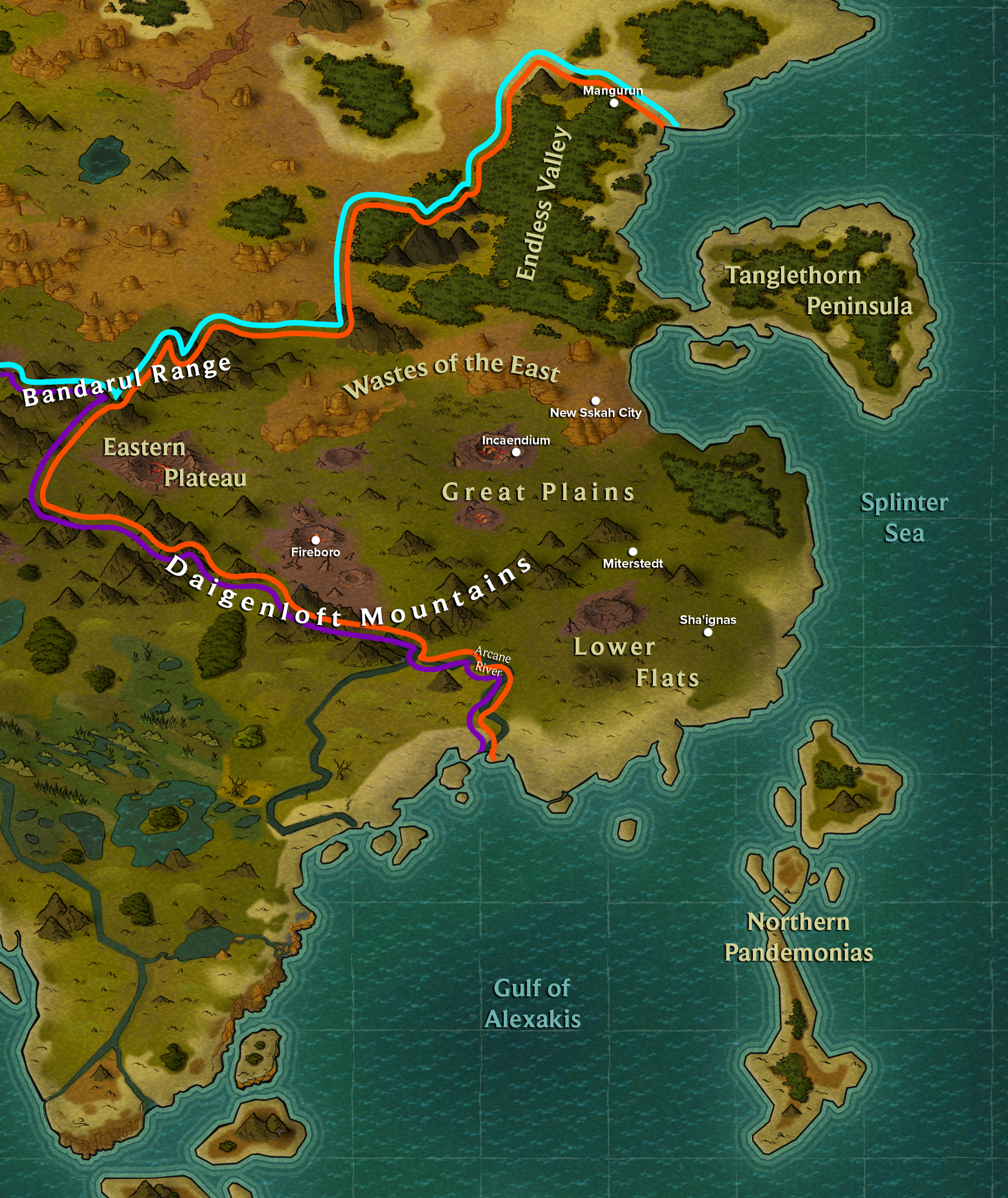


.jpg?alt=media&token=e9de6549-9431-42cb-a8e9-cef08110fbd9)


.png?alt=media&token=e2a5f39c-6509-4820-8fd5-b5992fdc2802)





.png?alt=media&token=73257ad1-8d8a-42ec-85b3-8b89b9e4fd3d)